A Black Agenda Radio commentary by executive editor Glen Ford
Sixty years ago, the U.S. Supreme Court ordered public schools desegregated, first “with all deliberate speed” and then, more urgently, “root and branch.” By the early 1970s, substantial desegregation has taken place in the South. But today, segregation has rebounded. In some localities, folks don’t quite remember what happened. “No one paid the court order any attention in St. Martin Parish, Louisiana, for 30 years.”
Segregation Rebounding: The Political Defeat of School Integration
A Black Agenda Radio commentary by executive editor Glen Ford
“Court orders were only effective if the judges were diligent and officials were willing to enforce them.”
Fourteen years after the U.S. Supreme Court ruled segregated education unconstitutional, the justices determined that the pace of integration, which was supposed to be proceeding “with all deliberate speed,” was far too slow. In it’s 1968 ruling
Three hundred school districts remain under desegregation order, today, but some of those communities don’t even know the order is still in effect, many have substantially resegregated, and the Justice Department is sometimes also in the dark, according to Nikole Hannah-Jones, who spent a year researching her authoritative article
“Some communities don’t even know the order is still in effect.”
The fight for school desegregation badly needed the Supreme Court’s “root and branch” mandate. In 1963, only about one percent of Black kids in the South attended integrated schools. But by the early Seventies, fully 90 percent of Blacks in the South attended desegregated schools. However, court orders were only effective if the judges were diligent and officials were willing to enforce them. When Ronald Reagan entered the White House, his Justice Department actively opposed school integration. So did both presidents Bush. Reporter Nikole Hannah-Jones found that the Obama Justice and Education Departments don’t even have an accurate list of the desegregation orders that remain legally in effect in local districts.
It appears that desegregation has been abandoned for so long in some school districts, that the locals assume the court orders are no longer in effect. No one paid the court order any attention in St. Martin Parish, Louisiana, for 30 years. In Gadsden, Alabama, a judge released the school district from a desegregation order, even though nothing had been done to dismantle segregation, one high school was 90-percent Black, and another school was still named for Ku Klux Klan founder Nathan Bedford Forrest. Nevertheless, the judge said he was satisfied that folks in Gadsden got along better than people in Kosovo or Northern Ireland.
The lesson of the ProPublica story appears to be that segregation was never eliminated “root and branch” partly due to lack of consistent enforcement of court orders over time, and in some cases for reasons that nobody seems to remember. Today, Black students are more segregated than in the Seventies, but all the Obama administration wants to talk about is testing and getting rid of teachers, and turning schools into privately-managed charters – which studies have shown tend to be more segregated than public schools.
The political defeat of school integration appears to be all but complete – except on television shows and in the movies.
For Black Agenda Radio, I’m Glen Ford. On the web, go to BlackAgendaReport.com.
BAR executive editor Glen Ford can be contacted at Glen.Ford@BlackAgendaReport.com .

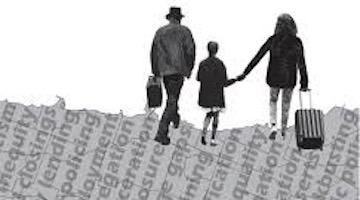 Dr David Stovall, author of an article titled, “Engineered Conflict: School Closings, Public Housing, Law Enforcement and the Future of Black Life,” said “one of the ways to attrac
 Slow-witted Joe Biden appears to think that we’re still in the age of the sole superpower, when in fact that era has come and gone.
 Neither AOC nor the rest of the Squad has mounted any significant challenge to the party’s corporate leadership, despite being elected for this exact purpose.
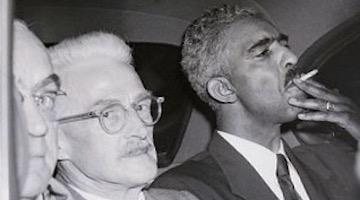 A pamphlet written 70 years ago by an exiled Black American communist reveals an African continent seething to break free from European colonization.
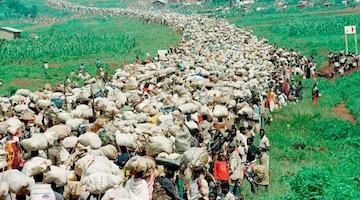 The real story of the Rwandan genocide begins in 1990, when exiled Tutsis from Uganda invaded northern Rwanda, unleashing a deadly campaign that uprooted a million Hutu peasants and set ethnic tens



