There is no doubt that the U.S. housing mortgage crisis is
rooted in much deeper contradictions of present-day capitalism, a system
dominated by speculative money-movers who create nothing, but have harnessed
the powers of the state to keep churning out profits. The
entire, global edifice would collapse were it not for the coercive power of the
United States military to subjugate whole regions of the planet - to rig the
game. Domestically, the money-changers are insulated by the state from the
consequences of their wanton thievery. The captains of capital will be bailed
out, rescued from bankruptcy - to the extent possible - to steal again.
There is another bankruptcy that has been dramatically
revealed by the sub-prime mortgage catastrophe: the bankruptcy of a Black
politics that is based on the trappings and illusions of steady African
American upward mobility, despite the objective facts of massive racial wealth
disparity. This central defect in an ancient current in African American
thinking holds that the appearance of prosperity trumps reality; that Black
folks will surely climb up the social and economic ladder if only they look
the part, even if their actual economic status is a façade.
Predatory lenders of the store-front kind have always
profited from an exaggerated "display" imperative among African Americans. With
wholesale deregulation of the finance industry, especially during Bill
Clinton's presidency, the big boys jumped into the loan shark game with all
four feet, steering Blacks into high-interest mortgages at a rate
far-disproportionate to the home-buying public. Whole neighborhoods, many of
them outwardly prosperous - with the appearance of being solidly middle and
upper middle class - spread through the formerly white suburbs, creating the
illusion of some sea-change in Black economic fortunes. Black suburbia was
heralded as proof that the legacies of slavery and Jim Crow could be overcome
without inconvenience to white privilege.
"A great chunk of this Black mobility was not vertical,
but a horizontal journey into the shifting sands of sub-prime lending."
No matter that Black household wealth is no more than
one-sixth that of the median white household - and that it would take centuries
to catch up at the current pace, that is, the pace before the latest crisis.
A section of so-called Black leadership hailed the new suburban settlements as
prima facie evidence of soaring Black mobility. As gentrification pushed
growing numbers of Black households out of cities and into ghettoizing suburbs,
that too was viewed as, somehow, a sign of "progress." We as a people were
moving on up - and out. But we now know that a great chunk of this
mobility was not vertical, but a horizontal journey into the shifting sands of
sub-prime lending. Consider this: Prince George's County, a Washington DC
suburb, is the most affluent majority-Black county in the nation. It now
registers the highest home-foreclosure rate of any county in the state of
Maryland.
The trappings of wealth - purchased with a signature - do
not represent Black progress, much less power. Those Black politicians that
have encouraged so many of our people to buy into a culture of ostentatious
display, rather than the hard work of political struggle, have done their most
committed followers the gravest disservice.
Black Liberation will not be financed on credit.
For Black Agenda Radio, I'm Glen Ford.
BAR executive editor Glen Ford can be contacted
at Glen.Ford@BlackAgendaReport.com.

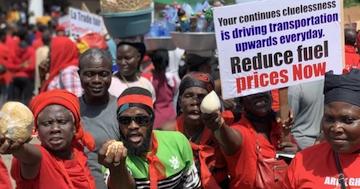 The 2001 Dakar Manifesto had a simple but unassailable claim: the total and unconditional cancellation of the odious African debt.
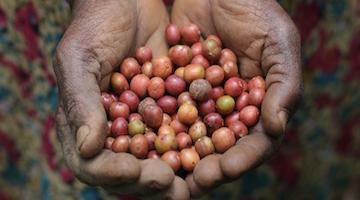 Food production in Africa is complicated by climate change and the use of fertilizers which increase food production but which also create green house gases and create other environmental harm.
 …
… Onyesonwu Chatoyer of the All-African People's Revolutionary Party and BAR Book Forum Editor Roberto Sirvent discuss how "We Can Save Ourselves."
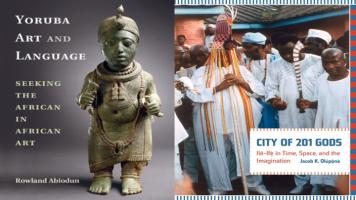 This week’s featured scholar is Ayodeji Ogunnaike. Ogunnaike is an assistant professor at Bowdoin College where he teaches interdisciplinary courses on Africa and the African Diaspora highlighting…


