The educator/journalist observed that some of the boys in her classroom were “bursting with perspective” on “the widespread use of the words ‘bitch’ and ‘ho’ to describe young women of color on campus.” Not so with the girls, who were largely silent on the subject. When pressed, some of the girls “claim the words are justifiably used to describe ‘bad girls’ who are promiscuous and unruly, not realizing that black women have always been deemed “bad” in the eyes of the dominant culture, as less than feminine, as bodies for pornographic exploitation.” There is a crying need to “change the self-hating mindset of many young black women,” made worse by “a generation of Bush-besotted militarism and corporate reign over media [that] has turned sexualized violence against women into a billion dollar industry.”
Misogyny and Black Youth: Silence Equals Death
by Sikivu Hutchinson
“My students slam other girls for being “hoochies” and sloganeer violent misogynist lyrics without a second thought.”
There is silence in the classroom. Even amidst the clockwatching ten minutes-before-the-bell-rings clamor of a typical high school class there is silence, deafening and thick as quicksand. I have asked the class a question about the widespread use of the words “bitch” and “ho” to describe young women of color on campus and several boys are holding forth in response. They are the same four opinionated boys who have been the most vocal throughout these sessions, always ready with a quip, a deflection or, sometimes, serious commentary that reveals deep wisdom. They are bursting with perspective on this topic, but the girls in the room are silent. Some twist in their seats, some study the tops of their desks in calculated boredom, transporting themselves outside of the room, slain by the language of dehumanization.
Finally a few girls chime in and say they use the terms casually with friends, as in “my b or my h,” supposedly neutralizing their negative connotations akin to the way they use the word “nigga.” Some claim the words are justifiably used to describe “bad girls” who are promiscuous and unruly, not realizing that black women have always been deemed “bad” in the eyes of the dominant culture, as less than feminine, as bodies for pornographic exploitation. When I wondered aloud whether white women call themselves bitch as a term of endearment I got uncertain responses. My guess is that they don’t, not because white women are necessarily more enlightened and self-aware than women of color on gender, but because white femininity is the beauty ideal and hence the human ideal. Despite the misogyny that pervades American culture there is inherent value placed on the lives of white women. Every aspect of the image industry affirms their existence, and the spectrum of culturally recognized white femininity extends from proper and pure to sexually liberated.
“Despite the misogyny that pervades American culture there is inherent value placed on the lives of white women.”
This is exemplified by the tabloid media’s obsession with missing white women and white girls. Plastered on the main pages of websites like AOL, relentlessly rammed down our collective throats in titillating morsels with whiffs of sexuality and scandal, poster child Caylee Anderson and company are a metaphor for Middle America’s Little Red Riding Hood fetishization of white femininity. Tabloid media narratives of imperiled white females highlight the suburban virtues of white Middle America and not so subtlely evoke the social pathologies of the so-called inner city. Indeed, the spectacles of grief, mourning, and community outrage trotted out on CNN and FOX not only program viewers to identify with the injustice that has been done to the victim and her family, but to her community. In the world of 24-7 media these victims become our girls, our daughters, while the “bs” and “hs” of the inner city symbolize the disorder and ungovernableness of an urban America whose values must be kept at bay.
“Awareness about the relationship between pervasive violence against black women in the media and male behavior is lacking.”
In many regards this is part of the same so-called post-feminist trend of telling women to sit down and shut up, to internalize the values of white supremacist capitalist patriarchy and stay in their place. A generation of Bush-besotted militarism and corporate reign over media has turned sexualized violence against women into a billion dollar industry, as illustrated by global romance with gangsta rap, violent video games and Internet pornography. Yet the desensitization of young black women to these trends is perhaps the most painful. When I talk to my students about the staggering rates of sexual assault and intimate partner abuse in black communities they are quick to judge themselves and their peers for inciting male violence. Unable to see themselves and their lives as valuable, they slam other girls for being “hoochies” and sloganeer violent misogynist lyrics without a second thought. Awareness about the relationship between pervasive violence against black women in the media and male behavior is lacking. During the 2008-2009 school year a few South L.A. schools have been willing to partner with media literacy organizations like the Women of Color Media Justice Initiative on a gender equity curriculum that trains young people to engage in media advocacy. But unless we change the self-hating mindset of many young black women, silence—as the 1980s gay activist group ACT-UP’s saying goes—does equal death, as we are poised to lose another generation to a media-colonized sense of self worth.
Sikivu Hutchinson is the editor of blackfemlens.org, a commentator for KPFK 90.7 FM and co-founder of the Women of Color Media Justice Initiative, a partnership with the Los Angeles Commission on the Status of Women, the Ida B. Wells Institute, Mother’s Day Radio and the Women’s Leadership Project. She can be contacted at sikivu@blackfemlens.org

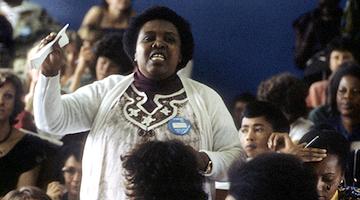 In 1985, African women tried to warn us about a world in crisis. Did we listen?
 Priest App
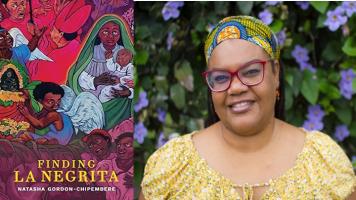 This week’s featured author is Natasha Gordon-Chipembere. Gordon-Chipembere holds a PhD in English from the University of South Africa. She was born in New York to a Costa Rican mom and a Panamanian…
 The author makes the case that liberalism is a dead end and that socialism is the only tool for Black liberation.
 Colia Clark was a veteran of the Black Liberation Movement who worked with Medgar Evers, who was also affiliated with the NAACP and who served as Executive Secretary of the Student Non-Violent…


