Despite the demands of millions of Americans for an everybody-in-nobody-out system of single payer, universal health insurance, President Obama and Democrats in Congress appear bent on preserving the parasitic role of private insurance companies which currently eat thirty cents of every health care dollar. If this twisted logic is good for health care, what else is it good for?
If health insurance companies ran the postal service...
George Harris KC Star Reader Advisory Panel 2008
Reprinted from KansasCity.Com – The Star
darf“People with preexisting high junk mail volume would pay a 300% surcharge”
Could health insurance companies opting to get into mail delivery make the current single deliverer postal service worse? Let's speculate.
If medical insurance companies ran postal services, citizens would pay a monthly premium to get mail delivery. The premium would vary by age, sex and region of the country.
To enhance competition, multiple health insurance companies would compete for mail delivery business. Some companies would provide service only to citizens in cities with populations over 2 million and would deliver only to comparable cities with populations exceeding 2 million. To conserve costs, subscribers would be permitted to post mail only at selected in-network post offices.
People with preexisting high junk mail volume would pay a 300% surcharge.
Citizens with dogs would be required to get mail delivery through the state high risk mail pool.
It would cost $.42 to send a letter across town. Delivery to rural areas would cost $20. Delivery to another state would cost $40. However, the actual allowable charge paid to subcontractors would vary by company.
Any citizen with mail volume exceeding 30% of average mail delivery could be denied mail service. However, the percentage cut-off point would vary by company. Appeals of denial would be submitted to a specialist who is unemployable in any other business available in the western hemisphere. The specialist would work in an undisclosed location with no direct telephone access and would not respond to e-mail.
Pre-authorization would be obtained to mail packages with breakable objects. Requests would have to be submitted to the corporate office in Connecticut and reviewed by teams of disgruntled employees (much like the present system.)
The CEO of one former health insurance company (now postal delivery service) would make $1.5 billion by selling his stock in the company.
Western Kansas, Wyoming, Nevada (except Las Vegas), the Texas panhandle and select counties of Mississippi, Alabama, Arkansas and New Mexico would not receive daily mail. 40 million people would go without regular mail delivery. However, the Federal government would legislate that emergency mail must be delivered at no cost to the citizen.
Illegal aliens would receive mail at no charge at emergency mail stations.
Citizens away from home would pay out of network rates to send mail.
Postal employees would become independent contractors and would be prohibited from forming guilds to maintain payment levels from companies. Average incomes would decline 45%.
The CEO of one former health insurance company (now postal delivery service) would make $1.5 billion by selling his stock in the company. The average pay of CEO’s would be $400 million annually.
Citizens would receive group mail delivery rates by applying through their employer and could join the group at time of employment or on predetermined sign-up dates without regard for preexisting mail volume overages. The cost of letter delivery to a citizen who belongs to a group would be discounted as much as 75%.
In some states, groups could comprise 2 or more unrelated people, not living in the same household. In all other states a group be be required to comprise 30 to 40 people.
The Federal government would legislate that citizens leaving a group would be able to take his/her postal privileges with him for a period not to exceed 18 months. However, the health insurance company could charge any fee it desired.
Advocates for a single company to organize mail delivery to everyone at a sensible rate would be branded as socialists and sent to Canada. However, shipment would be delayed because no one could calculate the postage.
You can find more of George Harris at MidWest Voices.

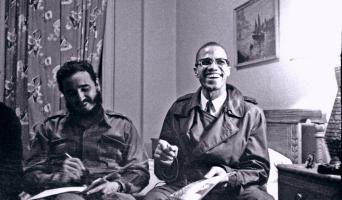 Cuban president Miguel Diaz-Canel paid tribute to Malcolm X on the anniversary of his historic meeting with Fidel Castro.
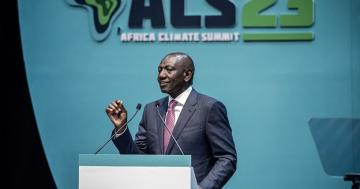 Kenya's president William Ruto talks a good game about Pan-Africanism but in his short time in office he has become the reliable cover for U.S. imperialism.
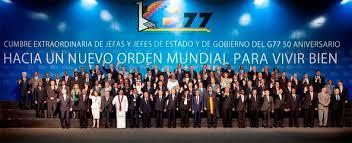 Cuba hosted the recent G77+China Summit in Havana, where calls to change the existing world order were made by Global South nations.
 Kenya has stated it will lead a potential intervention in Haiti backed by the US and the UN. The move is yet another attack on the sovereignty of Haiti in service of imperialist interests and…
 U.S. hostility towards China, the Beloved Community and the effort to end violence, and partisan gerrymandering and its impact on voting rights.


