 by BAR executive editor Glen Ford
The chief prosecutor of the court that purports to bring the rule of law to the planet is actively campaigning to appoint the United States – ‘the world’s most prolific perpetrator and sponsor of war crimes, crimes against humanity, and genocide’ – as chief law enforcement agent. This, despite the fact that the United States is not, and does not intend to become, a member of the International Criminal Court, nor subject to its jurisdiction. But, no matter: thugs rule.
Could International Criminal Court Deploy U.S. as World Law Enforcer?
by BAR executive editor Glen Ford
“Washington is quite eager to use the ICC as a tool of its own foreign policy objectives.”
The United States, which continues to shun membership in the International Criminal Court (ICC) for fear that it might itself be prosecuted, could wind up acting as the ICC’s military muscle on the planet. Having failed to prosecute anyone but Africans since its creation in 2002, the ICC now actively woos the U.S., the world’s most prolific perpetrator and sponsor of war crimes, crimes against humanity, and genocide, as global enforcer of ICC indictments.
The ICC’s 111 member states are gathered in Kampala, Uganda, for a 12-day conference (May 31 - June 11) that is largely focused on defining the international crime of “aggression,” the only crime listed under the ICC’s mandate that is without agreed upon definition. The next, much more difficult question: will the ICC independently decide who shall be indicted for crimes of aggression, or must the Court defer to the United Nations Security Council, where the permanent members hold veto power? Predictably, the United States is lobbying hard to maintain the Security Council as the sole arbiter of global aggression. Smaller nations and human rights groups contend that filtering indictments through the Security Council would further “politicize” the ICC – a code word for granting the great powers immunity from prosecution.
From the African standpoint, such immunity already exists, as evidenced by the all-African lineup of 14 individuals indicted to date, including the first sitting head of state, Sudanese President Omar al-Bashir. All have been charged with war crimes, and eleven also face charges of crimes against humanity. ICC prosecutors are currently considering adding the crime of “genocide” to President al-Bashir’s indictment. But enforcement is problematic. ICC member states are treaty-bound to arrest indicted persons that enter their territory. However, the African Union collectively opposes Al-Bashir’s indictment, officially on grounds that it is an impediment to a peaceful settlement in Sudan’s Darfur region, but unofficially because of the ICC’s color-coded notions of justice.
“Human rights groups and smaller nations contend that filtering indictments through the Security Council would grant the great powers immunity from prosecution.”
The United States cheers the prosecutors on from its position of immunity, since only ICC members fall under the Court’s jurisdiction. But that doesn’t stop Washington from primping and posturing as a guardian of international legality at the Kampala conference.
"It's hard to emphasize how happy countries are to see us here," said State Department legal affairs official Harold Koh. "They felt very distressed at the period of U.S. hostility to the court. They're very excited about the Obama administration and its renewed commitment to international law and engagement. And they're just thrilled that we're here as an observer country."
No such commitment international law exists, beyond President Obama’s rhetorical flourishes. The ridiculously titled U.S. Ambassador-at-Large for War Crimes, Stephen Rapp, advised the world not to hold its breath waiting on the Americans to join the ICC. “[W]e're nowhere near that point,” he told reporters in Kampala. But Washington is quite eager to use the ICC as a tool of its own foreign policy objectives. “What we're here talking about is ways that we can support this court constructively when it works in our interest,” said Koh. “And so far in the cases it is taking on, they are in our interests and in the interest of all of human kind."
The U.S. has the ICC’s Chief Prosecutor in its pocket. As reported by scholar-activists Samar Al-Bulushi and Adam Branch:
“In June 2009 at a public event in the US, Chief Prosecutor Luis Moreno-Ocampo declared the need for ‘special forces’ with ‘rare and expensive capabilities that regional armies don’t have,’ and said that ‘coalitions of the willing,’ led by the US, were needed to enforce ICC arrest warrants.”
Prosecutor Moreno-Ocampo is volunteering the Court as an instrument of American R2P – “Responsibility to Protect,” the Obama administration’s substitute for the Bush doctrine that justified American wars to spread “democracy.” As defined by Susan Rice, Obama’s snarling Ambassador to the UN: “The international community has a responsibility to protect civilian populations from violations of international humanitarian law when states are unwilling or unable to do so.”
“ICC Prosecutor Moreno-Ocampo is volunteering the Court as an instrument of American R2P – ‘Responsibility to Protect.’”
The U.S. is especially keen to deploy R2P as cover for its own continued crimes in central Africa, where Washington’s main proxies in the region, Ugandan dictator Yoweri Museveni and Rwanda’s ruling Tutsi military, are the most culpable parties in the death of an estimated six million Congolese. As recounted by Edward S. Herman and David Peterson in their invaluable new book, The Politics of Genocide, since overrunning the mineral-rich eastern region of the Democratic Republic of Congo in 1996, Rwanda and Uganda “have largely carved up the DRC between them, helping to cause a death toll more than fifteen times the scale of the “genocide in Darfur.”
But neither Uganda’s Museveni nor Rwanda’s Paul Kagame nor any of the three U.S. presidents that are culpable in the Congo genocide – Bill Clinton, George W. Bush, and Barack Obama – will ever face indictment by the ICC.
Impunity extends from the world’s sole superpower to its capos and hit men, and makes a farce of an International Criminal Court that appears ready to offer a marshal’s badge to the planet’s biggest thug and bully: the United States.
BAR executive editor Glen Ford can be contacted at Glen.Ford@BlackAgendaReport.com.

 Senior care puts care workers into racialized, gendered, and age hierarchies, making it difficult for them to achieve social and economic mobility.
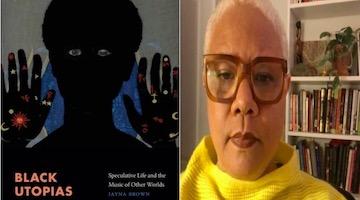 I am hoping my call will provoke/inspire us to practice forms of life and liveliness differently.
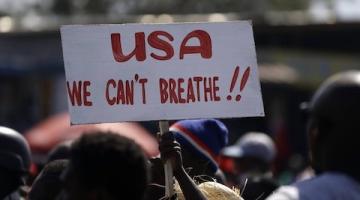 While Biden is telling Haitians “Don’t come over,” Haiti and its allies have been saying “U.S. Out of Haiti.”
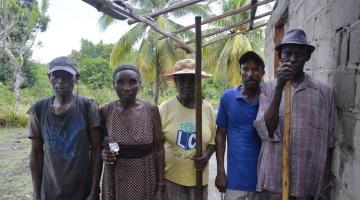 The author unpacks the tired trope of “poor rich Haiti,” highlighting the role of foreign capital and local elites in the destruction of life in the countryside.
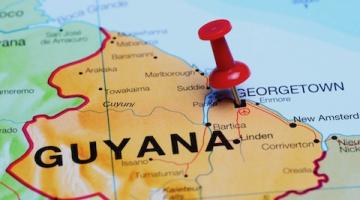 Guyana’s historically oppressed peoples direct their hostility at each other while neo-imperial powers hide in plain sight and reap the country’s wealth.


