A Black Agenda Radio commentary by BAR managing editor Bruce A. Dixon The “well-regulated militia” that the US Constitution's second amendment refers to were slave patrols, land stealers and Indian killers, all quite necessary as the amendment's language states “to the security of a free state” built with stolen labor upon stolen land. Unless and until we acknowledge that history, we cannot have an honest discussion about gun control.
The Real and Racist Origins of the Second Amendment A Black Agenda Radio commentary by BAR managing editor Bruce A. Dixon This commentary was originally published in Black Agenda Report April 19, 2008.
Why does the US Constitution guarantee a right “to keep and bear arms”? Why not the right to vote, the right to a quality education, health care, a clean environment or a job? What was so important in early America about the right of citizens to have guns? And is it even possible to have an honest discussion about gun control without acknowledging the racist origins of the Second Amendment?
The dominant trend among legal scholars, and on the current Supreme Court is that we are bound by the original intent of the Constitution's authors. Here's what the second amendment to the Constitution says:
“A well regulated militia being necessary to the security of a free State, the right of the People to keep and bear arms shall not be infringed.”
Clearly its authors aimed to guarantee the right to a gun for every free white man in their new country. What's no longer evident 230 years later, is why. The answer, advanced by historian Edmund Morgan in his classic work, American Slavery, American Freedom, the Ordeal of Colonial Virginia , sheds useful light on the historic and current politics and self-image of our nation.
Colonial America and the early US was a very unequal place. All the good, cleared, level agricultural land with easy access to transport was owned by a very few, very wealthy white men. Many poor whites were brought over as indentured servants, but having completed their periods of forced labor, allowing them to hang around the towns and cities landless and unemployed was dangerous to the social order. So they were given guns and credit, and sent inland to make their own fortunes, encroaching upon the orchards, farms and hunting grounds of Native Americans, who had little or no access to firearms. The law, of course did not penalize white men who robbed, raped or killed Indians. At regular intervals, colonial governors and local US officials would muster the free armed white men as militia, and dispatch them in murderous punitive raids to make the frontier safer for settlers and land speculators.
Slavery remained legal in New England, New York and the mid-Atlantic region till well into the 1800s, and the movements of free blacks and Indians were severely restricted for decades afterward. So colonial and early American militia also prowled the roads and highways demanding the passes of all non-whites, to ensure the enslaved were not escaping or aiding those who were, and that free blacks were not plotting rebellion or traveling for unapproved reasons.
Historically then, the principal activities of the Founding Fathers' “well regulated militia” were Indian killing, land stealing, slave patrolling and the enforcement of domestic apartheid, all of these, as the Constitutional language declares “being necessary to the security of a free state.” A free state whose fundamental building blocks were the genocide of Native Americans, and the enslavement of Africans.
The Constitutional sanction of universally armed white men against blacks and Indians is at the origin of what has come to be known as America's “gun culture,” and it neatly explains why that culture remains most deeply rooted in white, rural and small-town America long after the end of slavery and the close of the frontier. With the genocide of Native Americans accomplished and slavery gone, America's gun culture wrapped itself in new clothing, in self-justifying mythology that construes the Second Amendment as arming the citizenry as final bulwark of freedom against tyranny, invasion or crime. Embracing this fake history of the Second Amendments warps legal scholarship and public debate in clouds of willful ignorance, encouraging us to believe this is a nation founded on just and egalitarian principles rather than one built with stolen labor on stolen land.
Maybe this is how we can tell that we are finally so over all that nasty genocide and racism stuff. We've chosen to simply write it out of our history.
For Black Agenda Radio, I'm Bruce Dixon. Find us on the web at www.blackagendareport.com .
Bruce A. Dixon is managing editor at Black Agenda Report, and a member of the state committee of the Georgia Green Party. He lives and works in Marietta GA and can be reached via this site's contact page or at bruce.dixon@blackagendareport.com.

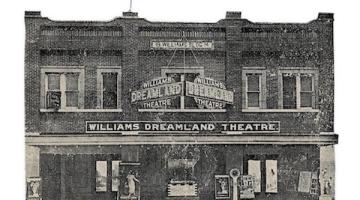 In 1921 thousands of whites attacked the Black population of Tulsa, Oklahoma with machine guns, airplanes, fire and pure hatred, killing at least 300.
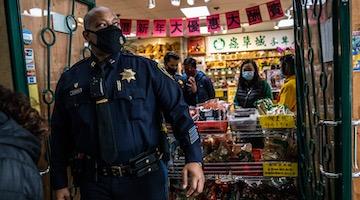 More policing rarely results in justice for anyone, and only puts Black, Indigenous, and other communities of color (BIPOC), including Asian people, at risk for more violence.
 “Bombing Somali civilians is one of AFRICOM’s main projects,” writes Mohamed Haji Ingiriis, a young Somali historian.
 The worldview animating Haitian masses today is leading to a social context ungovernable within the framework of prevailing economic neo-liberalism.
 This book challenges the myth that 1994 was the turning point in South Africa -- because the liberation process is unfinished.


