BAR Book Forum: Alaina E. Roberts’ “I’ve Been Here All the While”
Five Indian nations brought their Black slaves on the Trail of Tears and it was Black labor that helped them rebuild.
“Some people of color bought into systems of settler colonialism and white supremacy at various times for their own gains.”
In this series, we ask acclaimed authors to answer five questions about their book. This week’s featured author is Alaina E. Roberts. Roberts is Assistant Professor of History at the University of Pittsburgh. Her book is I've Been Here All the While: Black Freedom on Native Land.
Roberto Sirvent: How can your book help BAR readers understand the current political and social climate?
Alaina E. Roberts: In 2019, HBO’s Watchmen introduced thousands of people to the Tulsa Massacre, one of the largest incidences of racial violence in American history. Ever since, curiosity about this event has sparked conversations about the area destroyed in the massacre—which was known as Black Wall Street—and Black life in Oklahoma more generally.
My book will help BAR readers understand that this wealthy, entrepreneurial Black space was able to exist in Tulsa, Oklahoma because of a very particular history—a history that involves Native Americans who owned Black and mixed-race slaves and Black and mixed-race people who actually received land after their enslavement.
Most people are aware of Indian Removal in the 1830s and the Trail of Tears, which was the movement of Native people from their Southeastern and eastern homes to what is now known as Oklahoma, but which was then called Indian Territory, a region that was not an American state or an American territory. What most people don’t know is that five Indian nations (the Cherokees, Chickasaws, Creeks, Seminoles, and Choctaws) brought their Black slaves on the Trail of Tears and that it was Black labor that helped them rebuild after this traumatic event.
“Native Americans who owned Black and mixed-race slaves and Black and mixed-race people actually received land after their enslavement..”
After the Civil War, the United States forced these five Indian nations to free their slaves and give them land—some received 40 acres and some received as much as 160 acres—from their own tribal holdings. This land ownership, as well as the oil and other natural resources discovered on some of these land allotments made Indian Territory an attractive place for African Americans in the United States. This is how we get mass migration and, eventually, places like Black Wall Street.
But this was no paradise: in order to be successful, Native Americans turned against Native people from other tribes, Black people portrayed Native Americans as uncivilized savages, and white Americans used racial violence and segregation against both Black and Native people.
What do you hope activists and community organizers will take away from reading your book?
The solidarity of the past few years between the Black Lives Matter movement and Native American organizers has been very heartening. From Standing Rock to George Floyd’s murder, we’ve seen both groups taking on each other’s causes and advocating for one another.
I hope this book encourages activists, organizers, and everyday people to take this solidarity one step further and look at the past and present incidences of anti-Black racism within Native American communities. For example, many women and men who have both Native and Black ancestry have faced prejudice and even disenrollment because of their Blackness. Native activists and tribal citizens must speak out against this and take their own communities to task. On the other hand, African Americans can and should think about what it means that they live on Native American land and what they can do to account for that history of dispossession.
We know readers will learn a lot from your book, but what do you hope readers will un-learn? In other words, is there a particular ideology you’re hoping to dismantle?
Many Americans have rather simplistic ideas of who the victims and victimizers are throughout American history, due to the way we learn history. My book turns a number of those ideas on their head.
I’ve Been Here All the While identifies Native Americans who owned Black slaves and called other Native people uncivilized; it identifies Black and mixed-race people who were willing to dispossess Native Americans and call them uncivilized—just like white Americans did—in order to realize their own freedom and land-ownership.
I demonstrate that some people of color bought into systems of settler colonialism and white supremacy at various times for their own gains—it isn’t only white Europeans or Americans who have done the work of oppression.
Who are the intellectual heroes that inspire your work?
Historian Tiya Miles (award-winning author of Ties that Bind: The Story of an Afro-Cherokee Family in Slavery and Freedom and The Dawn of Detroit: A Chronicle of Slavery and Freedom in the City of Straits, among other books) has been a mentor to me since before I started graduate school.
Tiya is an example of a historian who does amazing archival research but is also interested in calling upon descendent groups for their input and in reading against the grain to get at the perspectives of people who have not left records. So many nonwhite peoples in North America did not or were not able to record their own histories and perspectives, and through her work Tiya has demonstrated that it is possible to write a sound history but also explore the possibilities of the lives these people lived and the feelings they might have possessed.
She doesn’t just stick to one geographic area or one narrative, either; Tiya is always looking for another way to address the interconnections between Black and Native peoples. I hope that I will be able to create such a varied body of work.
I also admire Tiya’s work ethic, her kindness, and her curiosity.
In what way does your book help us imagine new worlds?
The Five Tribes’ adoption of Black slavery was just one way these five Indian nations tried to prove that they were different from other Native people—more “civilized” in white Americans’ eyes.
Thus began a cycle: once in Indian Territory, these five Indian nations portrayed themselves as more civilized than the western Plains people who already lived in Indian Territory.
Subsequently every group that laid claim to land in Indian Territory portrayed themselves as more civilized and deserving of land ownership than the previous group, from the Black people owned by Native Americans to African Americans from the United States, and then finally to white American settlers, whose claims were ultimately the only ones permanently upheld by the American government.
Acknowledging people of colors’ participation in this cycle is difficult, I know. But it is only once we learn about and work through this truth that we can truly form interracial alliance and solidarity. I hope that my book can help in this work that opens wounds at first, but ultimately heals them.
Roberto Sirvent is editor of the Black Agenda Report Book Forum.
COMMENTS?
Please join the conversation on Black Agenda Report's Facebook page at http://facebook.com/blackagendareport
Or, you can comment by emailing us at comments@blackagendareport.com




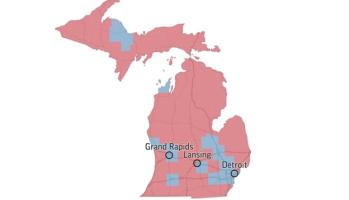 Abayomi Azikiwe, editor of Pan-African News Wire joins to discuss Michigan's Black voters, the Abandon Biden campaign, and the prospects for the swing state in the 2024 presidential election.
 BAR Poet-in-Residence, Raymond Nat Turner, joins us from New York City to talk about his work and an upcoming performance with his group, Upsurge New York City.
 Gerald Perreira of Organization for the Victory of the People in Guyana joins us to discuss the long running territorial dispute with neighboring Venezuela and the increasing activity of U.S. in the…
 Any sign of even tiny opposition is enough to send Israel into a frenzy of bloodletting. Hospital attacks, murders of aid workers, violations of the sovereignty of embassies, are all par for the…
 The statement on the UN Partition of Palestine by the Arab Higher Committee is a reminder of the sordid history of the U.S. in the expropriation of land and the attempted ethnic cleansing of the…


