Rwanda’s most important woman is a former political prisoner who isn’t allowed to leave the country.
“She’s not a leader of women. She’s a leader of people.”
Rwandan opposition leader Victoire Ingabire Umuhoza remains in Rwanda, where President Paul Kagame’s government has forbidden her to leave. Earlier this month, gospel singer Kizito Mihigo, whom the government had also forbidden to leave Rwanda, died after being apprehended trying to cross Rwanda’s southern border into Burundi. The government said that he committed suicide, but few Rwandans believe that.
On International Women’s Day, I spoke to Marcelline Nyiranduwamungu, a Rwandan refugee living in Brussels and a co-founder of the International Women’s Network for Democracy and Peace and the Victoire Ingabire Umuhoza Peace Prize, which will be awarded next week at a celebration in Brussels.
ANN GARRISON: Why did you and your friends come together to create a women’s organization instead of a general membership organization?
MARCELLINE NYIARANDUWAMUNGU: The International Women’s Network for Democracy and Peace was created by women because we are convinced that women should have a word to say regarding any subject, but men forget the women, the women’s importance, very often.
AG: Next week is your largest event of the year, the Victoire Ingabire Umuhoza Democracy and Peace Prize awards celebration. I know she can't be there with you, so could you tell us about her current situation in Rwanda?
MN: Victoire is out of prison, but she can’t travel. She must report to the Rwandan Investigation Bureau every month, and she can’t travel without the Justice Minister’s permission. I don’t even think she has a passport. So we had hoped that she would be with us, but she can’t be.
AG: Could you tell us how Victoire became a leader of the Rwandan refugee community in Europe and North America?
MN: Let's recall that Victoire left the Netherlands for Rwanda in 2010. She was not a refugee in the Netherlands as she got there on a scholarship one or two years before the genocide. So the tragic events of 1994 found her in the Netherlands. I can say that refugees that headed for this country found in Victoire a helpful hand. Through many associations that she belonged to, she helped newcomers settle in countries where they didn't speak the language. She helped them go through administrative chores and struggled to find them shelter, schooling, and work. She traveled a lot in Europe and North America in order to find out about the plight of Rwandan refugees, and she helped whenever and wherever she could.
AG: Once, in some text messages, Victoire told me that the Rwandan Investigation Bureau had called her in for questioning but really for no reason except to torment her and break her down psychologically. They left her sitting in a chair in an otherwise empty room all day without even a glass of water. But, as always, she said that she can't be broken.
MN: Yes, when she went to Rwanda, she knew she would likely go to prison or be killed, perhaps even tortured, but either way, she wanted us to find our strength and carry on the work she began. She did go to prison for eight years, and now she remains confined to Rwanda, where Kizito Mihigo and more and more of our friends are killed or imprisoned by Kagame's government.
AG: The last time I communicated with Victoire she said that she and Kizito had talked about death the last time they were together. She also said that his funeral was very sad, but many people came, and that was a sign that they were becoming less afraid.
MN: Yes, she is very courageous, as was Kizito, and despite what they've suffered, they have given others in Rwanda more courage too.
AG: I want to return to a question I asked you several years ago. Because you created a women’s organization, and because Victoire is the most courageous and heroic woman I’ve ever known, I had the feeling I should be able to somehow think of Victoire as a feminist, but I couldn’t. You and your husband gave me a curious look and said, “She’s not a leader of women. She’s a leader of people.” Could you say a bit about that?
MN: The award was created because she’s a model for us women, but she’s a politician at the same time. And if she were elected the president of Rwanda, she would not be a leader for women but a leader for the whole country. So she is the one who gives us all strength to carry on.
AG: Thank you, Marcelline.
MN: Thank you, Ann.
Ann Garrison is an independent journalist based in the San Francisco Bay Area. In 2014, she received the Victoire Ingabire Umuhoza Democracy and Peace Prize for her reporting on conflict in the African Great Lakes region. She can be reached at ann@anngarrison.com.
COMMENTS?
Please join the conversation on Black Agenda Report's Facebook page at http://facebook.com/blackagendareport
Or, you can comment by emailing us at comments@blackagendareport.com

 Some provisions of Biden’s “Build Back Better” legislation benefit the masses of Black people, but this legislation is a bare minimum effort to blunt some of the sharpest contradictions of the
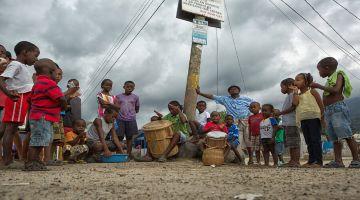 Many would-be migrants, like the Garifuna, would love nothing more than to stay in their homes. It’s Washington that’s making it difficult.
 Black challenges to white control of African Studies at the 1969 African Studies Association meeting in Montreal exposed the deeply entrenched racism within, and the imperialist leanings of, th
 Abayomi Azikiwe of Pan-African News Wire joined Danny Haiphong and Margaret Kimberley to discuss AFRICOM and U.S./NATO imperialist actions on the African continent.
 San Francisco Public Defender Manohar Raju spoke to Ann Garrison about why his office is suing San Francisco Superior Court for denying hundreds of Black and Brown people the speedy trial right


