Protestors outside the headquarters of the International Criminal Court (ICC) in The Hague, Netherlands, 10/18/2023 Reuters/Piroschka van de Wouw
Genocide crime, as defined by the UN Convention on Genocide, is sadly common. When does the world decide to respond?
This week I continued my conversation with human rights lawyer Dan Kovalik, who specializes in international law. This week we focussed specifically on the Genocide Convention, which was adopted by the UN General Assembly in December 1948. It has since been ratified by 153 of the 193 UN member states, with the US ratifying in 1988.
ANN GARRISON: The term “genocide” has been used more often than not as an excuse to commit international crimes, including even genocide, throughout its history. The US/NATO have used it as an excuse to bomb and break up Yugoslavia, Libya, and Syria. Rwanda has used it as an excuse for invading, occupying, and plundering the Democratic Republic of the Congo, leaving millions dead, over the past 30 years. The International Criminal Tribunals on Yugoslavia and Rwanda were both used to construct NATO narratives about those conflicts.
Now Trump is talking nonsense about white Afrikaner genocide in South Africa and threatening a “fast, vicious, and sweet” attack to stop Christian genocide in Northern Nigeria.
Meanwhile, the International Court of Justice says it won’t rule as to whether Israel is guilty of genocide in Gaza until late 2027 or early 2028, more than two years from now, and no one is taking action to stop the genocide.
Are the terms “genocide” and the UN Convention on Genocide still of any use?
DAN KOVALIK: I think that all things of importance, like the Constitution and the Bible, can be manipulated to serve negative ends, but it’s important to try to reclaim their true and essential meaning and use them for good.
The Genocide Convention, I believe, was passed with very noble intentions to try to prevent repetition of the evils of the Holocaust. I think it is worth keeping and trying to use for positive ends.
I still think the genocide term could be useful, for example, in the case of Gaza and in supporting a Uniting for Peace resolution to require troops to intervene to protect Gazans.
AG: What is a Uniting for Peace resolution?
DK: UN General Assembly Resolution 377(V), is a 1950 United Nations resolution that allows the General Assembly to take action on international peace and security issues when the Security Council is paralyzed due to a lack of unanimity among its permanent members. In other words, it allows the General Assembly to override a veto by one of the five permanent members, most significantly the US.
The General Assembly can convene an emergency special session and recommend collective measures, including the use of armed force if necessary, to restore peace.
So the General Assembly could recommend the creation of a multilateral force to stop Israel’s genocide in Gaza.
AG: A multilateral force? Meaning a multilateral armed force sailing, flying, or marching under a UN banner? A force that would go up against US and Israeli military force? That sounds so unlikely as to be preposterous, but what else could that mean?
DK: That is what it would mean if the UNGA and member states had the courage to act on what the resolution makes legal, though of course they never have.
AG: Does that have the status of international law?
DK: According to the UN Charter, yes, but it won’t have an effect without international agreement. It’s legally beyond the authority of the US veto, but the US will, at this time, just ignore it, just as they now ignore the rest of the Charter, going to war at will.
That’s why we have to organize and educate to change our own government, near impossible as that seems.
AG: What about the Genocide Convention in the International Criminal Court, otherwise known as the International Caucasian Court for Prosecuting Africans, because most of its indictments and prosecutions have served US/NATO purposes and narratives on the African continent. It indicted Gaddafi in 2011, but he of course never made it to trial before being murdered on Hillary Clinton’s command.
Other Africans were actually arrested and remanded to the court, and Omar Al-Bashir was charged with genocide, but Sudan refused to surrender him and tried him instead in a Sudanese court.
To their credit, Africans keep withdrawing from the court’s jurisdiction, most recently the revolutionary governments of Mali, Burkina Faso, and Niger.
The court indicted Netanyahu and Gallant for war crimes and crimes against humanity, but not for genocide. If they’re not guilty of genocide, who is?
And after the court indicted Netanyahu and Gallant, the US sanctioned ICC Prosecutor Karim Khan, former Prosecutor Fatou Bensouda, and various ICC deputy prosecutors, judges. The US Hague Invasion Act even provides for a US invasion of the Hague if the court ever indicts US officials.
Given all that, is there any hope for making the Genocide Convention meaningful at the ICC?
DK: I think the only way the ICC could regain any legitimacy is if it does prosecute Israelis for the genocide, but that seems unlikely.
AG: What about the International Court of Justice, which says it won’t rule as to whether Israel is guilty of genocide in Gaza for another two years, not until late 2027 or early 2028? What meaning will it have if they come to that conclusion then?
DK: An ICJ ruling could pave the way for a military intervention to stop the genocide. I don’t think you would need Security Council action at that point because the Genocide Convention itself requires all states to act to prevent and stop genocide.
Article I says:
The Contracting Parties confirm that genocide, whether committed in time of peace or in time of war, is a crime under international law which they undertake to prevent and to punish.
AG: So that would at least make creation of a military force legal, but the will to stand up to the US and Israel would have to be there.
DK: Yes.
AG: The Genocide Convention is so broad that it describes many situations in which there are “acts committed with intent to destroy, in whole or in part, a national, ethnical, racial or religious group.”
There are many in the Global South where ethnic, racial, religious, and/or clan populations found themselves competing for land, power, and resources within colonial boundaries that had nothing to do with their indigenous histories.
It’s arguable that the Ukrainian government in Kiev was committing genocide against the Russian-speaking populations of eastern Ukraine.
And there’s a long list of genocidal US wars on national groups—North Korea, Vietnam, Afghanistan, Iraq, Libya, Iran—that have never been prosecuted.
DK: I have argued that those wars are genocidal many times.
AG: The decision to bring charges in an international court always seems to be political.
DK: It always has been political, but in the case of Gaza, that’s good. The case has been brought to the international courts because international public opinion supports the Palestinian people.
Israel’s genocide against the Palestinian people has at least been brought to the international courts. It hasn’t succeeded, but it’s still being adjudicated and the world knows how the courts should rule.
In this, it’s different from the genocide cases brought to the international courts to serve imperial purpose.
Again, I think it’s important to try to reclaim the true and essential meaning of the Convention as it was conceived and passed in 1948 to prevent another Holocaust.
Ann Garrison is a Black Agenda Report Contributing Editor based in the San Francisco Bay Area. In 2014, she received the Victoire Ingabire Umuhoza Democracy and Peace Prize for her reporting on conflict in the African Great Lakes region. She can be reached at ann@anngarrison.com. You can help support her work on Patreon.

 Joseph Kabila, former president of the Democratic Republic of Congo, named himself president of the Front for the Rebuilding of the Nation. He is now formally allied with M23, the Rwanda-backed…
 Isaac Saney is a Cuba and Black Studies specialist and historian at Dalhousie University in Halifax, Nova Scotia, Canada. He discusses the U.S./Canadian partnership in settler colonialism,…
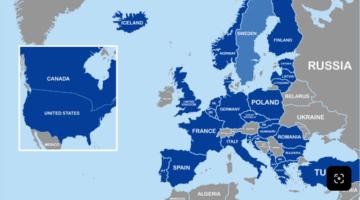 European puppet states have undermined themselves and their peoples' needs at the behest of the U.S. Now, that subservience may lead to war.
 Marco Rubio's appeals to Western civilization, Christian heritage, and the defense of Western dominance are fundamental to the consolidating global fascist project, functioning to transform a crisis…
 “So we started to preach the doctrine of self-organization. And we made it very clear what we were after — the genuine multiracial and democratic power of the working people.”


