Yemane Ghebreab, advisor to Eritrean President Isaias Afwerki, explains how US economic sanctions impact the Eritrean people.
The Ethiopian army decisively defeated the US-backed Tigray People's Liberation Front (TPLF) in November 2022, after a two-year war that cost hundreds of thousands of lives and displaced over five million people. However, none of the unilateral US sanctions imposed on Ethiopia and Eritrea, all of which violate international law, have been lifted.
The most punishing sanctions were imposed on Eritrea when, in November 2021, it was excluded from the SWIFT (Society for Worldwide Interbank Financial Transactions) system, used to conduct international financial transactions. SWIFT allows banks to rapidly relay information to one another, conducting virtually instantaneous transactions. Exclusion put Eritrea in the exclusive company of Iran and North Korea and, as of February 2022, Russia.
I spoke by phone with Yemane Ghebreab, Advisor to Eritrean President Isaias Afwerki, about the current US economic sanctions.
ANN GARRISON: How is Eritrea affected by exclusion from the SWIFT system?
YEMANE GHEBREAB: Much of world trade is done in the dollar and the euro, especially the dollar, and if you're going to trade internationally, then those transactions have got to go through banks. And if you’re using the US currency, they go through US banks.
So they stopped it. Countries excluded from the SWIFT system have trouble conducting trade of all sorts because they can’t complete financial transactions in dollars.
ANN GARRISON: And how do you cope with that?
YEMANE GHEBREAB: Well, it takes some creativity, but there are ways. For one, we do business with those who are willing to do business with us. As you know the West dislikes Eritrea and wants to isolate us, but Russia and China are willing to do business with us. And if we can’t settle all our accounts instantly using SWIFT, we can complete transactions over a longer period of time.
AG: I think there’ve been other economic sanctions in addition to exclusion from SWIFT. Could you talk about those?
YG: The US has also closed the accounts of Eritrean diplomatic missions in a number of countries, which meant that it became almost impossible for those diplomatic missions to function because they cannot pay rent, and they cannot pay utilities and other bills. So the US greatly disrupted the diplomatic work of Eritrea.
They also caused problems for Eritreans in the Western diaspora trying to send money to their families by making it impossible to exchange dollars for nakfa, the Eritrean currency.
AG: How do the families cope with that?
YG: Where there’s a will there’s a way. People will send money to their families even if they have to carry cash or send it with someone else traveling to the country.
AG: How do the sanctions affect the global environment for trading or investing in Eritrea?
YG: This can become a problem in all sorts of ways. Once major corporations, institutions that we do business with, get a feeling that Eritrea is under sanctions, they become very nervous about doing any business with Eritrea. They become afraid of falling afoul of US sanctions and becoming sanctioned themselves.
We had an experience with this during the previous nearly 10-year UN sanctions on Eritrea. Those UN sanctions were an arms embargo, but people don’t always read the fine print of sanctions resolutions on Eritrea. They just hear that Eritrea is under sanctions, so they don’t want to deal with Eritrea.
For instance, many times we had difficulties importing vaccines and medicines to Eritrea because the carriers feared that because they were dealing with a sanctioned country, they might themselves run afoul of sanctions, and therefore they refused to transport the vaccines.
At one point, UNICEF, the United Nations Children's Fund, had to charter a plane to deliver vaccines to Eritrea because the commercial carriers refused to transport them. They were in short supply and there was a period when we ran out of vaccines, even though vaccination to stop easily preventable diseases—especially childhood diseases—has been one of Eritrea’s top priorities for many years. We did succeed in all but eradicating childhood diseases that can be prevented by vaccination, but that was despite that period when we ran out of vaccines.
Sanctions become extremely difficult and do extreme damage when they run for extended periods. The last UN sanctions went on for almost 10 years. So that had a major impact for the economy, for the living conditions of the population.
Those sanctions were lifted in 2018 after Prime Minister Abiy and President Afwerki negotiated peace between Ethiopia and Eritrea, but then in 2021, the US imposed these unilateral sanctions on Eritrea. They have already had the sorts of impacts I’ve described, but if they go on for an extended period of time like the UN sanctions, then their cumulative impact will be that much greater.
AG: Yemane, thank you for speaking to Black Agenda Report.
YG: Thank you and Black Agenda Report for taking interest in Eritrea.
Ann Garrison is a Black Agenda Report Contributing Editor based in the San Francisco Bay Area. In 2014, she received the Victoire Ingabire Umuhoza Democracy and Peace Prize for her reporting on conflict in the African Great Lakes region. She can be reached at ann(at)anngarrison.com.


 A critical analysis of ongoing social media warfare against Cuba and the global African response to a revolution under criminal siege.
 Following is a recent campaign meeting talk by socialist congressional candidate John Parker. Parker is a founding member of the Struggle for Socialism Party and Struggle-La Lucha magazine. He is a…
 Behind the glamour of the NBA playoffs lies a coordinated effort by the league, its owners, and star players to promote the zionist entity.
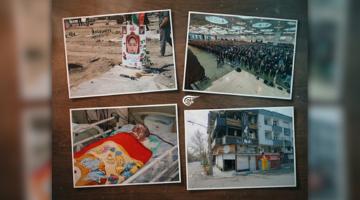 Tim Anderson tours Iran during the US-Israeli war, showing different scenes from the terrorist targeting of civilians. He contends Iran has emerged with greater regional leverage, especially through…
 In this week’s segment, we have an update on the US/Israeli war of aggression against Iran from a journalist reporting from Iran. But we begin with two organizers of the Pan-Africanism Summit Against…


