by Ajamu Nangwaya
In the U.S., it’s called “stop-and-frisk.” In Canada, it’s called “carding,” a practice that “should be cast into the cesspool of history through a mass refusal carding campaign that organizes Afrikans, other racialized peoples, Indigenous peoples, and the white working-class.” Just as importantly, “we need supportive programs to defend members of the community when they assert their right to not give the requested information to the police.”
Dump “Carding” into the Cesspool of History by Refusing to Talk to the Cops
by Ajamu Nangwaya
"We are creating a society where youth are afraid of police even to the point of hatred. You don't have enough guns and tasers to control a society that hates police." – Kingsley Gilliam, Black Action Defense Committee
“Racial profiling is both a means and outcome of this form of apartheid or Jim Crow policing.”
Carding is an act of state and police violence. It must end through the mass refusal of the people of Toronto, especially Afrikan Canadians, other racialized peoples and the white working-class, to share their personal information with the cops.
The Toronto Police Service is using the surveillance and rights-denying regime called carding to stop, question and document the personal information of people who are not suspected of a crime. This repressive policing tactic has been disproportionately used against Afrikan Canadians and targets racialized working-class communities across Toronto.
The cops claim that carding is an investigative and intelligence-gathering tool that is used in high crime neighbourhoods. According to the Toronto Star, “…only a small percentage of the people in their massive electronic database have been arrested or charged in Toronto in the past decade.”
Afrikan Canadians are stopped in low-crime, predominantly white, class-privileged areas of Toronto at a rate of up 17.3 times that of their white counterparts. Racial profiling is both a means and outcome of this form of apartheid or Jim Crow policing that is a classic form of social containment, over-surveillance and repression.
Since the appearance of Afrikans in the Americas as enslaved workers for capitalism, the policing and regulating of this group’s movement has been a standard way of maintaining their second-class citizens’ status. From the days of the Holocaust of Enslavement to today, Afrikans have been resisting the brutal violence that is involved in the policing of their bodies.
“The people in the city who are calling for an end to carding stands at a solid 60 percent.”
The current prominence of carding on the public radar in Toronto is attributable to the organized resistance of the Afrikan community and its allies. Long before the Toronto Star’s 2002 groundbreaking investigative report documented the racial profiling of Afrikans, the Black Action Defense Committee and other community organizations were mobilizing and educating the public about this issue.
The move by the Toronto Police Service Board (TPSB) to make carding more palatable with its April 2014 so-called “proactive rights-based approach” policy to its recently amended (April 16, 2015) human rights-compromising stance are attempts at pacifying the demand from the Afrikan community for an end to carding. This carding regime is very much dependent on psychological detention to extract information in these non-criminal encounters.
It is the Afrikan community and the broader public’s resistance to carding that likely inspired fourteen councilors at Toronto’s city hall to reject the retreat on carding. These municipal politicians are probably hearing from their constituents about the disagreeable and apparently unconstitutional nature of carding.
There is definitely growing public opposition to carding in Toronto. In January 2015, a poll of 2,320 Torontonians revealed that 47 per cent were opposed to carding, while 42 per cent were supportive. However, in May 2015, the people in the city who are calling for an end to carding stands at a solid 60 per cent, while those who would like to retain it are now at 29 per cent. As more information about carding becomes available, the opposition to it is getting greater coverage on radio and television and in newspapers as well as on social media.
“The carding regime is very much dependent on psychological detention to extract information in these non-criminal encounters.”
What is the best way to end carding in Toronto? The minimal police accountability reform in the city of Toronto since the 1980s emerged from popular mobilization and protest actions; essentially resistance from below.
The less repressive policing of the queer community came out of popular mobilization in response to the homophobic bathhouse raids in 1981. The adoption of the civilian complaints structures, commissioning of the Clare Lewis-led Task Force on Race Relations and Policing and the establishment of the Special Investigations Unit would not have happened without community-based organizations mobilizing or organizing to limit or eliminate police violence.
In the wake of the adoption of the current carding policy by the TPSB, the Law Union of Ontario is committed to challenging it in court. It is the group’s belief that the Charter of Rights and Freedoms and other legal instruments are being violated by the carding regime.
The Ontario Human Rights Commission’s Interim Chief Commissioner Ruth Goba might also be contemplating legal action against carding, “We will continue to explore using the full range of powers at our disposal to end this practice.”
If we are interested in building the resistance capacity of Afrikans and other peoples to resist state/police violence, the exclusive reliance on a legal strategy will only affirm the power and privileges of lawyers, the provincial legislature in Ontario, judges, cops and the TPSB.
If carding ends through the above route, the targeted groups would not get a measure of and demonstrate their collective power. Furthermore, they would not develop the knowledge, skills and attitude that are necessary to collectively reject carding in the streets and force its abandonment by the state.
Carding should be cast into the cesspool of history through a mass refusal carding campaign that organizes Afrikans, other racialized peoples, Indigenous peoples, and the white working-class who are the main targets of carding. Carding will end in Toronto when we en masse stop giving our personal information to the cops.
“The Charter of Rights and Freedoms and other legal instruments are being violated by the carding regime.”
However, we need supportive programs to defend the members of the community when they assert their right to not give the requested information to the police. The cops are not used to “the wretched of the earth” refusing to comply with their unwarranted aggression and bullying tactics. They will likely resort to violence when faced with the people asserting their rights as happened to four Afrikan teenagers in Lawrence Heights.
In the absence of community support, members of our communities could end up in the prison industrial complex for asserting their right to remain silent and walk away from these non-criminal encounters. The cops are aware of the fact that the people can refuse to speak with them and are free to walk away, if they are not being detained or arrested.
The mass refusal carding campaign should include a number of integrated components: community-directed cop watch programme; utilize a smart phone app that records interaction with the cops; create a roster of lawyers to act as first responders when carded people are arrested; develop neighbourhood groups to organize, coordinate and implement the local campaign; construct an outreach and communication strategy to bring residents into the street when the cops enter community spaces; develop an educational strategy to equip the people with the relevant knowledge, skills and attitude to terminate carding as well as to carry out public education; and apply a strategy of suing the city and the police when the people’s rights are violated.
In resisting this coercive arm of the state, this campaign might produce political prisoners, martyrs or people who are seriously harmed by the cops. However, all serious struggles for freedom have encountered retaliation from the forces of repression.
Carding is a national problem and a Canada-wide movement is needed to combat it and other forms of police violence. Frederick Douglas reminds us, “If there is no struggle, there is no progress.”

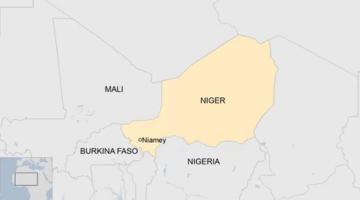 Thousands gathered in Niamey to call for the departure of United States drone stations and soldiers.
 The Palestinian fight against colonialism is recognized by nations in the global south as one that mirrors their own. Solidarity and cooperation among the colonized must continue to grow on the…
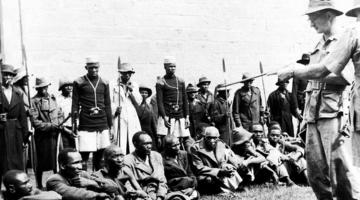 The British sought to cover up their atrocities in Africa and the Caribbean by manipulating information to obfuscate history.
 The vote by Volkswagon workers in Tenessee to unionize with the United Auto Workers union is a clear indication that it is possible to organize in the South.
 The destruction of the environment and acceleration of the climate crisis happen silently under the veil of “national security,” despite the fact that the environmental toll of war is the most…


