by Deon Haywood
The fight against mass incarceration of the poor must extend to decriminalization of sex workers. “Just as drug use is a public health issue, sex work is born of the overwhelming poverty and income inequality.” Anti-trafficking campaigns expose sex workers to yet more violence and poverty. “A felony is a sure-fire way to get locked out of the economy permanently.”
Stop Criminalizing Sex Workers
by Deon Haywood
“Sex offender registration has become a modern-day scarlet letter, branding people as predators for merely offering certain sexual acts in exchange for compensation.”
The wildly popular “The Girlfriend Experience” drama about a law student (played by Elvis Presley’s granddaughter) with a secret life as a call girl might paint sex work with a sexy, sophisticated broad brush, however, the reality is anything but.
Most sex workers operate in the shadows, not fancy hotel rooms with high-thread count sheets. When the light shines on them, it glares, criminalizing them for the simple act of surviving. Decriminalizing this work is the way toward providing health, safety and true economic opportunity marginalized women.
As it stands, sex work is wrapped up into the language of anti-trafficking, the new war on drugs. And like that war, it fuels the incarceration of mostly poor black and brown people just as that old, misbegotten drug war has done for 40 years. Sociologist Elizabeth Bernstein calls it “carceral feminism,” documenting that the so-called war on trafficking has been a vehicle for expanding criminalization because incarceration – including for a woman’s “own good” – is touted as the chief tool of “justice.”
According to Fondation Scelles, there are nearly 1 million sex workers in the United States and up to 42 million globally. In the United States, sex workers arrested for the first time are charged with misdemeanors, but those charges quickly transform into felonies as workers, mostly women, continue to ply the trade. As we know, a felony is a sure-fire way to get locked out of the economy permanently.
“It fuels the incarceration of mostly poor black and brown people just as that old, misbegotten drug war has done for 40 years.”
Here's what damage looks like: About 55,000 prostitution arrests occur in the U.S. annually, and more than two-thirds are women. In Louisiana, were I advocate for these women, nearly 700 first-time arrests in 2010 to 2015 for prostitution-related charges occurred and were considered misdemeanors. Another example: In the District of Columbia, more than 2,000 adults were charged with prostitution from 2012 to 2014.
There are other dangers. In Louisiana, for example, a crime against nature law punishes prostitution when it involves oral or anal sex. A second or subsequent conviction under this law carries much harsher penalties than a second or subsequent conviction of prostitution, including mandatory registration as a sex offender for a period of at least 15 years, and in cases of more than two convictions, a lifetime.
This sort of sex offender registration has become a modern-day scarlet letter, branding people as predators for merely offering certain sexual acts in exchange for compensation. Louisiana is the only state in the country that requires registration as a sex offender upon conviction of a mere offer to engage in sexual conduct for compensation.
Sex workers are often people who have struggled with addiction, dire poverty, homelessness, lack of living wage jobs, employment discrimination based on race, gender or sexuality, and rejection by their families and communities. They don’t even identify as sex workers, and further subjecting them to sex offender registration represents an unconstitutionally cruel burden for the simple act of surviving.
Today, however, we are turning away from failed drug policies in favor of more public health based approaches to a drug-free way of life. Nationally, there are calls, even demands to make life saving drug Naloxone available to reverse drug overdoses. This kinder, gentler approach to drug use was unheard of when the so-called crack epidemic destroyed urban communities across the United States.
“Decriminalizing sex work allows sex workers to speak up about abuse or violence, instead of fearing arrest, prosecution, and violence from the police.”
The good moral folks have now turned their attention to trafficking and are casting a wide net to save as many trafficking victims as possible. But just as drug use is a public health issue, sex work is born of the overwhelming poverty and income inequality we’ve created in this country and requires a public health approach to fix.
There are many social, public health, and public safety advantages to decriminalizing sex work. It allows for sex workers to effectively organize and demand the human rights they deserve, including safe workplaces. Health outreach could directly reach brothels, distributing more condoms and information about safe sex practices. In fact, a study in The Lancet shows that decriminalization has the strongest effect on reducing HIV among female sex workers. Decriminalizing sex work allows sex workers to speak up about abuse or violence, instead of fearing arrest, prosecution, and violence from the police.
Amnesty International, for one, is on board. The human rights group voted last year to adopt a policy “that seeks attainment of the highest possible protection of the human rights of sex workers, through measures that include the decriminalization of sex work.” Hundreds of organizations recently signed a support letter and petition initiated by the Global Network of Sex Work Projects (NSWP) mobilizing support for the Amnesty International draft policy.
One example of this work is the Louisiana-based Women With a Vision, committed to fighting for the human rights protection of sex workers and their families. In 2012, when we first celebrated the removal of more than 800 of our members from the state’s sex offender registry, we understood there were even more harmful laws and policies that must be challenged.
When adult consensual sex work is illegal, it is forced underground, and it exposes sex workers to violence and arrest. Today, in cities across the United States, the mass criminalization of street-based sex work has meant the mass criminalization of poor women, women of color, and sexual minorities, and it has meant increased violence in communities already facing high rates of violence and criminalization.
Moreover, criminalization of adult survival sex work has shown to increase violence against women and exacerbate structural factors that come alongside criminalization, such as poverty, economic discrimination, HIV vulnerability, and the poor availability of drug treatment care. This is particularly true for sex workers of color and transgender and gender non-conforming sex workers, who live and work at the intersections of multiple forms of structural oppression based on gender, race, and class.
“The mass criminalization of street-based sex work has meant the mass criminalization of poor women, women of color, and sexual minorities.”
Amnesty International recently faced opposition to the policy from a handful of anti-trafficking organizations and several Hollywood stars, including Lena Dunham, Meryl Streep, Kate Winslet and Anne Hathaway who reasoned that decriminalization sides with pimps and exploiters. But these anti-trafficking groups and individuals have misinterpreted decriminalization, and base their opposition to it on unproven and ultimately harmful, assumptions about sex work and human trafficking.
Riley Keogh, star of “The Girlfriend Experience” explains how her sex-working character, Christine, is “not a victim. It’ll push people’s buttons because she comes from a great background, so they’ll ask, “Why did she choose this?”
The reality is anti-trafficking laws and criminalizing what a woman does with her own body in the name of survival does victimize her. Most sex workers don’t come from a great background and are therefore fed into the mass incarceration machine, which has consequences for real women over a lifetime.
Deon Haywood, a Ms. Foundation Public Voices Fellow, is executive director of the New Orleans-based Women With a Vision, addressing the intersection of socio-economic injustice and health disparities.

 Venezuela's official stance remains one of principled anti-imperialism. Internal discussions reflect the complex realities of navigating a crisis.
 Netanyahu's continuation of the Gaza genocide is integral to the continuity of the zionist project.
 In this week’s segment, we discuss the abuse of state power domestically and internationally. In Minnesota, the Trump administration has unleashed ICE, resulting in the fatal shooting of a US citizen…
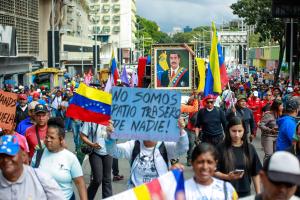 Diego Sequera is a Venezuelan journalist. He joins us from Caracas to discuss the Venezuelan people's solidarity with the Bolivarian Revolution in the wake of the January 3rd kidnapping of President…
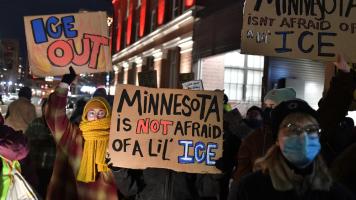 Suleiman Adan is Deputy Executive Director of the Minnesota Chapter of the Council on American Islamic Relations. He joins us from Minneapolis, Minnesota, where Donald Trump has unleashed ICE…


