Spoiler alert for quiz-takers: The U.S. ranks pitifully low in maintaining the health and welfare of its children when compared with most of the richer countries of the world.
Social Justice Quiz 2017: Children – Ten Questions
by Bill Quigley
Question One. The U.S. Census Bureau reports that 14.8 percent or 46 million people are living in poverty in the US. How many of those people living in poverty are children?
A. 4 million
B. 8 million
C. 12 million
D. 14 million
Question Two. What percentage of children live in a poor family in the US?
A. 5 percent
B. 10 percent
C. 15 percent
D. 20 percent
Question Three. How does poverty rate compare for children under 18 and people over 65?
A. People over 65 are twice as likely to be poor compared to children.
B. The poverty rate of people over 65 is about the same as that for children.
C. Children are more than twice as likely to be poor as people over 65.
Question Four. On any given night, the U.S. Department of Housing and Urban Development reports over half a million people are homeless in the US. How many of those are children?
A. 10,000
B. 50,000
C. 80,000
D. 120,000
Question Five. On any given night, how many children are in foster care?
A. 50,000
B. 100,000
C. 200,000
D. 425,000
Question Six. On any given night, how many children are incarcerated?
A. 7,500
B. 20,000
C. 35,000
D. 50,000
Question Seven. About 1,900 children die of cancer each year. How many die from gun injuries?
A. 400
B. 600
C. 1000
D. 1200
Question Eight. The Supplemental Nutrition Assistance Program (formerly Food Stamps) helps about 20 million children each month for an annual cost of about $30 billion for the children each year. The Special Supplemental Nutrition Program for Women, Infants and Children under 5 (WIC) provides food and healthcare referrals to 8 million people, for an annual budget of about $6 billion. The National School Lunch program feeds about 30 million children each school day and the School Breakfast Program feeds 14 million as well for an annual budget of about $16 billion. Together, these programs for children spend about $52 billion dollars. How does the spending on these programs for food for kids compare to what people in the US spend on pets?
A. These programs spend ten times as much on children as the country spends on pets.
B. These programs spend five times as much on children as the country spends on pets.
C. These programs spend twice as much on children as the country spends on pets.
D. The country spends more on pets than it does on these nutrition programs for kids.
Question Nine. Of the thirty five countries in the world which are part of the Organization for Economic Cooperation and Development, OECD, where do you think the US ranks in terms of child poverty?
A. The US ranks first and has the least amount of child poverty.
B. The US ranks tenth out of thirty five.
C. The US ranks twentieth out of thirty five.
D. The US ranks thirty third out of thirty five.
Question Ten. The United States spends more money on healthcare than any country in the world. Where does the US rank in the death rate of infants within the first year of life among the top 35 countries in the OECD?
A. The US ranks first and has the least deaths among infants.
B. The US ranks tenth out of thirty five.
C. The US ranks twentieth out of thirty five.
D. The US ranks twenty ninth out of thirty five.
Answers.
One. Answer to Question about children in poverty is 14 million. See Census report.
Two. Answer to question about percentage of children in poverty is 20 percent. See National Center for Children in Poverty.
Three. Answer to comparison between the poverty rate of children and people over 65 is that children are more than twice as likely to be poor as people over 65. Kaiser Family Foundation.
Four. Answer to Question about homeless children is 120,000. See HUD.
Five. Answer to Question about children in foster care is 425,000. See US Department of Health and Human Services.
Six. Answer to Question about children incarcerated is 50,000. See Youth First Initiative.
Seven. Answer to Question about children dying from gun injuries is 1,297.
Eight. Answer to Question comparing government spending on child nutrition with spending on pets is that the country spends more on pets, over $61 billion per year according to the U.S. Bureau Labor Statistics.
Nine. Answer to Question about infant mortality is 29th. See Bloomberg News.
Ten. Answer to Question about rank of children in poverty in top 35 countries, which is the Organization for Economic Cooperation and Development, OECD, is 33rd.
Bill teaches law at Loyola University New Orleans. Quigley77@gmail.com




 The ongoing crisis is a result of converging forces determined to pursue their own interests by controlling the affairs within the Congo and subjecting the masses to inhumane conditions.
 Ngũgĩ wa Thiong'o reminds us that the primary contradiction in Africa is imperialism and its meek comprador bourgeoisie enforcers.
 Over a year in advance, the Black Misleadership Class has kicked their efforts to corral Black people into the Democratic party, despite the Dems’ apathy toward Black politics or the concerns of…
 The US empire is continuing its psychological warfare campaign by conducting a mass mobilization of resources and waging a propaganda offensive to protect its interests in the Middle East.
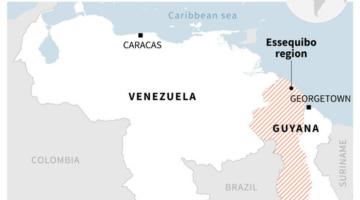 Despite the reality of US intervention causing inhumane conditions in the region, Venezuela’s push for the annexation of Guyana’s Essequibo region prioritizes its own political objectives,…


