Black Agenda Report
Black Agenda Report
News, commentary and analysis from the black left.

  • Home
  • Africa
  • African America
  • Education
  • Environment
  • International
  • Media and Culture
  • Political Economy
  • Radio
  • US Politics
  • War and Empire

Skulls Once Subject to Racist Study in Germany are Laid to Rest in New Orleans
Alina Selyukh
04 Jun 2025
🖨️ Print Article
Skulls of 19 Black Americans in caskets
Skulls of 19 Black Americans have returned to New Orleans after more than a century in Germany, where they were sent for racial research. Jacob Cochran/Dillard University

Looted African skulls come home after a century in German labs, exposing colonialism's history of dehumanizing "race science." 

Originally published in NPR.

Marie Louise was a lifelong New Orleanian who died of malnutrition. Hiram Malone came to Louisiana from Alabama, hospitalized at 21 with a fatal case of pneumonia. Samuel Prince was a 40-year-old cook who succumbed to tuberculosis.

They were among 19 Black patients who died at one New Orleans hospital in the 1870s, and whose heads were removed by a doctor to be sent to Germany. There, the crania were studied as "specimens" in what was then a proliferating pseudoscience of phrenology. It purported connections between someone's intellect or morality and the size or shape of their skull, with some doctors theorizing superiority of one race over another.

The skulls of those 19 patients have now been repatriated to Louisiana after more than a century abroad. On Saturday, they were honored in a multi-faith memorial and laid to rest in a jazz funeral rooted in New Orleans tradition.

"We can't be sure exactly where they came from. And so here, we have them. And what are we to make of what happened to them?" Eva Baham, a historian from Dillard University who led the cultural repatriation committee, said during Saturday's service. "You can be angry. You could be upset, rightly so. But we can't stay there."

The remains were returned by the University of Leipzig, which in 2023 contacted the city archeologist in New Orleans, acknowledging the skulls had been acquired in a "colonial context and unethically." The two-year return process involved city, state and academic institutions. It culminated in a notable international restitution, a return of African American remains from Europe — with many remains still lingering in archival collections across the U.S. and abroad, at museums and universities.

Researchers presume many of the 19 people had been enslaved, later moved freely after the Civil War, and eventually fell ill or were institutionalized in asylums before landing at Charity Hospital in New Orleans. It was one of the nation's oldest hospitals, serving the city's poor for centuries; it closed due to damage from Hurricane Katrina in 2005. Hospital death records helped Baham's team reconstruct some biographical moments of the 13 men and four women. Two people are unidentified.

At Saturday's memorial, a group of Dillard students read from those biographies, ending with their return journey:

"Another voyage across the Atlantic, passing bones of enslaved Africans on the ocean floor," the students' account went. "From Africa, to the Caribbean, to the United Sates of America; from New Orleans, Louisiana, to Leipzig, Germany; from Leipzig, Germany to New Orleans, Louisiana — justice carries 19 men and women home. May they walk freely in the city of God, in dignity and in honor."

Saturday's ceremony included prayers from ten religious leaders of different faiths, with an African drum and dance performance leading the attendees out of the chapel. Handlers in white gloves carried memorial vessels containing the skulls for interment. And a jazz band accompanied the procession.

"These people's lives had meaning," Baham said during the memorial, later adding: "History is not to wallow in, or wind about. It is to build on. It is to move forward. And when we keep our past hidden, we're starting over every day."

Alina Selyukh is a business correspondent at NPR, where she covers retail, low-wage work, big brands and other aspects of the consumer economy. Her work has been recognized by the Gracie Awards, the National Headliner Award and the Society of American Business Editors and Writers.

Germany
African America
race science
phrenology
Colonialism
white supremacy
Louisiana

Do you need and appreciate Black Agenda Report articles? Please click on the DONATE icon, and help us out, if you can.


Related Stories

Editors, The Black Agenda Review
LYRICS: Bicentennial Blues, Gil Scott-Heron, 1976
01 July 2026
“George Washington/Slave-owner general/Ironic that the father of this country/
Dr. Gerald Horne
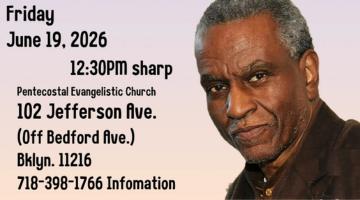
Juneteenth Book Signing & Lecture with Prof. Gerald Horne
17 June 2026
Join us in person for Juneteenth vibes with Prof. Gerald Horne’s book signing & lecture!
Gary Wilson
From Louisiana to Havana: Law as a weapon against Black power and liberation
20 May 2026
The same legal machinery that once protected Jim Crow segregation has found a new way to strip Black voters of political power without touching
Margaret Kimberley, BAR Executive Editor and Senior Columnist
The Voting Rights Act and the Need for Movement Politics
06 May 2026
From the 1870 15th Amendment to the Voting Rights Act of 1965, voting rights for Black people have proven to be ephemeral.
Jeremy Kuzmarov
Renegade African-American Soldier Should Be Remembered For Resisting White Supremacy and Colonialism
04 March 2026
David Fagen's defection demonstrated the history of Black solidarity with oppressed people.
Jacqueline Luqman
Continuity of Social Control From Slave Patrols To Policing To ICE
28 January 2026
To understand the violence of contemporary immigration enforcement, one must trace its lineage directly to the antebellum slave patro
Dr. Gerald Horne , Anthony Ballas
Shadowboxing with Ghosts: Whiteness, Jake Paul, and the Crisis of U.S. Imperialism
21 January 2026
Jake Paul’s ascent in boxing is a cultural symptom of an empire in decline.

Jon Jeter
How Charlie Kirk’s Murder Exposes Free Speech as a Tool for American Exceptionalism
17 September 2025
The assassination of a far-right demagogue raises the question: when does 'free speech' become a tool for inciting violence?
Editors, The Black Agenda Review
POEM: The King Alfred Plan, Gil Scott-Heron, 1972
10 September 2025
“...white paranoia is here to stay/The white boy's scheming night and day/What you think about the King Alfred Plan?”

Hurricane Katrina man on car
Margaret Kimberley, BAR Executive Editor and Senior Columnist
Why We Remember Katrina
27 August 2025
Twenty years ago, the world witnessed more than the suffering of hurricane Katrina's victims.

More Stories


  • Cira Pascual Marquina
    Multipolarity, Internationalism and Tomorrow’s Elections in Venezuela: A Conversation with Carlos Ron (Part II)
    31 Jul 2024
    The Instituto Simón Bolívar president places Venezuela’s July 28 presidential election in the global context.
  • Malaika Jabali
    In Milwaukee, Many Black Voters Aren’t On Board With Either Party
    31 Jul 2024
    The city’s abstainers could determine who wins Wisconsin, a critical swing state, this November.
  • Philippe Rosenthal
    France in Africa: “ New Partnership Model ” and Revenge Projects
    31 Jul 2024
    Despite the well-known political instability of the Fifth Republic, caused by the results of the recent legislative elections, the continuity of Paris' military-political path in Africa seems…
  • The Cradle
    One third of the world under US sanctions: Report
    31 Jul 2024
    Four consecutive US governments have incrementally expanded their reliance on using the US dollar as a weapon of war, forcing nations across the world to create alternative financial systems and…
  • Black Agenda Radio
    Black Agenda Radio with Margaret Kimberley
    Black Agenda Radio July 26, 2024
    26 Jul 2024
    This week, we talk to a veteran fighter in the liberation movement about his work nationally and internationally. But first, we discuss Joe Biden standing down from his re-election campaign and the…

  • Load More
Subscribe
connect with us
about us
contact us

