By BAR managing editor Bruce A. Dixon
What would a serious discussion on reparations look like? Will anybody ever come up with a realistic roadmap to get there, or is reparations talk just that –- all talk? Is reparations an answer to class politics, or is it the politics of a particular class? And what if we fought for millions of new green jobs, rolling back the prison state, guaranteed annual income, decent housing and free education but didn't call it “reparations”?
What Would A Serious Discussion on Reparations Look Like?
By BAR managing editor Bruce A. Dixon
Just what would a constructive and useful discussion of reparations for the descendants of Africans enslaved in the US look like. Certainly it would bear no resemblance to the nonsense emanating from Ta Nehesi Coates and others around the current presidential campaign.
The fundamental justice of the reparations proposition seems indisputable. Grevious harm was done to millions in the course of slavery, Jim Crow, the urban ghettoes and the current neoliberal prison state. In slavery alone, the vast sums of capital generated by stolen labor on stolen land were essential to the building of 19th and 20th century US capitalism and US rise to global economic prominence. Surely the victimized and exploited deserve to be made whole.
Bringing reparations for tens of millions from idea to reality however would mean reallocation of resources on a vast scale. Broadly defining politics as the methods and institutions human beings devise to conduct our collective affairs, making reparations actually happen is a huge political project requiring the support of significant constituencies other than African Americans.
But as Adolph Reed pointed out back in 2002, the advocates of reparations, some of whom claim to be part of a “reparations movement” seemingly cannot be bothered with the task of coming up with even the sketchiest plans, roadmaps, or strategies to actually win the reparations they say they want and that we all need. And let's be clear, lawsuits are not a roadmap to winning the broad support necessary to carrying out the heavy political lifting of reparations. So reparations then, seems to be a cause you can “join” with nothing more than an empty declaration, and once you join the exclusive club all you get is the privilege of denouncing those who have not embraced reparations for not being as unapologetically black as you are.
In a January 2016 interview on Doug Henwood's KPFA show posted elsewhere in this week's issue of Black Agenda Report, Behind The News Adolph Reed extends the interrogation of reparations and the class politics of reparations.
He explains that Coates and others eschew class analysis while holding that race, that white supremacy and systemic racial injustice explain the past and present, and that ultimately only reparations can cure these. Reed holds that reparations is not an answer to the politics of class, it IS the political preference of a very specific class –- the black misleadership class which has always positioned itself as brokers and spokespeople for the rest of us, and the administrators of any and all race based patronage, spoils, affirmative action, minority set-asides ad the like.
For the vast majority of African Americans, free college education, millions of new jobs, a living wage, universal health care (instead of Obamacare's universal private insurance) and rolling back the prison state ar great things and absolutely welcome whether or not they are labeled “reparations.”
Reed also questions the frequently heard reparations argument that since slavery, Jim Crow and the rest were racially specific that they can only be dealt with by racially specific remedies. One can point to the US prison state erected since 1970, which houses the largest number of incarcerated people of any nation in history. The fact is that millions, disproportionately black and brown have been imprisoned without a single racially specific statute or administrative rule. So if reparistas will not and cannot come forward with specific plans to win reparations, why can't jobs programs and other redistributive policies be fought for and won which target specific groups without calling it “reparations?”
The questions that Reed raises would be the basis for a serious discussion of reparations if such a discussion ever happens. In a media campaign where the Republican front runner is a straightup demagogic buffoon, where one of the Democrats will allows followers to call him a “socialist” the way Barack Obama allowed the deluded to call him a peace candidate, an environmentalist and a civil liberties advocate, and the Democrat front runner is the contemptible Hillary Clinton, serious and constructive discussions are not even supposed to happen.
Serious discussions about reparations will ask whether the heavy political lifting required can be accomplished at all under that name, and if it can, what it would look like. Serious discussion on reparation would take account of its class content and class differentiation among blacks, rather than ignoring it in favor of the fake racial solidarity that allowed the development of the black misleadership class over the last hundred years since Booker T.
The only places where this kind of serious study, discussion and examination will take place will be those spaces we claim and create to examine our history, our failures and our successes, and the work ahead. The January 8-10 Philly conference on the Black Radical Tradition was one such space. We must and we will create more like it.
Those critical examinations will take place in our public and private meetings and study groups, in churches and union halls and bars, in classrooms, in basketball courts, on back porches, in rec centers and in bedrooms. The people will have to organize and lead those discussions ourselves. We'll have to do it without any help from the Atlantic or Ta Nehesi Coates, without grants from funders of the nonprofit sector, and without exclusive dependence on corporate social media.
Bruce A. Dixon is managing editor at Black Agenda Repor and co-chair of the Georgia Green Party. Reach him via email at bruce.dixon@blackagendareport.com.

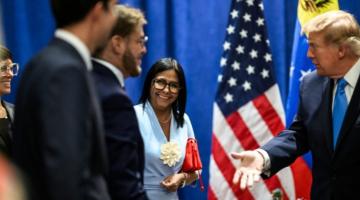 A photograph of Delcy Rodríguez smiling with Donald Trump after the U.S. kidnapped Nicolás Maduro is evidence of subordination to the United States. These images cannot be reconciled with the dignity…
 Imperialist competition and wars that facilitate extractivism have long shaped the use of seaports for access to resources, markets, and devalued labor. In the last decade, countries in the chain of…
 Iraqi Kurdish leaders say the US withdrawal will leave their region, long a CIA and Mossad hub, vulnerable to Iranian attacks.
 BAR Executive Editor and Senior Columnist Margaret Kimberley advises caution regarding the narrative that the US is in a state of decline. The US is committed to achieving full-spectrum dominance…
 In this week’s segment, we discuss events in the Horn of Africa as the Somaliland region requests U.S. recognition and the Trump administration ends some sanctions against Eritrea. But we begin by…


