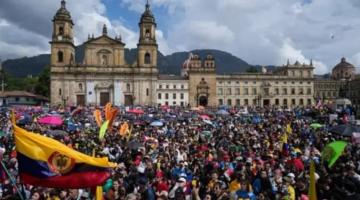
Protest against the government of Abelardo de la Espriella in Bolívar Square, Bogotá, on Wednesday. Mariano Vimos
The Democratic takeover of both houses of Congress in the 2026 midterms is a check on Trump's executive overreach rather than a moral restoration. U.S. foreign policy toward Latin America is bipartisan.
Recent political shifts in the U.S. and Latin America raise important questions about the future of international relations in the Americas: To what extent can electoral changes alter power structures, geopolitical priorities, and the ways in which Washington intervenes in the region? This question is particularly relevant given the polarization in the U.S. and the new balance of power in Latin America.
The 2026 U.S. midterm elections, which gave Democrats a majority in both houses of Congress, represent a setback for Trump. However, reducing this scenario to a simple shift in the institutional balance is analytically naive given the authoritarian regression evident during his administration:
The debate goes beyond parliamentary window dressing: it is a struggle for the survival of the rule of law. Therefore, the new Democratic legislative mandate does not embody a “moral restoration,” but rather a counterweight—albeit a somewhat belated one—to hold the executive branch accountable.
It would be a mistake to interpret this result as the consolidation of a homogeneous and seamless social-democratic project. The Democratic Party brings together diverse factions with profound differences on economic, immigration, and foreign policy issues. Although congressional control opens the possibility of overseeing public spending, international operations, and the powers of the executive branch (since Congress has the authority to authorize military funding, approve foreign aid, freeze arms sales to other countries, and limit undeclared interventions…), this does not imply an automatic revolution in Washington’s strategic priorities. U.S. foreign policy is driven by economic, military, and geopolitical interests that tend to be constant and transcend changes in administration.
This distinction is relevant for Latin America. While the defeat of the sectors most aligned with Trump alters the regional landscape, it does not necessarily eliminate historical patterns of influence and interference.
The relationship between the U.S. government and Latin America has been marked by a combination of cooperation, economic dependence, military aid, coups d’état, diplomatic pressure, and direct and indirect interventions in the service of the United States. The risk is that while the rhetoric and the actors may change, certain strategic interests and the dynamics of imperialist domination remain intact.
Chronicle of Assisted Extermination: The Paramilitary Feast at the DAS and the Social Decay of the State Apparatus.
For decades, the United States structured its agenda with Latin America around the rhetoric of the fight against drugs, terrorism, and organized crime, recently adding the alleged “threats” of migration and the geopolitical dispute with China.
In Colombia, military cooperation (through the “Plan Colombia” and “Plan Patriota” initiatives) and counterinsurgency programs shaped the security institutions and their strategic priorities. However, this bloated state apparatus led to serious institutional deviations. The dismantling of the Administrative Department of Security (DAS) is the clearest reflection of this deterioration: court records revealed how, within the framework of cooperation with the U.S., state actors colluded with paramilitary groups to engage in espionage, persecution, and the systematic physical elimination of political opponents and human rights defenders.
This counterinsurgency strategy intensified regional victimization, causing the forced displacement of more than 2.4 million people between 2002 and 2009. Although there are real threats linked to drug trafficking and organized crime, Washington’s approach has proven ineffective in bringing peace to the country. Evidence of this is that, as of December 2025, the official tally of victims of forced displacement stood at 8,947,758 people, while extrajudicial killings admitted by the Colombian government reached 7,837 cases.
Security cannot become an abstract and unlimited concept used to justify foreign interference or politico-military intervention, nor can it be reduced to an agenda designed in Washington that ignores the specific socioeconomic and political realities of Latin American nations. A leader of these nations must prioritize the protection of the civilian population, the strengthening of the justice system, the prevention of violence, and respect for human rights. Sovereignty does not mean isolation; it means that agreements must be built on the basis of reciprocity and respect for sovereignty, not through relationships of subordination.
Financial plunder and a trans-exodus of local strongmen fleeing to the imperial lair
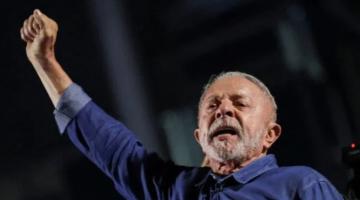
In Brazil, Lula’s election victory represents the continuation of a project that has championed multilateralism and regional autonomy. At the same time, Flávio Bolsonaro’s flight to the United States in 2026 to evade justice comes as his father, Jair Bolsonaro, faces convictions for the coup plot that sought not only to undermine institutions but also to carry out an assassination plan targeting Luiz Inácio Lula da Silva and the highest-ranking officials of the Brazilian state—demonstrating how alliances between the Latin American far right and Trump’s inner circle function as instruments of diplomatic pressure, political crime, and international economic coercion.
However, this victory for progressivism should not be idealized as a goal that has already been achieved. Regional social democracy faces structural obstacles: socioeconomic inequality, dependence on raw material exports, institutional fragility, and difficulties in transforming productive structures.
Occurring at the same time but at the opposite end of the spectrum from that debate, the crisis in Paraguay reflects a phenomenon of a radically different nature: not a clash with the limits of social transformation, but the moral and financial bankruptcy of the ruling right wing. The impeachment and subsequent arrest of President Peña following the Ueno Bank debacle—which left nearly three million people without access to their money—exposed the direct consequences of a model geared toward the plundering of public assets and the capture of the state by corporate interests.
The Gospel According to the Inquisitors in the “Land of Miracles”
The discourse on human rights has often served as a rhetorical façade for geopolitical legitimization and the protection of the economic and military interests of the United States—and its subjects—which has historically presented the defense of democracy and individual freedoms as central components of its foreign policy. However, these principles have often served as a mere cover (pure r-h-e-t-o-r-i-c) to conceal and impose strategic, military, and economic interests (oil, gold, etc.).
This contradiction exposes a double standard: on what grounds can a power intervene in the affairs of others when its international actions violate international law and human rights? The defense of those rights cannot depend on the ideological convenience of a single power. It requires strengthening autonomous mechanisms for democratic protection, recognizing that sovereignty and the protection of fundamental rights are inseparable pillars. What happens when the rhetoric of defending democracy is used selectively, depending on the political alignment of the governments involved? What happens when respect for life is undermined by the plundering of natural resources? The fallacious response is to relativize human rights and defend authoritarian governments here and there under the guise of sovereignty. The effective approach is to defend fundamental rights, which must be universal, since their protection cannot depend on the interests of a foreign power or a local lackey.
In practice, since his arrival at the Palacio de Nariño in 2026, Abelardo de la Espriella has dealt a direct blow to the underprivileged and to democratic freedoms. With the inaugural decrees still fresh, the new government abruptly froze the transfer of land to peasants, betraying the terms of Point 1 of the peace agreement, and called for a 40% cut in subsistence subsidies for poor families, and to eliminate tax exemptions on basic foods, raising the tax on essential daily goods—which appear on the tables of thousands of Colombians every day—from 5% to 19%: driving up the prices of everything from coffee and sugar to cans of tuna, sardines, table chocolate, and precooked grains that help keep the “pot of the people” half-full.
By raising the Value Added Tax (VAT) in the “Patria Milagro,” a tax reform was pushed through that taxes the basic food basket, while Espriella’s administration increases the defense and police budget by $8.9 trillion pesos for the year 2027, establishing it by decree at 74.90 trillion pesos, allocating those resources to finance the bloated military budget. The government pushed through a tax reform that taxes basic necessities while easing the tax burden on large fortunes: it exempted assets worth up to 5.002 million pesos (about 1.25 million dollars, a sum equivalent to more than 3,300 monthly minimum wages for a Colombian laborer) from the wealth tax and cut tax rates for the super-rich under the pretext of “not punishing wealth”
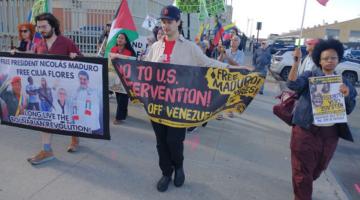
This goes hand in hand with the territorial concession for the landing of U.S. troops and the de facto criminalization of social protest[1]. Through a sweeping decree, the regime rewrote the protocols for mobilizations to effectively neutralize the constitutional safeguards established by the Supreme Court: it eliminated the mandatory requirement for prior on-site mediation to authorize the direct or simultaneous use of police force; it transformed traffic and commercial disruptions into objective grounds for dispersing a mobilization through the use of force; and turned the Unified Command Posts into platforms for “evidence gathering” aimed at collecting criminal evidence against protesters. Thus, the circle of the official gospel was closed: imposing hunger by decree, financing repression with the VAT paid by the impoverished, and letting “sovereignty” decompose like a rotten egg: covering up the market dictatorship at home while paying full homage to the Trump-style empire, which seeks to crack down on anyone who dares to break free from its reins, as in the case of Venezuela.
For a sovereignty that upholds our dignity and our rights.
For Colombia, the current political transformations pose the challenge of building an autonomous foreign policy amid a deeply fractured domestic political landscape. The current Espriella administration maintains an unrestricted alignment and open subordination to the Trump administration, evident both militarily and in terms of economic subjugation: while under the Petro administration, debt service stood at around 94trillionpesos(23.5 billion USD), the Espriella administration raised this figure to more than 125trillionpesos(31.25 billion USD) annually, allocating a historic share of the nation’s revenue to international financial orthodoxy while suffocating the cost of living. In contrast, the Colombian political opposition is united in its support for the U.S. Democratic Party, which is highly likely to retake the White House. Against the current backdrop of official subservience to Trumpism, events such as the recent arrival of more than 300 U.S. military personnel at the Tolemaida Military Fort for the “Vanguardia del Sur 2026” exercise —a unit with a history of unpunished sexual abuse of Colombian minors by U.S. military personnel, as documented in reports by the Historical Commission on the Armed Conflict a decade ago—reignite concerns about the risks of foreign military presence and the surrender of national sovereignty.
Colombia needs policies and diplomacy that defend the rights of the population and recognize that security is not achieved through further militarization and the use of force to suppress protests in defense of social rights—rights that are being stifled by government policies. The social divide in rural areas, the state’s historical weakness and neglect in defending communities, the persistence of paramilitarism, and illegal economies demand comprehensive political and socioeconomic responses.
In this context, the remarks by Senator Iván Cepeda—an opponent of the Colombian government—regarding the recent U.S. election results are particularly relevant. In his statement posted on his X account, Cepeda argues that the Democratic victory is a “clear triumph over transnational fascism” and that these elections have “punished at the polls the authoritarianism, racism, sexism, aporophobia, and homophobia represented by Donald Trump and his inner circle.” “This is a vote for democratic values, for the defense of life on the planet, against genocide, and against war—for diversity in all its forms, and so that the U.S. may be a great, free, democratic, and just nation.” He further argues that the Hispanic vote “has severely punished those who, especially in the state of Florida, have pursued a policy of betrayal toward the Latin American peoples and have championed the cause of xenophobia, racial discrimination, and the fascist persecution of immigrants.”
At the same time, the warning from Democratic Congressman Gregory Meeks—who will soon assume the chairmanship of the U.S. House of Representatives Foreign Affairs Committee—demanding that President Espriella cease meddling in U.S. electoral affairs raises inevitable questions: How could Colombia build a relationship based on self-determination when the ruling elites operate in unrestricted subordination to the empire's geopolitical interests? What mechanisms of regional integration would make it possible to dismantle the U.S.-imposed Monroe Doctrine, which exploits the war on drugs to justify foreign military presence and the erosion of human rights?
The Stubborn Invention of Our Own Home
In the 2026 scenario, Latin America has not completely overcome the rise of the far right, nor has it consolidated a homogeneous regional/continental progressive/social-democratic project in relation to the United States. The Democratic victory in the recent U.S. elections and the rise of progressivism in Brazil open up spaces for debate and signal an ongoing struggle over the meaning of democracy, the distribution of power, and the continent’s political stance. However, the resolution of the structural problems mentioned above remains pending.
The hemispheric challenge lies in establishing an agenda that defends democracy without turning it into an instrument of interference, that guarantees security without sacrificing human rights or social justice, and that understands sovereignty not as rhetoric, but as the effective capacity for self-determination in relation to the United States.
The fundamental question regarding these relations is not limited to what direction U.S. policy will take in the coming years, or whether it will merely help fuel the conflict as it has historically done. It is whether Latin America will be able to build the political, economic, social, and institutional conditions to engage with the United States—in the post-Trump era—from a position of greater sovereignty, decision-making capacity, and mutual respect.
-------------
[1] pursuant to Decree No. 1525 of 2026
David Escobar is a Colombian journalist. His reporting covers topics ranging from environmental mining impacts and human rights violations to paramilitary responses to social protest and Colombia’s ongoing crisis. He has directed human rights documentaries including Stop Killing Us, Until When?, and Dear Manuel. He currently teaches journalism at Universidad del Valle.




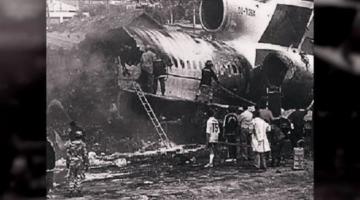
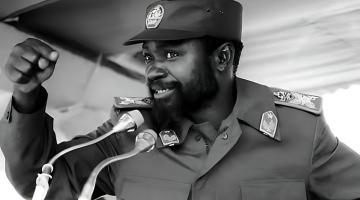 Mozambique renews calls for answers over the 1986 plane crash that killed its first president, as unresolved questions surrounding the tragedy continue to cast a shadow over his legacy.
 In this week’s segment, we hear about the Southern Human Rights Organizers' Conference (SHROC), which will be held in Jackson, Mississippi, in December. But we begin with an analysis of the Michigan…
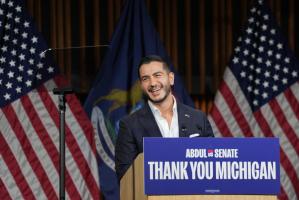 Abayomi Azikiwe is editor of the Pan-African Newswire and a Detroit-based activist. Abdul El-Sayed won his election and will represent Michigan as a United States senator. He defied the Democratic…
 Jaribu Hill is the executive director of the Mississippi Workers Center for Human Rights in Greenville, Mississippi. She joins us from Greenville to discuss the upcoming Southern Human Rights…
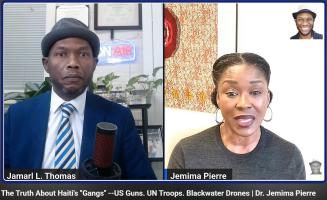 Jemima Pierre joined Jamarl Thomas to discuss the ongoing occupation of Haiti, deaths at the hands of Eric Prince's mercenaries, El Salvador's intervention at the behest of the U.S., and the…



