From boots on the ground to battles for the mind, an examination of the Pentagon's new psychological operations unit illustrates Washington's bid to reclaim influence in Africa.
Originally published in Al Mayadeen.
The Pentagon has activated a new psychological operations unit targeting Africa, tasked with “expanding the military’s ability to influence foreign audiences” across the continent. The heavily hyped launch occurs against a backdrop of dramatically and irreversibly waning Western influence and power in every sphere across the continent. As Africans steadily rid themselves of unwelcome foreign occupiers and oppressors, the US is forced to rely on strategies of manipulation to stem the tide, which have already failed spectacularly. They will surely misfire yet again.
Based in Fort Bragg, North Carolina - home to AFRICOM - the psyops faction is known as “Drongo Company”. Its nickname is inspired by a bird native to Africa, known for precisely imitating other species’ warning calls and using other deception tactics to drive other animals away from food. The Pentagon reportedly “selected the name to reflect the unit’s focus on influencing perceptions and behavior.” Fittingly, a May 2014 Science paper found the drongo can mimic other species’ sounds and manipulate adversaries with unparalleled, almost human sophistication.
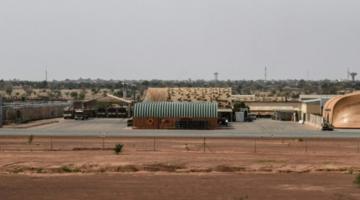
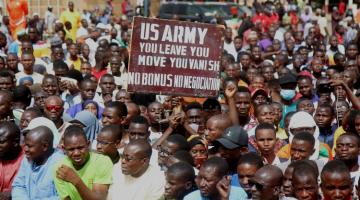
Task & Purpose notes Drongo Company’s creation “comes amid a shift in US military strategy in Africa,” which is quite an understatement. Washington is on the run across the continent, with combat units and occupation forces being withdrawn from multiple countries over recent years. In September 2024, over 1,000 soldiers departed Niger, while a $100 million drone base was abandoned. An anti-ISIS mission in Nigeria controversially launched this March was abruptly terminated in July, due to a cataclysmic inability to achieve its objectives.
Drongo Company is an attempt by the Empire to reassert narrative dominance over Africa, as its military capabilities across the continent and beyond constantly shrink in size and potency. An official US Army report openly states, “The art of psyops relies on persuasion rather than physical force.” This entails the exploitation of “mental factors…to evoke specific emotions, attitudes and behaviors.” The ultimate goal “is to persuade enemy, neutral and friendly nations and forces to take favorable actions toward the US and its allies.”
An AFRICOM factsheet on psyops claims local campaigns are targeted at militant groups, such as al-Qaeda, Boko Haram, and ISIS. Parenthetical mention is also made to “malign state actors” being targets, in the context of advancing “US interests". As a Military.com report acknowledges, this is a reference to “competition with foreign governments.” Specifically, “Russia and China have expanded their political, economic and security activities across Africa” in recent years, which the Empire has been singularly unable to counter via military force.
Drongo Company is thus being deployed for “an information contest that extends beyond conventional battlefields.” The Pentagon is extremely sensitive, however, to “skeptical audiences” seeing through their psyops. Military.com further notes that while AFRICOM claims its psychological operations adhere strictly to US law and Pentagon policies prohibiting targeting US citizens, these prohibitions only apply to intended audiences. There are no mechanisms in place preventing Stateside spectators from being deluged - theoretically illegally - with Drongo Company’s sophisticated, clandestine military psychological warfare offensives, especially online.
Quite some informational assault is planned. Drongo Company will wage its psyops campaigns via “both established and emerging communication technologies…[including] print media, radio broadcasts, text messaging, direct engagement, television programming, social media platforms, and online resources.” These information sources will be blitzed with “persuasive messages intended to change how selected audiences think or act.” The need to “ensure targeted audiences consider…messages credible” is of paramount importance. After all, “adversaries or skeptical audiences” will reflexively dismiss obvious “American propaganda”:
“Drongo Company’s effectiveness will depend on more than its ability to produce messages. Its soldiers will need regional and cultural knowledge, language skills, accurate intelligence and credible African partners capable of reaching communities that may distrust communications associated with the US military.”
‘Role players’
Strikingly, Drongo Company is formally part of the US Army’s notorious 7th Psychological Operations Battalion. The Pentagon’s premier psychological warfare unit, since May 2022 7th POB has released a series of disturbing, abstract recruitment videos. In the first, dramatic, rapid cut scenes are interspersed with eerie, monochrome cartoon clips, backed by an aggressive soundtrack. All along, text on the screen proclaims:
“You’ll find us in the shadows, at the tip of the spear. War is evolving, and all the world’s a stage. Anything we touch is a weapon. We can deceive, persuade, change, influence, inspire...We are everywhere.”
Despite such ominous hype, Drongo Company’s activation suggests a longstanding, initially much-vaunted 7th POB unit previously “forged for Africa” operational from 2017 onwards fell far short of its bold objectives. In February that year, the US Army published an essay celebrating the new psyops division’s launch. An accompanying essay recounted how its operatives were deployed “into the gray zones of Africa where alliances can be fluid and the people are as diverse as the many landscapes,” following elaborate training exercises in Florida:
“Influencing a population to create lasting change when you don’t look, sound, or dress like that population is a tricky proposition. Cultural training, language proficiency, and an indigenous approach can go pretty far towards closing the gap, but true effectiveness is only achieved through airtight relationships with host nation partners.”
Hence, this training saw 7th Psychological Operations Battalion operatives deployed to simulated environments in the fictional African nation of Conch Republic. Under the exercise’s auspices, “the government of Conch had requested support from the US Embassy” to combat “a bevy of societal problems from drug trafficking to domestic terrorism, to combat these ills.” It featured live-action components, in which US police and Navy operatives and African “civic leaders” were “role players”, with detailed characters.
Their roles included “local radio disc jockeys, roving reporters, and even the police” in the fictional African country, who “would ambush teams in broad daylight and attempt to gain information, curry favor, or even solicit a bribe to make a tough situation disappear.” A synthetic local social media infrastructure was also constructed - “a dynamic, reactive and proactive environment…with analogs to Facebook, Twitter, and even Craigslist.” Through this online nexus, the Battalion could “affect and inform” different audiences in the fictional Conch Republic.
The social media simulation reportedly “provided an invaluable feedback mechanism that showed which messages were heard and to what extent they were understood.” Elsewhere, “the unit broke new ground…through the use of new communications equipment and series development software,” utilising a variety of “information transmission devices…useful in influence campaigns.” Resultantly, 7th POB operatives could supposedly “hit the ground” when deployed to Africa, delivering “cogent, impactful” psyops “aimed right at the heart of the population.”
“By all accounts, the juice is worth the squeeze. Community leaders take pride in supporting a high caliber exercise, the partnered agencies have found unique ways to meet their own training objectives through the scenarios, and the teams heading out the door are better prepared; prepared to amplify African solutions to African challenges, and prepared to survive if the world falls down around them.”
‘Indigenous approach’
The US Army essay on 7th POB’s then-new African assignment revealed, “there’s a saying in the PSYOP community” - “[Army Special Operations Forces] makes change happen. PSYOP makes change last.” A senior military advisor to the division boasted how 7th POB’s activities represented the apotheosis of US psychological operations - “a place where science and technique blend.” The essay bombastically concluded by characterising psyops as “the long game, where changes in behavior are measured not over a deployment, but often over years.”
Judged by this metric, the “long game” played by 7th POB throughout the continent over the past decade has been decisively lost. In May, AFRICOM commander Dagvin Anderson laid bare in Congressional testimony how a “75% reduction” in US military and intelligence “posture” regionally during this time - “coupled with a drawdown of allies in the region” - has produced a “black hole” in Africa. He lamented at length how this gaping chasm in Western dominance has been rapidly filled by China, Iran, and Russia.
Beijing’s “aggressive investments” in Africa’s “mining, infrastructure, and transportation sectors” have supplanted Western control over “critical minerals and strategic infrastructure.” On top of major profit hits and supply chain disruption, China’s increasing domination in industrial fields reliant on these resources - ranging from “electric vehicles, consumer electronics, and advanced military technologies” - represents “a structural vulnerability for the US Defense Industrial Base.” Meanwhile, Russia’s rising economic and military footprint on the continent is “undermining US influence and limiting NATO’s reach on its southern flank.”
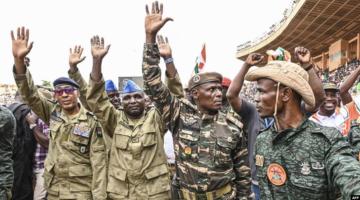
Anderson claimed Russian paramilitary forces “insulate and protect regimes” in Africa with which Moscow has close relations, “under the guise of counter-terrorism operations.” However, the AFRICOM chief contradictorily acknowledged the threat of extremist militancy throughout the region Russian military advisors seek to deter was very real. In particular, Anderson cited how al-Qaeda-affiliate JNIM aims to destabilise the revolutionary governments of Burkina Faso, Mali, and Niger, to the “extent of securing the resources and trappings of a nation state” in the manner of ISIS.
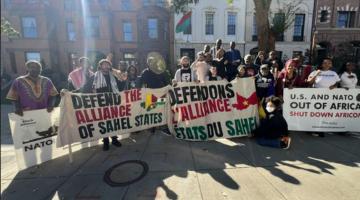
AFRICOM’s commander neglected to mention how France and Ukraine have heavily supported JNIM’s counter-revolutionary activities in the Sahel. An April essay published by Militarnyi, Kiev’s most prominent military news site, makes clear the objective of these military and intelligence machinations is out-and-out regime change, explicitly in service of furthering the Empire’s interests in Africa. Drongo Company must be understood as the psychological warfare component of this proxy assault on the Alliance of Sahel States (AES) and the continent more widely.
Evidently, Africans must remain vigilant. Counter-revolutionary forces seen and unseen are perpetually on the offensive, determined to shatter national and continental unity, strangle sovereignty, and ensure the region remains dominated by pliant and brutal puppet regimes facilitating untrammelled Western economic rape and pillage. Yet, 7th POB’s supposed “cultural training, language proficiency, and indigenous approach” from 2017 onwards soundtracked an absolutely extraordinary collapse in the Empire’s clout throughout Africa. Drongo Company’s repeat attempt may end with Washington’s final, long-overdue retreat from the continent entirely.




 “...the science for revolutionary change…is forged by human persuasion and building social consciousness based on the class analysis which sees the struggle against racism as central.”
 Symone Sanders interview with Hasan Piker exposed her as a bad-faith interlocutor who uses identity as a cudgel while remaining silent on the poverty, pollution, and police violence that plague the…
 The U.S. extradition request for Fergie Chambers is an attempt to use Spanish courts to extend a domestic repression campaign against political opposition.
 The demand to call out alleged crimes in Iran or Cuba while those countries face annihilation from the U.S. and Israel is a refusal to see those people as human beings worthy of protection.
 Red Scares are a recurring feature of the U.S. political tradition aimed at criminalizing anticapitalist politics through accusations of foreign infiltration and conspiracy. The NSPM-7 and the report…


