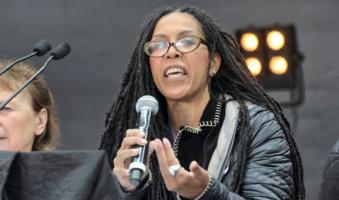
Johanna Fernandez touched many lives through her scholarship, activism, and belief that people themselves can change history and be "the ones we've been waiting for."
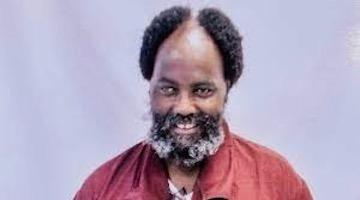
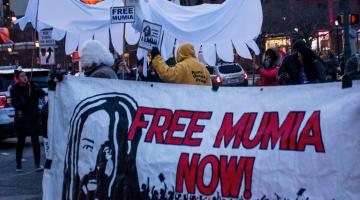
When I heard of the passing of Johanna Fernandez, my heart was filled with sorrow and profound gratitude. Sorrow for the loss of a relentless supporter of justice and truth. Profound gratitude that I lived in a time when her voice, her brilliance and her unwavering commitment to justice helped shape our understanding of the world- and our place within it. I encountered her voice and brilliance as an imprisoned person. She was an unstinting supporter of political prisoner Mumia Abu Jamal. She was the author of The Young Lords: A Radical History, a book I read and used in the inside study group I founded: 9971.
Johanna was many things: a historian, a writer, an educator, an organizer, and an intellectual. But above all else, she was a person who deeply believed in the capacity of ordinary people to transform history. For Johanna, history was alive. It lived in the streets, in our communities, in our classrooms, in prison visiting rooms, in organizing meetings, and in every act of resistance carried out by people who refused to accept injustice as inevitable.
She dedicated her life to telling stories that too often went untold. She gave voice to movements and communities that powerful institutions tried to erase. She reminded us that the struggle for freedom is not the work of a few extraordinary individuals, but of countless ordinary people who dare to dream beyond the limits imposed upon them. She taught us that to recover forgotten histories is to reclaim collective humanity.
Johanna understood something that many of us spend a lifetime trying to learn, that love and struggle are inseparable. She believed that our movements must be rooted not only in analysis but in care. Not only in critique but in community. Not only in resistance but in the courage to imagine a world where everyone belongs.
Today, we mourn a tremendous loss. There is no replacing a voice like Johanna’s. There is no replacing her insight, her fierce determination, or the way she could connect history to the urgent demands of the present. We will miss her at our tables, in our classrooms, on our panels, and in our meetings. But today is not the end of her story.
The measure of her life is found not only in what she accomplished, but in what she made possible for others. Her work and activism made it possible for me to become a teacher, a thinker, a leader and an organizer. Her life reminds us that our greatest legacy is not what we build for ourselves, but what we build in one another.
Her work taught me to refuse the world as it is. Johanna taught me that history was never simply about the past. It was a living archive of struggle, sacrifice, imagination and possibility. She taught me that to remember is a political act.
She taught me that scholarship should not be detached from the people whose lives shaped it. She stood in the tradition of intellectuals who understood that ideas matter because they help ordinary people transform the conditions of their lives. Whether writing about the Young Lords, defending the freedom of Mumia Abu-Jamal, or illuminating the long history of resistance to racism, colonialism, and state violence, she approached every project with rigor, courage, and deep love for humanity. She reminded that history belongs not only to universities or archives, but to neighborhoods, prisons, picket lines, classrooms, and communities in struggle.
Johanna taught us that movements are built through relationships. She crossed boundaries between generations, between academics and organizers, between those behind prison walls and those outside of them. She refused the false divide between thinking and doing. She taught us that knowledge demanded action, and action demanded reflection. She showed us that scholarship could be an act of solidarity, and that solidarity required discipline, patience, and hope.
Her absence leaves an immeasurable void. The measure of a life is not only found in the years it spans, but in the lives it changes. Johanna changed countless lives, including my own, through her teaching, writing, organizing and unwavering belief that another world is possible. We who have benefited from her work must continue to benefit the world through her work. We must continue to tell the histories she fought to preserve. We must continue to defend the people whose humanity she insisted the world recognize. We must continue to build the future she spent her life imagining and working for. We must amplify her voice wherever people study together, organize together, and refuse to surrender to injustice. That is our charge.
The words of activist/poet June Jordan perfectly encapsulate the lesson Johanna Fernandez taught us: “We are the ones we have been waiting for.” We are responsible for our history, our future and each other. May we honor Johanna not only with our memories, but with our continued struggle for justice. And may she rest in power, knowing that the seeds she planted will continue to grow in all of us.
Always,
Stevie
Stevie Wilson is a formerly incarcerated, abolitionist writer and organizer. He is currently a Fellow with Critical Resistance and Fellowship Coordinator for The Work and Us. He resides in Philadelphia.


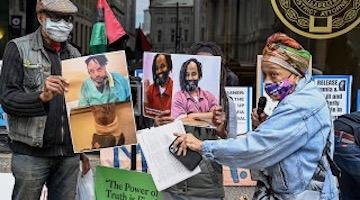


 Our guest is Dr. Gerald Horne, who discusses his newly republished International Publishers book, “Black and Red: Du Bois and the Afro-American response to the Cold War, 1944-63, the 40th anniversary…
 Donald Trump and Interim Venezuelan President Delcy Rodriguez have announced a 'historic' oil deal between the United States and Venezuela. Although the terms remain murky, the deal appears extremely…
 Hakeem Jeffries climbs the political ladder because he engages in dirty deeds with the world’s worst people. Being called a monkey gives him an easy out. The presence of a Black face in a high place…
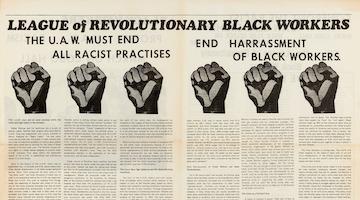 “To seize control of the political economy of the Midwest is to seize control over the political economy of imperialist America.”
 The victory of Somalia’s Northeast State over secessionist Somaliland gives Somalis hope of renewed unity and sovereignty, but Israel attacked that hope by recognizing Somaliland.


