“It is perfectly clear that the war of aggression waged by Morocco against the [Western] Saharan people is a purely colonial war.”
The decolonization of Africa remains incomplete. Not only are there any number of existing neocolonies — economic satellites and military proxies under the sway of the imperial powers — but there remains one actual formal colony, a territory whose struggle for independence and national sovereignty continues. That territory is the Western Sahara.
The Western Sahara has been called Africa’s last colony. It was colonized by Spain as the “Spanish Sahara” from 1884. In 1973, a group of indigenous Sahrawi student nationalists formed the Frente Popular para la Liberación de Saguia el-Hamra y Rio de Oro, or the “POLISARIO Front,” and launched an armed struggle against Spanish colonization until 1975. Meanwhile, the Kingdom of Morocco had long wanted to claim the mineral rich areas of Western Sahara and staged a military march on Spain in 1975 to force a takeover.
In 1976, rather than release the land to its indigenous people, Spain decided to “give” the two-thirds of Western Sahara to Morocco and a third to Mauritania, countries which had no claim to the land. The POLISARIO Front intensified its guerilla war against these new colonizers and, in 1979, Mauritania relinquished its claims over the Western Sahara. Since then, Western Sahara has been under the colonial domination of the Kingdom of Morocco whose monarchs — first King Hassan II, and now his son, Mohammed V — have consistently and brutally thwarted the nationalist aspirations of the Sahrawi people.
In February 1976, the POLISARIO Front proclaimed Western Sahara as the Sahrawi Arab Democratic Republic (SADR) while waging a war to drive the Moroccan colonial settlers from the Sahrawi territory. The SADR has been widely recognized by nation-states around the world and the United Nations has acknowledged the Polisario Front as the legitimate representative of the Sahrawi people.
However, despite Sahrawi appeals to the UN to uphold their right to self-determination under the UN charter, the Western-controlled UN has consistently postponed a referendum on independence. Meanwhile, Morocco has maintained its irredentist goal of a “Greater Morocco,” continued the control of 70% of the most resource rich areas of the Western Sahara, and outlawed the Polisario Front in the occupied territories. They have also built the so-called Moroccan Defensive Wall, or the “Berm” – a 2,700 km-long militarized boundary planted with seven million land mines dividing the Morocco-controlled portion of the Western Sahara from those controlled by the POLISARIO Front.
To better understand the history of the Moroccan colonization of the Western Sahara, and the colonial techniques continually used against the Sahrawi people, one should read the “Question of Western Sahara,” a statement made by Tinguiri Mansour Omar of the POLISARIO Front to the UN General Assembly in 1979 during sessions on the “Implementation of the Declaration on the Granting of Independence to Colonial Countries and Peoples.” Omar’s statement is a powerful condemnation of Moroccan settler colonialism, its territorial aspirations, and the brutality of its occupation. It is also an indictment of so-called “international institutions” such as the UN, which have long served to protect western people, institutions, and their minions (after all France and the US are the most important supporters of Morocco’s colonialism). Most importantly, the “Question of Western Sahara” is an important document of anti-colonialism, one that offers a useful primer for the ongoing attempts to decolonize Africa’s last colony.
We reprint Tinguiri Mansour Omar’s “Question of Western Sahara” below.
Question of Western Sahara
Statement made by Mr. Tinguiri Mansour Omar of the Frente Popular para la Liberación de Saguia el-Hamra y Rio de Oro (Frente POLISARIO) at the 14th and 15th meetings of the 4th Committee, held on 23 and 24 October 1979
1. The international situation prevailing as the Fourth Committee commences its work is one in which the racist colonial forces are losing their last strongholds to the inexorable and irreversible advance of the movement to liberate those peoples which are still under colonial or racist domination.
2. As a result, now more than ever the attention and hopes of the African peoples are focused on the outcome of your Committee's work – hopes which demand that your Committee assume its responsibilities with regard to the crime committed against the Saharan people, who are the victims of criminal aggression and savage occupation.
3. United Nations responsibility with regard to the struggle of our people to safeguard their independence and free their country from foreign occupation derives from the duty entrusted to the Organization by the Charter and by General Assembly resolution 1514 (XV) of 14 December 1060, and it is within the context of the implementation of their provisions that the question of the decolonization of Western Sahara has always been viewed with considerable concern.
4. I do not intend to dwell at length on all the stages through which the process of Western Sahara’s decolonization has passed, for I know that each of you follows events there closely. Allow me, however, to recall that our people’s struggle, first against Spanish colonization and then against conspiracy and aggression by Morocco and its accomplices, has over the past decade been the subject of resolutions and decisions adopted by the United Nations and its organs on the basis of the Charter and, in particular, of the Declaration on the Granting of Independence to Colonial Countries and Peoples (resolution 1514 (XV)).
5. In this way, the international community hopes to perform its task of ensuring or safeguarding the implementation of a cardinal principle, that of the right of peoples to self-determination, and to continue to view as clearly and objectively colonialist the war imposed on the Saharan people by the Moroccan aggression.
6. So the United Nations task is to help our people, like other peoples, to free themselves from a situation of subjugation, domination and foreign exploitation which is designed to deny our most elementary fundamental rights and to threaten peace and security in the region.
7. The right of peoples to self-determination is a right which the international community has raised to the level of an irrefutable, irresistible and undeniable sacred principle, by virtue of which every people is free to determine its political status and to pursue its economic, social and cultural development without interference. This principle is stated in general terms in resolution 1514 (XV), on which the relevant resolutions on Western Sahara are based.
8. In 1975, after a long and arduous struggle, when our people were about to exercise their rights and recover their lost sovereignty after more than a century of Spanish colonial occupation, a criminal conspiracy was mounted against them.
9. It is with bitterness that we recall that this crime was designed to prevent our people from exercising their inalienable right to self-determination and independence and to subject them to genocide.
10. The authors of that crime, however, committed a major error of judgement, for they underestimated our people’s capacity not only to enforce their rights but also to pursue their struggle until the conspiracy failed and their home and country was totally liberated.
11. The conspiracy thus carries the seeds of its own destruction, for the aggressors left our people no alternative but to fight to ensure that their independence and territorial integrity are respected. In the same situation, any people would respond by exercising their right to self-defence.
12. The situation after four years of cruel war shows, if there is need to, that the aggressors were wrong: the Saharan people are indeed capable of defending their right to independence and Morocco and its accomplices cannot carry out their base designs.
13. By their struggle and sacrifices, the Saharan people have made tremendous gains in the field and have thwarted the enemy's plans. Today, the Saharan Government has liberated almost all its national territory.
14. Having broken once and for all the military alliance between Morocco and Mauritania against our people, the Saharan People's Liberation Army (SPLA) is effectively in control of the situation and has the upper hand in battles against the Moroccan army of occupation.
15. At the same time, in exercise of our right to self-defence, we have now taken the war to the Moroccan forces’ rearguard bases inside Morocco.
16. I should, however, like to stress that our army’s military operations against the Moroccan army’s rearguard bases are designed solely to force that army to evacuate those areas of our country which are still under illegal occupation. The Government of Morocco must be made to realize that, as long as its army occupies a single portion of our country, however small, our army will intensify its attacks on that army’s positions both within and outside Western Sahara.
17. The liberation of almost all our national territory, and the victories won daily by SPLA, show that the defeat of the Moroccan army in Western Sahara is inevitable.
18. The victories of the Saharan army at Amgala, Tifariti, Hausa, Lemseyed, Libtaina, Tantan, Lebouirate, Zag, Engab, Tiguiy y Remth Al Lbane Bir-Enzaran, Semora, Mahbes, etc., and the capture of an increasingly impressive number of prisoners of war are facts which neither Moroccan propaganda nor Morocco’s customary distortion of the truth can conceal.
19. On each occasion the Frente POLISARIO has, through the press and on the occasion of numerous visits by international personalities to the liberated territories, called the international community to witness the results of the military campaigns. Thus, at every possible opportunity, the prisoners of war and large amounts of war matériel captured have been seen by the press and by foreign delegations.
20. Our country is caught up in a cruel war in which the enemy aggressor forces it to mobilize every conceivable effort.
21. The Government of the Saharan Arab Democratic Republic, however, has during these four years of war been able to structure and organize the State’s institutions. Thus, since 27 February 1976 when our people proclaimed the Republic as a sovereign State, the necessary structures have been created for that State.
22. At the national level, our Government is conducting the State activities required at the present stage through its departments and services.
23. In this war-time period, our concern is to create the necessary socio-economic and administrative conditions to enable our people to enjoy health care, receive an education and meet their basic needs, and also to enjoy freedom and safety in the liberated areas.
24. Thus, at the national level, the following institutions have been created:
(a) The “9 June” Education Centre, which provides secondary education;
(b) A national hospital for patients who could not be treated at regional hospitals and local clinics;
(c) The ''12 October” Military Academy, which provides military training for the various sectors of our army;
(d) The "27 February" School which provides vocational and military training for Saharan women, who participate actively in the war;
(e) The Saharan Red Crescent, which is responsible for supplies.
25. At the regional level, in each territorial administrative department or Wilaya, a hospital, a school, a supply branch and other vital services meet the needs of the population of the respective Wilayas and Dairas in the national territory.
26. This sums up briefly the efforts which we are making to organize the country administratively, concurrently with our tremendous efforts expended on our national liberation struggle.
27. With regard to our international activities, I am sure that you will duly appreciate the growth of relations between the Saharan Arab Democratic Republic and other countries and peoples of the world.
28. The upsurge of recognition and support for the Republic, under the leadership of the Frente POLISARIO, shows, if there is need to, that our people's cause commands the admiration and respect of the international community.
29. A large majority of States have relations with the Frente POLISARIO, as the sole legitimate representative of the Saharan people, and the Saharan Arab Democratic Republic is recognized by 34 States, 20 of them from Africa and the rest from Latin America and Asia.
30. This situation is marked by our Government's efforts to reduce the suffering of our people, who are still exposed to the horror of occupation and war.
31. In the areas still occupied by Morocco, our civilian populations are subjected to terror, repression and systematic extermination. Concentration camps have been established by the Moroccan occupying forces in which hundreds of children, women and old people die every day.
32. I use the word “terror” advisedly, because torture, kidnapping and rape are practised daily by the criminal officers of the Moroccan army, whose methods are comparable only to those of the Nazis.
33. Morocco’s criminal actions to uproot our populations from the occupied areas and to destroy our culture and traditional values by introducing drugs, corruption, rape of minors and other indescribable practices, must be added to those already mentioned above.
34. Speaking from this same rostrum a year ago, we informed honourable members of the Fourth Committee of the latest escalation perpetrated by Morocco.
35. For the past two years, the occupying forces have adopted a policy of colonization involving the settlement of Moroccan civilians in the occupied areas of our country - a colonialist practice with which you are very familiar.
36. The complications which such methods add to the situation need not be described here; they cannot escape the attention of the international community, which must denounce and thwart this dangerous process.
37. It is this policy of settlement, extermination and occupation that has forced thousands of Saharans to live in shanty towns around the occupied cities, while others have been forced to take refuge in neighbouring countries.
38. Before moving on to my next point, I must express to you as representatives of the international community our indignation and disappointment at the virtual indifference of the international humanitarian organizations which are morally and even legally bound to respond in this kind of disaster.
39. At the same time, the Saharan Government would like to express its sincere gratitude to the brother peoples of the Libyan Arab Jaraahiriya and Algeria for the fraternal assistance which they are rendering us in these difficult and testing moments of suffering.
40. The Saharan people and its Government are also grateful to humanitarian organizations of Sweden, Belgium, the Netherlands and the Federal Republic of Germany for the humanitarian aid which they have afforded to our refugees.
41. The thirty-fourth session marks a final stage in the process of decolonization of Western Sahara begun by the United Nations, in which resolution 33/31 A of 13 December 1978 was one of the most recent developments.
42. That resolution reflected the dynamic and positive developments with regard to the question of Western Sahara within this world Organization. In reaffirming that this is a question of decolonization covered by resolution 1514 (XV) and that our people must therefore exercise their right to self-determination and, independence, that resolution rejected categorically the aggressors’ attempts to present the international community with a fait accompli of military occupation.
43. Faithful to the goal of decolonization, that same resolution took note of the Frente POLISARIO’s initiative in deciding unilaterally and provisionally on a cease-fire in Mauritanian territory.
44. Thus we note with satisfaction that the Fourth Committee's action keeps pace with developments on the spot.
45. The statements by a representative of the Frente POLISARIO in the Security Council and in the Special Committee on the Situation with regard to the Implementation of the Declaration on the Granting of Independence to Colonial Countries and Peoples also reflect the increasing importance which all United Nations organs attach to the decolonization of Western Sahara and bear witness to the failure of Morocco’s attempts to place the problem outside its true context.
46. In this way, the international community has rejected its role as accomplice in a blatant manoeuvre by the colonialist forces which, in their inability to stifle the determination of peoples to throw off the colonial yoke and seize their independence, are resorting to accusations against third States.
47. We would advise Morocco that it is time it faced up to the facts and stopped abusing international and Moroccan public opinion, from which it has been seeking to hide the truth for the last four years, covering up its defeat by accusations against third States.
48. We realize that it is perhaps most unpleasant for the “great army” of his “majesty” the King of Morocco to acknowledge defeat at the hands of the tiny Saharan people. But defeat is inevitable, and no propaganda can hide it. The victorious campaigns of SPLA, which have resulted in thousands of deaths, the taking of hundreds of prisoners and the capture of vast quantities of light and heavy materiel daily, are harsh realities which will survive the lies and shams.
49. This year has seen positive, far-reaching developments in the situation which, we believe, have created the necessary conditions for the thirty-fourth session, and the Fourth Committee in particular, to take a decision commensurate with the responsibilities of the United Nations under resolution 1514 (XV).
50. One of the most important developments this year was the decision taken by the Assembly of Heads of State and Government of the Organization of African Unity at its sixteenth session, held in Monrovia from 17 to 20 July 1979.
51. By that decision, OAU assumed its responsibilities by adopting a specific resolution on the substance of the decolonization of Western Sahara.
52. The position taken on our problem by the African States at Monrovia is clear and unequivocal. They reaffirm the right of the Saharan people to self-determination and independence. We can deduce from this that they reject categorically the occupation of our country by Moroccan expansionists. They also decided that the parties to the conflict must have recourse to political channels as a means of finding a just and lasting solution to the problem in accordance with the right of the Saharan people to self-determination and Independence.
53. The parties to the conflict were also solemnly invited to meet and initiate negotiations, with a view to reaching a peaceful settlement in accordance with that resolution.
54. In response to Africa's appeal, and in its concern to see the restoration of justice and peace in the region, the Saharan Government invited the two other parties to the conflict (Morocco and Mauritania) to meet with us in Bamako, the capital of Mali, or in any other African capital, in order to initiate peace negotiations.
55. While Mauritania and the Frente POLISARIO immediately embarked on the road to peace, in accordance with the OAU resolution adopted in Monrovia and with their responsibility to end the unjust war in our Republic, the Moroccan Government's response to the African initiative was mere arrogance.
56. You will all recall how the Moroccan delegation in Monrovia reacted with blackmail and insults to the African verdict, withdrawing from the Conference after the failure of its attempts to impose its wishes against the views of the African community as a whole.
57. History too will recall how the King of Morocco treated the African Heads of State and their Organization with scorn, referring insultingly to the decision which they had taken in Monrovia in support of justice and peace.
58. Thus it was that, at his press conference on 19 August 1979 in Fez, the King of Morocco described the OAU conference as a "meeting of tom-tom players" and OAU as a "cesspool" (Le Monde of 20 August 1979).
59. Nonetheless, you will probably recall how at the thirty-third session the Moroccan delegation in this Committee mobilized efforts and resorted to all kinds of acrobatics to make the General Assembly adopt resolution 33/31 B and that the resolution was adopted, on the proposal of the Moroccan delegation, and contains only one substantive reference to the idea of entrusting the question to OAU and its ad hoc committee on Western Sahara.
60. Morocco must be consistent and stop abusing the good faith of United Nations Member States.
61. If it does not do so, the international community must force it to respect the rules of membership of international organizations.
62. The United Nations must henceforth reject Morocco’s continued disregard for its resolutions, and for its obligations as a State Member of the United Nations whose duty it is to abide by the wishes of the majority and by the decisions adopted by the Organization.
63. The signing in Algiers on 10 August 1979 of a peace agreement between Mauritania and the Frente POLISARIO is another new development to which the international community must direct its attention and interest, given the decisive impact which it has had on the situation.
64. In addition to being the logical and natural extension of the OAU Monrovia decision, this agreement is important because:
(a) Its effective contribution to the -peace and hence the security of Western Sahara, and of the region as a whole, was considerable.
(b) It is the expression of the sovereign wishes of two of the three parties to the conflict, it brings to an end the war between them and it opens up a new era of understanding, good neighbourliness and co-operation based on respect for each country’s sovereignty within the framework of their territorial integrity.
65. A few moments ago, I spoke of the importance of this agreement and mentioned some of its elements. But basically we can say that its signature marks the break-up of the political alliance against our people both of the so-called "Madrid Tripartite Agreement," which was killed on the field of battle by the struggle of our people.
66. Mauritania, which had been an essential party to the "Madrid Agreement" henceforth recognizes, as you will have noted from the Algiers peace agreement, not only the illegality of the criminal undertaking to deprive the Saharan people of their rights but also the Frente POLISARIO as the sole legitimate representative of that people.
67. Before moving on to other aspects of the question, I should also like to recall that Spain, the administering Power for Western Sahara, has in fact by its position gone beyond the "Madrid Agreement,” which was Morocco’s only hobby-horse. It should be recalled that the ruling party in Spain, the Union del Centro Democratico (UCD), has recognized the right of the Saharan people to self-determination and the Frente POLISARIO as their sole legitimate representative. Such recognition was recently reaffirmed by Spain's Minister for Foreign Affairs, Mr. Marcelino Oreja Apuirre, in his statement to the newspaper Le Monde on 21 August 1979, in which he observed that Western Sahara was still an international territory and that his Government's position was identical to that of its party (UCD). That position was again reaffirmed in his statement to the United Nations General Assembly on 24 September 1979 (A/34/PV.5).
68. Instead of drawing inspiration from the courage and sense of responsibility of the Mauritanian and Saharan Governments, King Hassan II of Morocco has turned his hack on peace and opted for the path of violence over that of peaceful means, wisdom and justice.
69. His persistence in his military aggression and his decision to extend Morocco’s military occupation to the city of Dakhla, prior to Mauritania’s withdrawal under the provisions of the agreement of 10 August are clear proof of the intransigence of the Moroccan Government and its criminal intention of persisting in its military escalation, in defiance of law, justice and the interests of the peoples of the entire region.
70. The paragraphs on the question of Western Sahara included in the Political Declaration adopted by the Sixth Conference of Heads of State or Government of Non-Aligned Countries, held in Havana from 3 to 9 September 1979, were also a new and extremely important development which cannot fail to add weight to western Sahara’s case at the present session.
71. Although the Moroccan delegation resorted to all kinds of manoeuvres and systematically opposed the inclusion of that question in the agenda of the Conference of Heads of State or Government, the Sixth Conference decided to assume its responsibilities and expressed its firm solidarity with the Saharan people in their struggle for independence by adopting the paragraphs on the question of Western Sahara unanimously.
72. Through this historic document, you will see the firmness with which the non-aligned countries met Morocco's challenge, blackmail and manoeuvres and supported the just cause of our people.
73. When they analysed the problem in its true context, namely as a case of incomplete decolonization caused by colonial aggression, the Heads of State of the non-aligned countries uncovered the dangers inherent in the Moroccan occupation of Western Sahara and demanded that the right of the Saharan people to self-determination and independence be scrupulously respected.
74. At the same time, they emphasized that the historic decision taken by OAU in Monrovia provided a dynamic and positive impetus for restoring peace in Western Sahara by returning their sovereignty to the Saharan people, thereby ushering in a new era in the region in which the demons of expansionism and disregard for the right of peoples will give way to fraternal co-operation, good-neighbourliness, security and stability among our peoples.
75. A few minutes ago I referred to Morocco's intransigence, which has led it to persist in its military escalation to an intolerable degree.
76. While Africa, the non-aligned movement and the United Nations have all agreed in repeated, resolutions that the Moroccan aggression against Western Sahara represents a threat not only to justice and law but also to peace and stability on the African continent, the King of Morocco, with the complicity of certain countries, is paving the way for the internationalization of the war.
77. In that regard, I should like to stress that the Egyptian military intervention and the collaboration of certain non-African Powers with the Moroccan army provide irrefutable evidence of the serious escalation towards internationalization of the war and constitute a challenge to Africa, which is working untiringly to find a peaceful solution to the question of Western Sahara.
78. The recent decision of President Carter of the United States of America to increase aid to Morocco by providing sophisticated anti-guerrilla materiel has dealt a serious blow to the movement towards peace that had given hope for a just and lasting solution to the question of the decolonization of Western Sahara. The United States has thus given material support to Morocco’s intransigent and stubborn policy of pushing the region through fire and sword towards the internationalization of the war.
79. This is also a blow to the wise decisions of OAU, of the non-aligned nations and of the United Nations, which had struggled for so many years to ensure respect for the right of the Saharan people to self-determination and independence.
80. If domestic considerations (elections) have prevailed in President Carter’s mind, to the detriment of his obligation to respect the right of the Saharan people to self-determination and independence, that does not mean he can forget the responsibility of his country, as a member of the Security Council, to strive for peace and stability in this region of Africa and the Mediterranean.
81. If we really wish to put out the fire, we should not pour more fuel on it.
82. Whoever wishes to help Morocco should show it how to get out of the war.
83. To turn a simple problem of decolonization into an international conflagration of unlimited proportions is a crime for which Morocco and its accomplices must assume responsibility and take the consequences.
84. The leaders of the Saharan Arab Democratic Republic, in their desire to spare our continent further suffering and upheavals have so far avoided any action that might lead to internationalization of the conflict, even though that has meant tremendous sacrifices for us.
85. We are still hoping for urgent action by the international community to deal with this threat. But we wish to make it clear, for the historical record and for you today, that the possibility of an international conflict does not frighten us and that we will surely be the winners.
86. Our people, with their initiative and their unswerving determination, will find the best way of facing the challenge of conspiracies that are condemned by history and by mankind.
87. If Morocco continues its military escalation towards internationalization of the war, what choice will we have? Are we to stand and look on while Morocco perpetrates its crime? Or are we to defend ourselves against death? One need not be a wise man to know the answer. We will defend ourselves.
88. I am sure that the rapid summary I have just given you has enabled you to assess the developments in the situation and the dangers that are inherent in the continuation of this war of aggression.
89. The specific developments of the current year, particularly the decision taken by OAU in Monrovia, the peace agreement with Mauritania, the declaration by the Sixth Conference of Non-Aligned Countries on Western Sahara and the evolution of the position of Spain, the administering Power, provide the United Nations with an opportunity at this thirty-fourth session fully to discharge its responsibilities.
90. The developments of the current year make it incumbent upon the Fourth Committee to take the measures necessary to fulfil the responsibilities of the United Nations set forth in the Charter and in General Assembly resolution 1514 (XV).
91. We must face realities, bearing in mind that the problem of Western Sahara can be solved only by guaranteeing and respecting the right of the Saharan people to self-determination and independence.
92. The various types of manoeuvre to which the Moroccan Government [is] resorting in order to change the course of the process of decolonization of Western Sahara, as well as to undermine the efforts of the African and the non-aligned countries and the United Nations, must be rejected by the international community.
93. The regional economic measures which the King of Morocco has advocated, following his failure in Western Sahara, are nothing but an illusion which can deceive no one but the man who dreamed them up.
94. Having been unable to impose the fait accompli of military occupation, the King of Morocco is now resorting to a manoeuvre typical of colonialists. We recall the tendentious origin of the idea of the “Greater Sahara” as a “sea of sand,” over which there is no sovereignty.
95. Hassan II of Morocco will not stop acting as a peddler of dreams. But it is time for him to wake up, for this region has no room for empires and there is no such thing as a “sea of sand;” there are only States living within their respective boundaries which have been delimited and established according to the cardinal principle of the OAU charter: the intangibility of boundaries inherited from colonial times.
96. Like the other States of the region, the Saharan Arab Democratic Republic is fighting to preserve this cardinal principle of the OAU by defending its boundaries.
97. Following the failure of his attempt to divide our country with Mauritania, the King of Morocco is seeking a new partner in his criminal endeavour against the Saharan people. But those States to which he is “generously” offering an outlet to the sea through a redistribution of our country will not let themselves be deceived, for we are certain they can discern the underlying implications of this diabolical proposition.
98. Morocco’s true plan is not based on generosity or on a sense of responsibility, but is a manoeuvre aimed at calling into question the principle of the intangibility of borders and thus upsetting the stability of the States it mentions in its letter, so as to divert the ad hoc committee of OAU away from its true purpose.
99. It is perfectly clear that the war of aggression waged by Morocco against the Saharan people is a purely colonial war.
100. Thus, a colonial Power is trying to occupy our country militarily against our will. It is therefore a case of an aggressor and a victim of aggression.
101. It is the duty of the international community to act decisively on behalf of the victim.
102. We for our part are convinced that peaceful means should prevail over violence. That is why the Frente POLISARIO fully believes that the United Nations has a role to play in achieving the restoration of peace and justice in our country.
103. The international community can attest to our full willingness to meet with the Moroccan Government to negotiate the restoration of peace, justice and fraternal co-operation.
104. The signing of the peace agreement of 10 August 1979 between Mauritania and the Frente POLISARIO is an example of wisdom, responsibility and realism and should inspire the Moroccan Government to desist from its intransigence, which is bound to have dire consequences, and from its preference for a course of violence over one of justice and reason.
105. In any case, we wish to reiterate here an aspect of our Policy which has been constant, namely, our willingness to co-operate with the United Nations and its Secretary-General in whatever efforts may be required to seek a just and legal solution.
106. This willingness to seek political solutions is equal only to our determination to fight, as we are fighting now, to defend our independence.
Implementation of the Declaration on the Granting of Independence to Colonial Countries and Peoples Question of Western Sahara: Statement made by Mr. Tinguiri Mansour Omar of the Frente Popular para la Liberación de Saguia el-Hamra y Rio de Oro (Frente POLISARIO) at the 14th and 15th meetings of the 4th Committee of the United Nations General Assembly, held on 23 and 24 October 1979


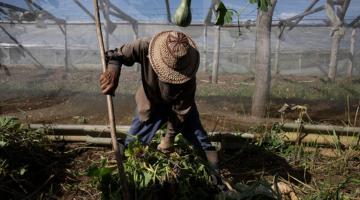 The Trump administration has already cut off Cuba’s access to oil. Now it’s attempting to starve the Cuban people, targeting the country’s capacity to grow, process, and import food — unless it buys…
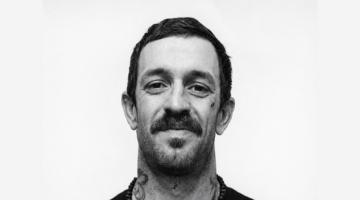 Fergie Chambers is an American philanthropist who was arrested on July 10 in Ibiza, Spain, by order of the Trump Administration.
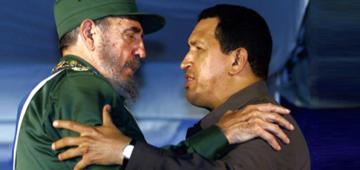 Cuba's leadership has chosen resistance over subordination as the blockade tightens, but Venezuela's sovereignty is being stripped away.
 In this week’s segment, we hear about the crisis in northwest Indiana, including the city of Gary, where some residents have gone more than two weeks without power after a storm. As in the rest of…
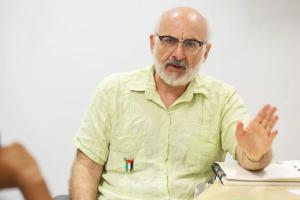 Our guest is Sam Husseini. He’s a veteran independent journalist and senior analyst at the Institute for Public Accuracy. He is now running for Congress in Maryland’s 4th district as a Green Party…


