Cannabis farmers Erasto Robertson and Bobbis Matthews with their crop on Golba Hill on the Caribbean island of St Vincent and the Grenadines. Photograph: Demion McTair
St. Vincent legalized medicinal cannabis in 2018, but the industry cannot take off while US warships enforce a blockade. A nation cannot build a legal economy under military threat.
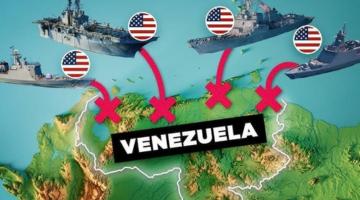
It has been five months since the United States Government, led by Donald Trump, imposed a military blockade against the Bolivarian Republic of Venezuela, under the guise of fighting drugs. For the people of Venezuela, it has been a very painful experience. They have lost their President, suffered many casualties, as well as serious socio-economic setbacks. But apart from affecting the people of Venezuela, it has also affected other peoples and countries of our region, including St. Vincent and the Grenadines (SVG).
Since then, the US military has blown up dozens of the regions’ fishing boats, and an estimated 157 passengers have been killed, on the pretext that they were “narco-terrorists.” There was no evidence presented, no trial, just summary executions.
As a traditional cultivator of cannabis myself, which, incidentally, fits into Trump’s categorization of drugs and drug traffickers, and therefore, exposes our own traditional cultivators (TCs) to a similarly risky fate, and as President of the Cannabis Revival Committee (CRC), a traditional cultivators’ organization, we strongly condemn the action of the US military.
Who knows? Any one of us may be next. As traditional cultivators, we are all potential candidates for attack.
With the military blockade, SVG, coupled with the ongoing and indiscriminate blowing-up of our fishers, we are now witnessing a transformation of our region from a zone of peace to zone of war, a situation which could only make life more miserable for us as a people, and, in the case of SVG, especially our traditional cultivators, particularly hurting. I must say, the potential of a miserable life for us, as traditional cultivators, has never been so bleak.
This is not an endorsement of the illegal nature of our activities as traditional cultivators. But facts are facts. Cannabis, legal or illegal, is here to stay. Going back to the 1970s, cannabis has been the one crop that has sustained some of the most marginalized communities in St. Vincent. It contributes significantly to our own socio-economic and cultural development, in some estimates being the largest contributor to the economy, employing thousands. We did not end up in this situation by choice, indeed many of us were pushed into the hills out of desperation after the United States (and World Trade Organization) decimated our agricultural industry in the mid-1990s during the Banana Wars.
Given that our main market for agricultural exports in Europe was taken away from us, and that we lacked an international airport to build a competitive tourism industry, we took up the only opportunity which was available to us. For this, we were met with several rounds of US drug eradication exercises, such as Operation Weedeater, which needlessly took the lives of Vincentian citizens and caused serious economic hardship without addressing the root cause. Given the centrality of cannabis in SVG, it became one of the most pressing political issues of the last 30 years.
As it stands, we can best manage it by doing our possible best to get all the harm out of it, or, at least, to significantly reduce such harm. This is why in 2018, after decades of popular struggle, the Government of St. Vincent became the second Caribbean country (after Jamaica in 2015) to reform its cannabis laws significantly. While St. Vincent has taken essential steps to establish a legal medicinal cannabis industry, ahead of many countries in this regard, this seemingly progressive initiative remains stalled due to the prevailing international regulations imposed by UN treaties on drugs and the most recent imperialist attitudes and threats around “narco-terrorism” in the region. Indeed, our attempt to build a legal, regulated medicinal industry to address the histories of poverty and underdevelopment in the region are at risk of being undermined by US imperialism in the Caribbean Sea.
One only must look at the region’s main suppliers to appreciate the situation. As expected, the military blockade and the blowing-up of fishers have had a significant impact on trade from Colombia, while hurricane Melissa, having seriously damaged the cannabis industry in some parts of Jamaica, has caused a big setback to that country’s supply. Take for example, the expected greater influx of drug traffickers from the region and beyond, the potential increase in the importation of guns and ammunition, as well as the potential accompanying violence, as a result. Not to mention, the forging of new partnership between our very local traffickers and their regional and international counterparts, who, in some cases, may very well be more experienced, more hardened and merciless, God forbid that they are.
And one does not have to be a rocket scientist to realize the potential consequences of all this, including the potential of being designated as a “Narco-State”. In discussing this matter with a friend, he said to me, “Spirit, you are looking too much on the dark side”. The thing is, in times like these, we must prepare for the worst, while continuing our struggle forward.
The most unfortunate thing is that none of this needs to happen. In my many decades on the ground during the many different phases of the War on Drugs, I believe that ultimately, the military blockade and the latest episode of the War on Drugs are doomed to fail because they treat a symptom while aggressively feeding the disease. By dismantling the Caribbean’s traditional agricultural base and meeting economic desperation with summary executions, the US has created the very instability it claims to fight. This is all happening while at the same time hypocritically hosting a domestic cannabis industry within the US that is worth tens of billions of dollars.
However, as long as the US chooses militarization over meaningful economic partnership and respect for our national sovereignty, the trade will persist, the violence will escalate, and the risk of the 'Narco-State' will grow, not because of the farmers in the hills, but because of the empires seeking to dominate our seas, skies and economies. If we are to build a country and an industry protected by law, we must stop treating a socio-economic crisis as a military one. Our path forward is clear: we must defend our right to a regulated, legal industry that honors our history of struggle and provides a dignified future for our people, proving once and for all that bullets are no substitute for bread. You cannot bomb away the necessity of our survival.
Are our political leaders across the Caribbean prepared to do this, or will they continue to be silent as we are wrongfully executed?
Junior “Spirit” Cottle is an activist and the President of the St. Vincent and the Grenadines Cannabis Revival Committee. He was a founding member of the Black Liberation Action Committee, which was formed in the 1970s in order to create a revolutionary break with British colonialism and establish the Vincentian people’s popular control over the economy and political system to address the lasting legacies of slavery and underdevelopment. Related to his political activities during this time, he was imprisoned in 1973 for the assassination of the then Attorney General and for discharging a firearm at a police officer. Following his release after eleven and a half years in prison, he began organizing the cannabis farmers in St. Vincent against US drug eradication exercises in the late 1990s, such as Operation Weedeater. He has been one of the most active, engaged and politically committed militants of the 1970s Black Power era in the 1970s, and he shares his thoughts on the current resurgence of US imperialism in the Caribbean Sea.

 Trump is terrorizing Minnesota’s Somali Americans in a desperate xenophobic and racist appeal to voters in the state’s white farming and mining communities.
 Artificial intelligence and hyperscale data center buildout constitute a new front of environmental racism and a project to optimize white supremacy, with Black communities targeted as sacrifice…
 Erik Prince's mercenary operations in the Democratic Republic of the Congo serve U.S. imperial and corporate interests in critical minerals and violate the Congolese peoples' sovereignty.
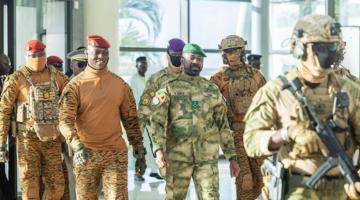 Mali, Burkina Faso, and Niger are leading the way toward the realization of Pan-Africanism and the struggle against imperialism in the 21st century.


