Morocco's Minister of Foreign Affairs, Nasser Bourita, with the Minister of Foreign Affairs of the Republic of Ghana, Samuel Okudzeto Ablakwa. Photo: Moroccan Diplomacy/X
Ghana endorsed Morocco’s autonomy plan for Western Sahara, abandoning its long-held support for Sahrawi sovereignty. Now Ghana is aligned with Morocco’s expanding economic and diplomatic maneuver across Africa.
Originally published in People's Dispatch.
In a move that has disappointed many supporters of self-determination and sovereignty in Africa, Ghana has officially endorsed Morocco’s autonomy plan for Western Sahara, effectively undermining its ties with the Sahrawi Arab Democratic Republic (SADR). The decision marks a startling break from Ghana’s steadfast support for Western Sahara’s independence, a stance the nation had proudly upheld since 1979.
Policy change initiated under Akufo-Addo administration
The diplomatic pivot was first signaled in the final hours of the Nana Akufo-Addo administration, when Ghana’s Ministry of Foreign Affairs announced the suspension of diplomatic relations with the SADR, on the eve of President John Dramani Mahama’s inauguration on January 7, 2025. At the time, analysts speculated that Mahama might reverse the decision and restore Ghana’s historical support for Western Sahara’s independence.
Mahama administration continues with the same policy
However, recent developments indicate that President Mahama is maintaining the new trajectory, despite earlier expectations. During a working visit to Morocco, Ghana’s Foreign Minister reaffirmed the country’s support for Morocco’s autonomy proposal for Western Sahara, a plan that grants limited self-governance under Moroccan sovereignty but falls short of full independence for the Sahrawi people.
The diplomatic shift coincides with deepening bilateral ties between Ghana and Morocco across multiple sectors. The visit resulted in a comprehensive cooperation agreement covering education, economic development, trade, defense, and cultural exchange.
According to Reuters, Ghana now considers Morocco’s autonomy plan “the only realistic and sustainable basis to a mutually agreed solution to the issue,” as stated in a joint communiqué following talks between Ghana’s foreign minister, Samuel Okudzeto Ablakwa, and his Moroccan counterpart, Nasser Bourita, in Rabat.
Morocco’s diplomatic offensive in Africa
The scale of Morocco’s economic outreach to Ghana appears to have been a decisive factor in Accra’s policy shift. In what has become Morocco’s “diplomatic offensive,” leveraging trade, investment, and educational opportunities to win allies in Africa over the Western Sahara dispute.
Despite the deepening cooperation, the move has sparked domestic criticism. Nana Asafo-Adjei, a member of Parliament for Bosome Freho and a member of Ghana’s Foreign Affairs Committee, accused the Mahama administration of diplomatic double standards. Last month, Algeria was assured of support for Western Sahara, and the two countries also agreed to waive visa requirements between them.
The Socialist Movement of Ghana (SMG) called out the decision and reiterated its unwavering solidarity with the Sahrawi Arab Democratic Republic (SADR).
“The Sahrawi people’s right to self-determination is non-negotiable,” the SMG stated. “It is no different than the Gold Coast’s right to free itself from British colonialism. And, now as then, we say with Kwame Nkrumah that the independence of Ghana is meaningless unless it is linked with the total liberation of the African continent.”
SMG categorically rejected Morocco’s autonomy plan, describing it as a continuation of colonial occupation under a different veil. “Morocco’s charm offensive does not confuse us,” the statement emphasized. “SADR is a colony, forcefully occupied by the Kingdom of Morocco. Western Sahara remains the only part of our continent still under colonial rule.”
Highlighting Morocco’s growing alliances with the US, NATO, and Israel, the movement cautioned that Morocco’s partnerships serve to entrench foreign influence in Africa under the protection of a repressive monarchy.
The African Union (AU) continues to recognize the Sahrawi Arab Democratic Republic as a full member, and Ghana’s move puts it at odds with the AU’s long standing support for Western Sahara’s right to self-determination.
The Western Sahara dispute remains one of Africa’s longest unresolved territorial conflicts. The Polisario Front, backed by Algeria, continues to push for a referendum on independence under the supervision of the United Nations, a process that has stalled for decades.
Additionally, the SMG statement highlights that UN resolution “We reaffirm our support for UN Security Council Resolution 690 Of 1991. This resolution called for a referendum to manifest the democratic will of the Saharawi people as the only basis for a peaceful solution to the Morocco-Sahrawi conflict.”
Ghana’s realignment comes as Morocco intensifies its diplomatic efforts to rally support for its position across Africa, leveraging economic partnerships and infrastructure investments as key tools of persuasion, with the UK, Côte d’Ivoire, and Kenya recently supporting its autonomy plan.
What has unfolded over the past month signals a worrying trend across the African continent, a systematic plan for the gradual erosion of support for Western Sahara’s full independence. The diplomatic shifts are driven by economic incentives to undermine the future of Western Sahara’s struggle.

 The prison system links corporate interests, the military industrial complex, and policing into a web of oppression impacting more than 2 million people in this country. The Mapping Project reports…
 To move from 59 infant deaths out of every 1,000 live births to no infant deaths in the matter of a few decades is an extraordinary feat.
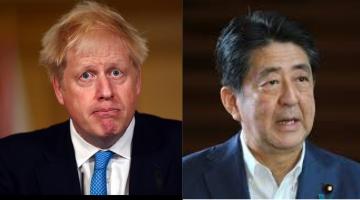 The western capitalist axis of domination is responsible for most of the world's crises. The crisis of legitimacy extends from the UK to Japan, and U.S. imperialism is involved in every new…
 Drunken Count Ghouliani took the fifth the 6th—low Barr last days of Pompeo… (For Amiri)
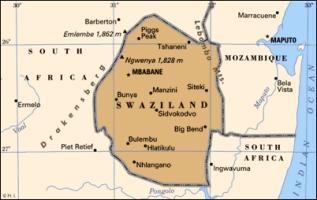 June 29 was observed as a day of commemoration in Swaziland to honor the dozens of people killed by the forces of King Mswati III during the unprecedented anti-monarchist uprising of 2021


