Fifteen grueling months of bombing and military assault have finally come to a pause as the ceasefire agreement between Hamas and Israel has come into effect.
Originally published in Electronic Intifada.
A ceasefire took effect at 11:15 am local time on Sunday in the Gaza Strip, following a nearly three-hour delay.
Israel seized on those 180 minutes to kill at least 19 Palestinians and wound dozens.
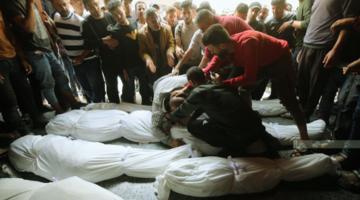
The eventual halt to the bloodshed could not have come soon enough for Palestinians, who have endured 471 days of relentless Israeli airstrikes, starvation, displacement, death and destruction.
Celebrations erupted across the Gaza Strip, and footage surfaced of Palestinians returning to their neighborhoods on foot.
In an impromptu livestream on Sunday afternoon, editors discussed the beginning of the ceasefire and provided analysis as the first exchange of prisoners between Israel and Hamas started.
On Sunday morning, north Gaza reporter Anas al-Sharif announced the ceasefire’s commencement, surrounded by people singing and cheering on Al Jazeera while taking off his helmet and PRESS vest, capturing the prevailing mood in Gaza.
Civil police patrolling the streets signaled a return to some semblance of order. Pictures of destroyed Israeli armored vehicles scattered across Gaza’s streets were a symbol of Israel’s defeat, as it was forced to negotiate with the very organization it vowed to destroy.
On Sunday evening, Hamas released three Israelis that had been held captive in Gaza: Doron Steinbrecher, Emily Damari and Romi Gonen.
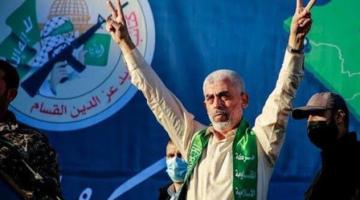
The handover to the International Committee of the Red Cross took place in al-Saraya square in central Gaza City, where a massive crowd of surrounded members of the Nukhba commando unit of the Qassam Brigades, the military wing of Hamas.
“This was incredibly symbolic,” said Ali Abunimah, director of The Electronic Intifada, of footage showing Palestinians surrounding resistance fighters cheering and celebrating.
“These are the elite fighters of the Qassam Brigades coming out into the streets in their uniforms, looking battle-ready, just as they did on or before 7 October.”
Qassam fighters “were being greeted by their people. They were being greeted as heroes. There were scenes of people taking selfies with them, kissing them on their heads, just tremendous support and joy, which just shatters the idea that the resistance is somehow isolated by the people or hated by the people,” Abunimah added.
The Red Cross then handed over the three women to the Israeli military, which transferred them out of the coastal enclave.
The way in which the transfer happened in the middle of Gaza City, coupled with its broadcast on Tel Aviv screens for Israelis, intended to show how Hamas is “still in control of Gaza City,” marked by the reestablishment of police presence, continuing the work of the municipality and the gradual restoration of services.
“This was palpable, demonstrable proof to the Israeli public of the utter failure of their army and the fact that the total victory they were promised was not achieved,” Abunimah added.
Release of Palestinian prisoners
Later on Sunday and into Monday morning, Israeli authorities released 92 Palestinian prisoners from Ofer prison in the occupied West Bank, all women and children, the vast majority of them detained after 7 October 2023.
This includes three female prisoners who were re-arrested by Israeli occupation authorities after they were released in the November 2023 exchange deal.
Among those released is the lawmaker and human rights defender Khalida Jarrar, who some remarked was nearly unrecognizable after spending months in “a very small solitary confinement cell, measuring no more than 2×1.5 meters, with barely enough space for a mattress,” according to Palestinian prisoners rights group Addameer.
Israel imposed restrictions on public Palestinian celebrations marking the release of detainees.
Despite that, people celebrated the return of their mothers, daughters and children to their homes.
Addameer welcomed the ceasefire agreement and the prisoner exchange deal, saying it “brings an end to the suffering of Gaza’s residents and a large number of prisoners in detention camps and prisons.”
Throughout Israel’s genocide in the Gaza Strip, it also conducted widespread arrests of Palestinians across Palestine. This includes more than 14,300 Palestinians from the occupied West Bank, including East Jerusalem. Among them, more than 1,000 children.
The number of Palestinian prisoners before the beginning of the genocide stood at nearly 5,200. The number of Palestinians that remain in Israeli detention today stands at about 10,200.
This “clearly demonstrates how the occupation authorities use detention as a tool of repression and control against Palestinians, as well as a form of collective punishment aimed at pressuring Palestinian political parties during prisoner exchange negotiations,” Addameer said.
Mood in Gaza
We were joined by football journalist and EI contributor Abubaker Abed, who emphasized the resilience and hope among Palestinians in Gaza.
“People are happy, so happy, jubilant. And they show an extreme passion, amazing, unprecedented passion, a love of life,” he said.
“The children, this is the first time they’re playing outside. This is the first time they are gathering with their families. This is the first time they have snacks in their hands that they can enjoy. This is the first time they are playing football together in the streets. This is the first time they are really dancing. They’re really chanting, and the wails are replaced by honks. The wails are replaced by cheers,” Abed said.
The young writer criticized the role of humanitarian organizations in Gaza throughout the genocide, accusing them of not being transparent in their operations.
Will the ceasefire hold?
The fragility of the ceasefire in the beginning may not necessarily reflect the fragility moving forward, Abunimah argued.
“I would bet that the ceasefire will hold for a couple of reasons,” Abunimah said.
“One is that the Israeli army is broken and demoralized. That’s a material reality,” he added.
Another factor is the growing shift within Israel toward ending the war, highlighted by a poll last month showing that a majority of Israelis supported a ceasefire agreement.
Another reason Abunimah highlighted that could signal Israel is in no position to return to bombing Gaza is the fact that there is no longer a guarantee that US Congress will keep signing off on billions of dollars of packages in military aid to Israel.
An additional factor is the way the deal is structured, with the gradual release of Israelis held captive in Gaza, which is likely to influence Israeli public opinion.
“Week after week of Israelis coming home and being joyously reunited with their families is going to make it very difficult for Israel to say, well, we’re going to condemn the rest of them to death now and start bombing Gaza,” Abunimah added.
Contributing editor Jon Elmer highlighted how Hamas “dismantled the myth of the Israeli military.”
One “key takeaway from the events of today,” Abunimah said, was that “maybe before 7 October, Israel and its American and European backers thought there was an option to destroy Hamas that they had and that they were holding in their pockets. Now it’s clear they don’t have that option.”
He added: “Israel did everything to Gaza except use nuclear weapons, and it is very clear they cannot dislodge this resistance, and it appears to be entirely intact, even despite Israel’s destruction of Gaza.”
You can watch the program on YouTube, Rumble or Twitter/X, or you can listen to it on your preferred podcast platform.
This writer produced and directed the program and The Electronic Intifada’s Maureen Clare Murphy and Asa Winstanley contributed writing and production. Michael F. Brown contributed pre-production assistance and Eli Gerzon contributed post-production assistance.
Past episodes of The Electronic Intifada livestream can be viewed on our YouTube channel.
Tamara Nassar is an assistant editor at The Electronic Intifada.




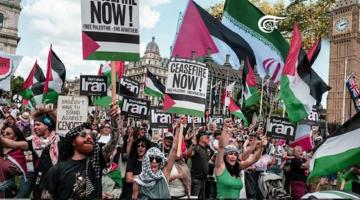

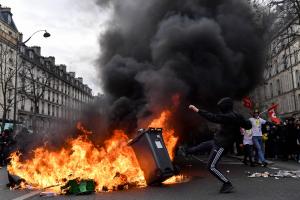
 In this week’s segment, we hear about the ongoing uprising in France against austerity, neo-liberalism, colonialism, and white supremacy. But first, we will talk about a new report that shows a 25%…
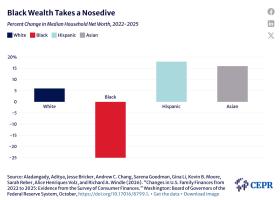 The Center for Economic and Policy Research (CEPR) recently reported on Federal Reserve data that shows that Black Americans have lost 25% of their wealth between 2022 and 2025. Whites, Asians, and…
 Bouna Mbaye is an activist, a member of the Pan-African League-Umoja, the Pan-African Brigade for Palestine, and the US Out of Africa Network.
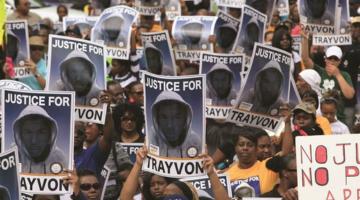 As Black Agenda Report is poised to celebrate its 20th anniversary, we reprint Glen Ford's commentary on the killing of Trayvon Martin and the impunity provided to his killer in a criminal justice…
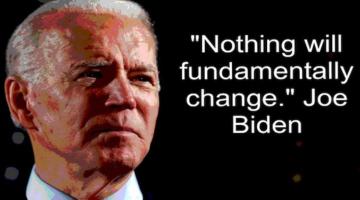 The Democratic Party is terrified of even small liberal reforms and will not abide left leaning democrats thwarting their plans for austerity and neoliberal orthodoxy.


