The people of Africa's Sahel region want truly sovereign governements that act in their interests. But U.S. interference, the continued influence of France and other colonizers, and neo-colonial governance all play a part in causing "coup contagion" in West Africa.
The recent increased frequency of coups in West Africa or what some have called ‘coup contagion’ are mere symptoms of deeper problems that are rooted in a combination of factors. Together they have dialectically combined to produce a general climate of increased instability, insecurity, violence and suffering of the masses of people just trying to make a living. Several of the coups have been regarded as ‘popular’ by some because they represent (at least so far) a welcomed change from incompetent corrupt governments. Some populations in Mali and Burkina Faso are desperate for a government and force that can mitigate terrorist criminal violence perpetrated by non-state actors which at the same time can be trusted to provide for their needs, even if those coup leaders may not necessarily be altruistic, but to some extent self-interested. This analysis highlights five major factors contributing to coup contagion.
First, the US/NATO led destruction of the Socialist People’s Libyan Arab Jamahiriya (SPLAJ) government of Muammar Qadhafi in 2011 resulted in significant increase in unemployment, poverty and criminal activity. This particularly affected the nomadic Tuareg community, many of whom had migrated from Mali to Libya where they were given jobs in many areas, particularly in the Libyan military during the time of the SPLAJ. However the US/NATO perpetrated catastrophe has resulted in many well-armed Tuaregs returning to Mali to contest the government there for what they perceived as their rights to land, water and other resources.
Although to some extent the conflict between Tuaregs and Malian governments preceded their inclusion in the SPLAJ government services, research shows that the destruction of Libya definitely exacerbated this conflict. The destruction of the SPLAJ government not only deprived Sahel countries of Libyan economic investment it also deprived them of a force of mediation since Qadhafi was personally committed to reconciling and equally serving Arab, Berber, Tuareg and other African populations. It is also instructive to remember that Qadhafi was always proud of his Berber heritage, an ethnic group that is at least linguistically related to the Tuareg.
The next contributing factor is the increasing climate crisis resulting in worsening droughts in the Sahel and the inherent contradictions around how semi nomadic pastoralists and sedentary farmers make their living and struggle for food security. Many Sahel populations now suffer high rates of food insecurity and poverty rates as high as 60% which the pandemic, and the effect of sanctions related to the US /NATO proxy war with Russia have only exacerbated. These contradictions that often become violent are simply reduced to stereotyping by Sahel governments that point to problems alleged to be inherent to certain ethnicities and blame the Fulani or Tuaregs as the Burkinabe government and Malian governments have. The Fulani are often blanketly accused of being part of Jihadist groups like Al Qaeda in the Islamic Maghreb (AQIM) but these conflicts are rooted in contradictions of competing and conflicting peripheral modes of production which are now often resolved through violence. To add to the complexity, in Africa there is still often a close identification between ethnicity and caste, ie. how an ethnic group has historically made a living. For example since Tuaregs and Fulanis are historically semi-nomadic pastoralists. This means they not only can be identified as landless ethnic groups, but they also operate in a communitarian political economy in conflict with sedentary farmers and at the same time are subordinate to and in conflict with the private ownership central to the dominant neocolonial capitalism in West Africa and global imperialism.
The third contributing factor is the increase in Al Qaeda related Islamic movement particularly Salafists who practice the extremist Wahhabist sect version of Islam promoted by Saudi Arabia, UAE and Qatar. In the Maghreb and Sahel these groups became known as AQIM (Al Qaeda in the Islamic Maghreb) many of whom were imported to Libya and armed by the CIA and the Gulf Cooperation Council (GCC) countries like Qatar and Saudi as part of the destruction of the Jamahiriya. (McKinney, C (Ed.) 2012). These groups have grown as they have recruited from disaffectedand neglected unemployed youth who believe their opportunities are better with some of these Jihadist groups.
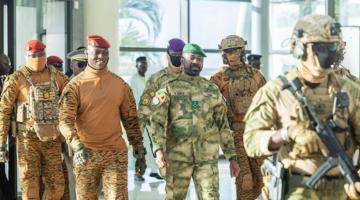
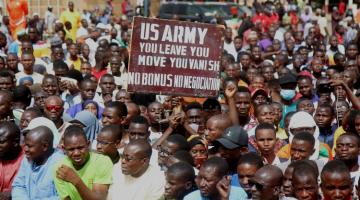
The fourth factor is the collection of foreign (especially French until recently, and US/AFRICOM military) forces that have become entrenched in the area and have provided so called “security assistance.” But as Stephanie Savel’s research shows, , this “assistance” actually accomplishes the opposite result from what was intended, and at the same time justifies the existence and presence of these forces. In the case of the Francophone countries that have long been under the yoke of the CFA, the French financial and commercial ties that are by nature exploitative, not to mention the economic interests that exploit cheap labor, raw materials, minerals and food for France. It is not surprising that the popular masses in agreement with their government in Mali kicked the French troops out last February who were accused of training Al Qaeda affiliated groups inside the country.
The fifth and last factor is corrupt comprador neo-colonial African governments, many of which are now military or controlled by the military. They have not provided development assistance to marginalized groups but instead have been agents of cash crop colonialism, corporate mineral resource extractive exploitation, French CFA constrictions, IMF imposed austerity structural adjustment, and or have collaborated with or have been totally bought by Narco-traffickers (see Guinea Bissau). They have further collaborated with AFRICOM in using the people’s resources to further militarize their governments and for their own enrichment while cooperating with the IMF/World Bank and French or now Russian equivalents.
As Pan-African anti-imperialists we have always targeted neo-colonialism and imperialism as the primary contradiction. However it is important to also look at other layers of contradictions that are historically steeped in ethnicity, caste, and class. Unjustly neglected, persecuted, marginalized pastoralist or landless groups that have suffered disproportionately will inevitably develop justified organized resistance to secure their rights. Moreover, imperialists have never hesitated to exploit these contradictions in their strategy of divide and rule. It behooves African governments and political parties to insure the respect and recognition of rights of pastoralist, semi nomadic groups and that these rights are reflected in the constitution in order to facilitate in theory and practice for their rights even as a method leading to affirmative action and if necessary even semi-autonomous counties.
End note:
McKinney, C. (Ed.) 2012 The Illegal War On Libya. Clarity Press
Djibo Sobukwe is on the Research and Political Education Team of the Black Alliance for Peace. He is also a former Central Committee member of the All African People’s Revolutionary Party who worked with Kwame Ture on the political Education Committee. He can be contacted at djibo1@gmail.com

 As we are experiencing a world order in disorder, with war and conflagrations and a shifting balance of power, Issa Shivji calls for a Sovereign Pan-African Project. The analyses recap the…
 In this week’s segment, we see through supposed disagreements between the US and Canada and recognize their partnership in settler colonialism, enslavement, and imperialism. But we begin with a…
 Joseph Kabila, former president of the Democratic Republic of Congo, named himself president of the Front for the Rebuilding of the Nation. He is now formally allied with M23, the Rwanda-backed…
 Isaac Saney is a Cuba and Black Studies specialist and historian at Dalhousie University in Halifax, Nova Scotia, Canada. He discusses the U.S./Canadian partnership in settler colonialism,…
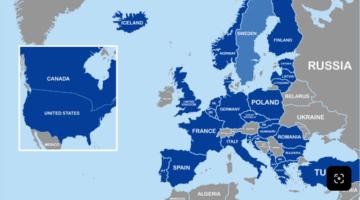 European puppet states have undermined themselves and their peoples' needs at the behest of the U.S. Now, that subservience may lead to war.


