Black Agenda Report
Black Agenda Report
News, commentary and analysis from the black left.

  • Home
  • Africa
  • African America
  • Education
  • Environment
  • International
  • Media and Culture
  • Political Economy
  • Radio
  • US Politics
  • War and Empire

Memphis Sanitation Workers Remembered
Ken Morgan
07 Feb 2018
🖨️ Print Article
Memphis Sanitation Workers Remembered

“The workers represented and led the black public striving for decent employment, paying jobs, decent living conditions, quality public schools and union recognition.”

The date February 1, 1968, marked the 50th anniversary of the start of the historic 1968 Memphis “I Am A Man” strike and black fight back. The struggle lasted sixty-five days and resulted in a victory for strikers and the community.

What “I Am A Man” Meant. Workers desired to be treated as human beings and not inferior. They wanted to receive a living wage and a better quality of life for their families. Call them men, and not boys.

Black Memphis saw the strike as their fight. A pol in the Tri-State Defender, a black weekly newspaper, showed that the vast majority of blacks found Mayor Loeb’s actions were racially inspired and 93 percent of them thought Mayor Loeb was sidestepping the real issues when he claimed the strike was illegal. The workers and their community supporters confronted police attacks and National Guard terror tactics to confirm these points.

Two events advanced the sixty-five-day fight back of the 1300 mostly black sanitation workers. First, Echo Cole and Robert Walker, two public sanitation workers, met their death crushed by a faulty hydraulic garbage truck compactor. They sought shelter from the cold and rain in the truck’s hooded back, as was the practice. These jobs stood among the lowest paying, unsafe, and filthiest jobs in Memphis.

Second, black workers at the time were part of the still unrecognized AFSCME Local 1773 union took umbrage when 22 of them were sent home because of the rain and whites were allowed to remain on the job. Whites received pay for the entire day, but the 22 blacks received a 2-hour call-in pay.

Dr. Martin Luther King gave his support to sanitation workers and was assassinated in Memphis. Still, the community support movement was well underway. They included: Black boycott of businesses, vigils at city hall, daily marches, and numerous demos. Workers and the mostly black community committed civil disobedience. Rallies included 17,000 people such as the one that King spoke.

The workers represented and led the black public striving for decent employment, paying jobs, decent living conditions, quality public schools and union recognition. Blacks made up about 40 percent of the city’s populace. This statistic stood in sharp contrast to the only 8 percent working in city jobs.

Everyone will associate the assassinated Dr. King with Memphis “I Am A Man” strikers. Few will remember Echo Cole, Robert Walker, and Larry Payne, the young man attempting to join one of the marches that Memphis cops gunned down under doubtful settings. Few will remember the thousands of people that risked their lives for a community cause.

One struggle, one fight remains a relevant worldview.

Dr. Ken Morgan is an advocate with and for working people. He can be reached at 443 610-1970.

#Black Liberation Movement

Do you need and appreciate Black Agenda Report articles? Please click on the DONATE icon, and help us out, if you can.


Related Stories

The Unknown History of Black Uprisings
Keeanga-Yamahia Taylor
The Unknown History of Black Uprisings
01 July 2021
Historian Elizabeth Hinton’s book reveals that, in the late sixties and early seventies, there were hundreds of local rebellions against white viol
Rock-A-Bye Baby: The Anesthetizing Effects of Political Concessions
 joshua briond
Rock-A-Bye Baby: The Anesthetizing Effects of Political Concessions
01 July 2021
The response to Black rebellion are all distinct types of “reforms” to politically sedate Black surplus populations and sustain white settler-capit
BAR Book Forum: Cisco Bradley’s “Universal Tonality”
Roberto Sirvent, BAR Book Forum Editor
BAR Book Forum: Cisco Bradley’s “Universal Tonality”
16 June 2021
Jazzman William Parker’s work is a bold art of resistance to capitalism, colonialism, racism, and the runaway train that is our present-day America
“New Bones” Abolitionism, Communism, and Captive Maternals
Joy James
“New Bones” Abolitionism, Communism, and Captive Maternals
09 June 2021
Joy James uses poet Lucille Clifton's image of “new bones” to reflect on a series of revolutionary anniversaries in 2021 and the nature of pol
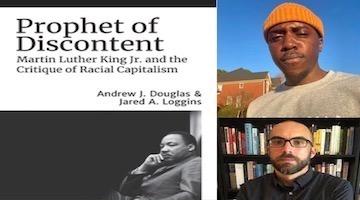
The authors set out to reconstruct King’s critical theory of racial capitalism.
Roberto Sirvent, BAR Book Forum Editor
BAR Book Forum: Jared A. Loggins and Andrew J. Douglas’ “Prophet of Discontent”
06 May 2021
The authors set out to reconstruct King’s critical theory of racial capitalism.
Reaching Beyond “Black Faces in High Places”: An Interview With Joy James
George Yancy
Reaching Beyond “Black Faces in High Places”: An Interview With Joy James
03 February 2021
White supremacist culture is a permanent site of predatory consumption, extraction and violation.
Return to the Source: Democracy is Dead
Editors, The Black Agenda Review
Return to the Source: Democracy is Dead
20 January 2021
By what stretch of the imagination can the US be a democracy when ordinary citizens have virtually no influence over what their government does?&…
Caste Does Not Explain Race
Charisse Burden-Stelly, PhD
Caste Does Not Explain Race
06 January 2021
The celebration of Isabel Wilkerson’s Caste reflects the continued priority of elite preferences over the needs and struggles of
Freddie Gray and Why the Wealth of Sports Franchises Matter
Gustavus Griffin
Freddie Gray and Why the Wealth of Sports Franchises Matter
06 January 2021
A significant portion of sports franchise wealth can be traced directly to the oppression and displacement of Black and Brown bodies.
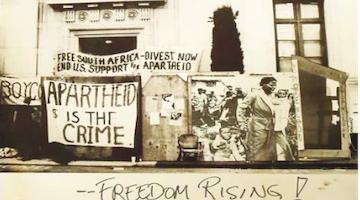
Racial Capitalism, Black Liberation, and South Africa
Editors, The Black Agenda Review
Racial Capitalism, Black Liberation, and South Africa
16 December 2020
The phrase racial capitalism first emerged in the context of the anti-Apartheid and southern African liberation struggles in the 1970s.

More Stories


  • The Inglorious End of Juan Guaidó
    Ricardo Vaz
    The Inglorious End of Juan Guaidó
    11 Jan 2023
    Juan Guaido's "interim presidency" of Venezuela has come to an end, as opposition parties chose to end the U.S. backed arrangement. They hope to unify behind one candidate in next year's…
  • John Parker "People Speak Out to Stop War, Racism and World War III" in Harlem on January 13
    John Parker , Margaret Kimberley , BAR editor and senior columnist , Black Agenda Radio with Margaret Kimberley
    John Parker "People Speak Out to Stop War, Racism and World War III" in Harlem on January 13
    10 Jan 2023
    John Parker is coordinator of the Harriet Tubman Center for Social Justice in Los Angeles and a leading member of the Socialist Unity Party. He is also a member of the Black Alliance for Peace who…
  • Black Agenda Radio January 6, 2023
    Black Agenda Radio , Black Agenda Radio with Margaret Kimberley
    Black Agenda Radio January 6, 2023
    06 Jan 2023
    The latest in Mumia Abu Jamal's defense, the UN Permanent Forum on People of African Descent and its connection to the Durban conference, and a new book “Sanctions: A Wrecking Ball in a Global…
  • Mumia Abu Jamal Continues His Fight for Freedom
    Black Agenda Radio , Black Agenda Radio with Margaret Kimberley
    Mumia Abu Jamal Continues His Fight for Freedom
    06 Jan 2023
    Johanna Fernandez is an Associate Professor of history at Baruch College, and a longtime advocate for political prisoner Mumia Abu Jamal. She joins us from New York City to discuss the loss of his…
  • UN Permanent Forum on People of African Descent and the Durban Declaration Program of Action
    Black Agenda Radio , Black Agenda Radio with Margaret Kimberley
    UN Permanent Forum on People of African Descent and the Durban Declaration Program of Action
    06 Jan 2023
    Efia Nwangaza discusses her participation in the first session of the UN Permanent Forum on People of African Descent, a mechanism that emerged from the 2001 Durban world conference against racism.

  • Load More
Subscribe
connect with us
about us
contact us

