“Italian Americans and African Americans drew explicit connections between fascist ideology and the racist and repressive system existing here.”
It may be a hopeful sign: Efforts by white supremacists to defend Confederate memorials seem to have inspired a renewed effort to remove them. In Chicago, by extension, there’s a proposal to remove a Roman column dedicated to Italian dictator Benito Mussolini and rename the street honoring his aviation minister, Italo Balbo.
There’s a lot of history there, including an important history of resistance.
A Chicago Tribune feature story last week mentioned in passing “mainstream supporters” of Italian fascism in 1930s Chicago; indeed, Chicago Mayor Edward Kelly appears to have been an enthusiastic fan of Mussolini. But we should also remember the courageous anti-fascist organizing in Chicago at the time by Italian Americans and African Americans, who drew explicit connections between the fascist ideology being celebrated and the racist and repressive system existing here.
When he led his Atlantic Squadron in a flight to Chicago’s Century of Progress world’s fair in 1933, Balbo was a dashing celebrity aviator in the age of Lindbergh and Earhart. Fascist Italy had not yet adopted the anti-Semitic policies of Nazi Germany (policies Balbo’s biographer says he opposed), and Britain and France still hoped to prevent an alliance between Italy and Germany.
Balbo’s background, leading bands of Black Shirt gangs in murderous attacks on Italian trade unionists and progressives, was apparently no impediment to his warm reception here.
“Chicago Mayor Edward Kelly appears to have been an enthusiastic fan of Mussolini.”
The mayor and governor greeted Balbo, and tens of thousands of Chicagoans turned out to cheer him in a parade down Michigan Avenue and a ceremony at Soldier Field. There was ethnic pride, admiration of technological prowess and derring-do -- and among the city’s leaders, there was certainly sympathy with the fascist regime’s goal of keeping the working class in its place.
But there was also dissent: Two anti-fascist Italian-American groups distributed thousands of leaflets denouncing Balbo’s role in the murder of Italian progressives. “It is a disgrace that this murderer and terrorist should be received by Democratic America as the official representative of the Italian people,” wrote the Italian Socialist Federation and the Italian League for the Rights of Man.
This is significant: It’s not like Chicago’s elite was innocently ignorant of the true character of fascism.
Anti-fascist resistance mushroomed here two years later, as Mussolini’s armies massed in preparation for the invasion of Ethiopia. Thousands of Chicagoans marched in Bronzeville to oppose the war -- and to demand democratic rights in Chicago.
The “Hands Off Ethiopia” demonstration of Aug. 31, 1935, was initiated at a community meeting a month earlier with over 1,000 delegates from community organizations, churches, lodges, and left-wing and nationalist groups. For African Americans, Ethiopia was a symbol of independence and anti-colonialism. But Mayor Kelly refused to grant organizers a parade permit, insisting a protest targeting Italy would insult a “friendly power.”
“Balbo’s background in murderous attacks on Italian trade unionists and progressives, was apparently no impediment to his warm reception here.”
As the date of the demonstration approached, it was clear police would try to prevent it from taking place. In the years of the Great Depression, Chicago police had a reputation for brutally suppressing efforts to organize for unemployment insurance, public works jobs and eviction moratoriums. They regularly raided offices, harassed organizers and beat activists, sometimes fatally. In 1931 they shot directly into a crowd of hundreds of South Siders who were blocking the eviction of a 70-year-old widow, killing at least two. (Tens of thousands turned out for the funeral procession down South State Street.)
On Aug. 31, the streets around 47th and South Park (now King Drive) were jammed with protestors. Police were making wholesale arrests and continually shoving and clubbing demonstrators to prevent them from converging. But as they sought to shut things down, organizers who had secreted themselves in buildings the night before appeared, one by one, on the roofs of buildings. They exhorted the crowd to decry Mussolini’s war plans and to defend their own exercise of democratic rights, denouncing the use of Mussolini’s tactics in Chicago. Each spoke until he was hauled off by cops -- then another appeared atop another building.
The action continued from early afternoon into the night, according to the memoirs of organizer Harry Haywood. Meanwhile arrestees faced a gauntlet of dozens of police officers who systematically clubbed them as they were marched into the station. Haywood had to use crutches for a month as a result of his beating.
“For African Americans, Ethiopia was a symbol of independence and anti-colonialism.”
Haywood and several others who organized in 1935 went on to volunteer to defend the Spanish Republic after it was attacked the next year by fascists -- including Oliver Law, who would become the first African American to command black and white troops in battle.
Meanwhile, in Italy’s invasion of Ethiopia, the air force built by Balbo (who by then was governor of Libya) would carpet-bomb cities, kill thousands of civilians and systematically drench large areas with poison gas. It was a precursor of many atrocities to come.
It looks like Balbo Drive’s days are numbered. The street should be renamed for someone with real roots in Chicago history, someone who fought to advance human rights. Some have suggested Ida B. Wells.
As for that Roman column given by Mussolini to Mayor Kelly – the column with the “sketchy history,” according to the Tribune – some have suggested its removal to a museum, with an exhibit giving its historical context. If that’s the solution, the historical material should expose the sympathies of Chicago’s leaders for fascism and the role of Chicago police in suppressing dissent and working-class organizing. And it should give special attention to the committed opposition mounted by Black Chicago and others, who found themselves fighting fascism in the streets of the South Side.
This article previously appeared in the Chicago Reporter and Portside.
Curtis Black is an opinion writer for the Chicago Reporter.

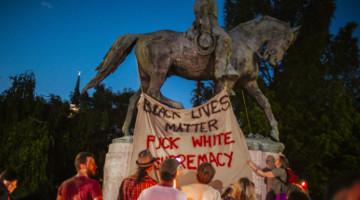
 In this week’s segment, we discuss organizers in Washington, D.C. who developed a transit solidarity program to oppose transit fare crackdowns that criminalize poverty. But we begin with a discussion…
 Dr. Shireen Al-Adeimi provides historical background and analysis of events in Yemen as Ansar Allah advances against Saudi-backed mercenaries.
 Pan-African Community Action (PACA) released a Transit Solidarity Plan for Washington, DC that challenges DC fare evasion crackdowns by collecting and redistributing fare cards to residents in the…
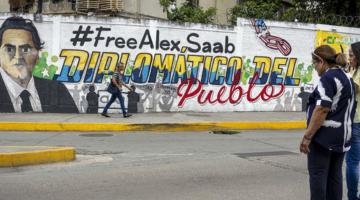 The United States got its hands on Alex Saab a second time in order to use him in its case against Nicolás Maduro. The U.S. succeeded in getting a guilty plea from Saab, but the current Venezuelan…
 “The Iraq invasion greatly accelerated the process of U.S. imperialism’s decline.”


