In Mexico, Drug Cartels are the Ruling Class
by Arsinoé Orihuela
This article previously appeared in Rebelión and The Dawn News.
“Almost by definition, security corporations have been led by civilians or militaries who are suspected of colluding with organized crime, specifically drug trafficking.”
It is frequent for people inside and outside Mexico to ask why in this country there are so many journalists killed, so many students disappear, teachers are repressed to death, community leaders persecuted ferociously, innocent civilians executed by the hundreds, and so on. The answer is frequently “it was the cartels.” This sort of automatic hypothesis, based on information leaked disjointedly by the press, is partially true, although it has limitations and omissions that are best to point out.
The first (subjective) limitation is that it feeds the fetishized belief that drug trafficking is a “Balkanizing agent” that the forces of the State can’t dominate or contain, out of weakness. This belief is based on another, subterraneous belief: the false notion that the sole participation and intervention of institutions automatically stops illegal ways to deal with business and politics, which is a thesis that (at least in Mexico) doesn’t stand up to analysis.
This leads to a second (objective) omission: that in Mexico, the presence of high-rank institutional authorities is a constant in the equation of drug-trafficking businesses. Almost by definition, security corporations have been led by civilians or militaries who are suspected (and sometimes provenly so) of colluding with organized crime, specifically drug trafficking: Miguel Nazar Haro, Mario Arturo Acosta Chaparro, Francisco Sahagún Baca, Jorge Maldonado Vega, Jesús Gutiérrez Rebollo, Oralio Castro Aparicio, Rafael Macedo de la Concha, Genaro García Luna—just to name a few.
“In Mexico, the presence of high-rank institutional authorities is a constant in the equation of drug-trafficking businesses.”
And, as if this was not enough, during Enrique Peña Nieto’s administration alone, at least 16 former governors have been accused (some were detained, some fled from justice) for numerous crimes that involve illicit association with drug trafficking: Roberto Borge (Quintana Roo); Javier Duarte de Ochoa (Veracruz); Flavino Ríos (Veracruz); Tomás Yarrington (Tamaulipas); Egidio Torre Cantú (Tamaulipas); Eugenio Hernández (Tamaulipas); Guillermo Padrés (Sonora); Luis Armando Reynoso Femat (Aguascalientes); Jesús Reina García (Michoacán); Fausto Vallejo (Michoacán); Humberto Moreira (Coahuila); Rubén Moreira (Coahuila); Rodrigo Medina (Nuevo León); Miguel Alonso Reyes (Zacatecas); Ángel Aguirre Rivero (Guerrero); and Andrés Granier Melo (Tabasco).
We must bear in mind that those former governors are part of the “new” political generation that the current President of Mexico, Enrique Peña Nieto, promoted as faithful representatives of the “new PRI” (Institutional Revolutionary Party). And he was right—they accurately represent the nature of the PRI. Just not in the way he suggested.
Proof of this relationship is the turbulent six-year presidency of Carlos Salinas de Gortari. The Salinas clan is perhaps the most emblematic representation of political power in Mexico. During that administration, the Golfo cartel reached a dominant position in Mexican drug trafficking, under the wing of the presidential family, which granted institutional protection. Juan Nepomuceno Guerra, founder of the cartel, was a mate of his dad’s, Raúl Salinas Lozano. His brother, Raúl Jr., was infamously criminal and spent ten years in prison for the murder of his brother in law and other things such as money laundering, embezzlement, links with drug trafficking, etc.
“During that administration, the Golfo cartel reached a dominant position in Mexican drug trafficking, under the wing of the presidential family.”
In 1999, a Swiss report confirmed the collusions of the Salinas clan. “Since the late 70s, the Salinas de Gortari brothers were introduced in the drug business by their father Raúl Salinas Lozano, who would have been happier with Raúl in the presidency of the State of Mexico, but nevertheless gave his other son Carlos the support he needed because Raul’s indefensible way of life wouldn’t have allowed him to hold a high rank in politics” (Proceso, 30,I, 1999).
Two years prior, in 1997, Swiss prosecutor Carla del Ponte presented a report that described the connections between Mexican politicians and organized crime. According to the testimony of a protected witness in the Cali prison, in 1990 a meeting was held in Cali with several criminal chiefs, including “Arturo Acosta Chaparro, Francisco Quiroz Hermosillo, Manlio Fabio Beltrones, Emilio Gamboa Patrón and José María Córdoba Montoya (source: Sinembargo.mx 7-VIII-2015). The latter was Carlos Salinas’ closest advisor during his mandate.
In 1997, Manlio Fabio Beltrones Rivera was accused by the US DEA of protecting the Juárez cartel, led by Amado Carrillo Fuentes, the “Lord of the Heavens.” According to the aforementioned Swiss report, Emilio Gamboa Patrón negotiated with the Golfo cartel for them to deposit 114 million dollars to the name of Raúl Salinas de Gortari in the Swiss Bank. Currently, Beltrones Rivera is the president of the PRI, and Gamboa Patrón is the PRI’s whip in the Senate.
Lastly, the third omission committed by those who repeat the verse “it was the narco” is that in Mexico 95 to 100% of crimes are left unpunished (with negligible differences in different federal entities)—a number that, in and of itself, shows that the goal of institutions isn’t justice but impunity.
So the question isn’t why Mexico has inhumane crime numbers. Even a teenager understands that this empire of the law of “dollar bills or bullets”, which is the law of drug trafficking, brings death, terror and destruction at a large scale.
The question is why drug trafficking is the ruling class in Mexico.

 The Axis of Resistance is shining a light on the reactionary regimes in the region who remain active and willing agents of imperialism.
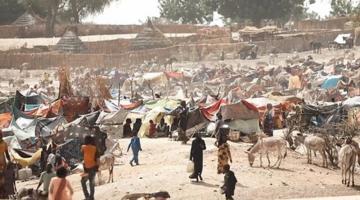 Ending the war in Sudan will require real Sudanese dialogue to carve out a new political course. The people must be wary of a manufactured process, run by a political and economic elite…
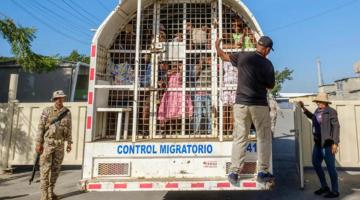 The reactionary government of the Dominican Republic has continued to pursue its racist policies against Haiti, deporting Haitians while exploiting the nation for its economic gain. Widespread sexual…
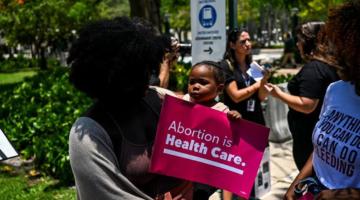 Florida’s ban takes effect May 1, 2024, and the fate of Arizona’s abortion access is in the throes of legal, political, and legislative battles.
 President Bola Tinubu’s lifting of fuel subsidies and liberalization of currency trade has pleased the IMF and increased hunger in Africa’s most populous country.


