by BAR editor and columnist Dr. Marsha Adebayo
More than half a century ago, developers paved over a Black cemetery in Bethesda, Maryland. Now the county claims the ancestral bones may no longer be there. Some accounts from the Fifties “describe construction crews carving a ditch in the hillside and pushing countless remains into it.” Said a Black protest leader: “When the people in the Planning Office tell us that the cemetery doesn’t exist I know they are lying. I played in that cemetery.”
Brother Harvey Matthews: “I’m Fighting for My Ancestors.” The Bethesda African Cemetery: Part I
by BAR editor and columnist Dr. Marsha Adebayo
“All of the wealth that we accumulated was stolen from us and given to white people. How could I not fight?”
Harvey Matthews, represents an African community that colonized Bethesda, Maryland, three years after the Emancipation Proclamation. This African land-owning community lived in the heart of one of the wealthiest settlements in America. Today, Montgomery County history books fail to impart that Bethesda was once a thriving African community that nourished artisans, masons, teachers, entrepreneurs, construction workers, parishioners and parents. The major thoroughfares in Bethesda, including River Road and Bradley Boulevard, were built by members of this African community. Members of the African River Road community were among the workers who built the White House bunkers that protect the president, his family and staff in the event of war.
The River Road African community thrived in Bethesda for nearly 60 years, until the 1950s when developers colluded with Montgomery County to disenfranchise and pillage this community. From circa 1955 to 1960 the Bethesda African community was under assault. The acre of land Harvey Matthews’s family owned would be worth over $20 million today. Whole Foods—that proudly displays its support of projects in underdeveloped countries—now thrives where the Matthews’s home and farm once stood.
“Members of the African River Road community were among the workers who built the White House bunkers that protect the president.”
The word "breathtaking" doesn't even approximate the scale of desecration visited upon those interred in the Bethesda African Cemetery. Once county officials allowed developers to displace the entire African population they set their sights on the African cemetery, building an apartment complex and parking lot on top of the graves. Some accounts describe construction crews, tired of the tedious and painstaking process of according African bones respect, carving a ditch in the hillside and pushing countless remains into it. Montgomery County officials now deny the presence of remains and contend that without proof the developer, NY Stock Exchange traded Equity One, be allowed to build a parking garage atop the African cemetery.
Harvey Matthews is the “face and primary spokesman” of the Bethesda Cemetery struggle. He rejects the notion that physical remains have to be discovered in order to legitimize the cemetery's existence. "Are they going to use radar on Lincoln's tomb? Or the Unknown Soldier? Or Kennedy's grave in Arlington to determine if those sites are still holy?" Matthews asks. "Of course not. Those people have historical significance. Well, I'm here to tell you that a final resting place for first generation free Africans in the United States is historically significant. We must honor that significance with a museum that consecrates what happened here."
“Matthews rejects the notion that physical remains have to be discovered in order to legitimize the cemetery's existence.”
Despite overwhelming community opposition at a recent Planning Hearing, conditional approval was given to Equity One to move to the next phase of the process. The “conditional” approval is predicated upon further testing to find remains in the burial ground. The following interview was conducted while walking the grounds over the Bethesda African Cemetery.
Marsha Coleman-Adebayo: Mr. Matthews, you face tremendous opposition from Equity One and the Montgomery County Planning Office. Yet you continue to fight for the integrity of the River Road African cemetery project.
Harvey Matthews: I have to stand for my ancestors, my mother, grandmother. I believe they are up in heaven looking down saying, “Harvey is fighting for us.” We built Bradley Blvd in Bethesda. In fact, it was our sweat and blood that build Bethesda. We worked in every sector of Bethesda, the roads, sanitation, housing, education. We built our own school and church, Macedonia Baptist Church. My grandfather and others in our community ran businesses from Georgetown to Bethesda. All of the wealth that we accumulated was stolen from us and given to white people. How could I not fight?
MCA: You have spoken about your childhood and playing in the Moses Cemetery. As you are aware, Equity One and Montgomery County Planning officials have cast doubt on the existence of the cemetery.
HM: As black folks we didn’t have a lot of places for recreation. We couldn’t bowl in the bowling alley. Our job was to replace the pins that whites struck down. We couldn’t swim at the swimming pool. As black folks we swam in the creek. As black kids, we didn’t have parks, or a recreation center, or ball fields, so we played in the cemetery. In the cemetery we could play hide and seek. We could run and not fear coming in contact with white people. My brother remembers that he used to put a sheet on his head and play like a ghost and scare the children. That was our fun. The cemetery was our playground. So, when the people in the Planning Office tell us that the cemetery doesn’t exist I know they are lying. I played in that cemetery.
MCA: Please tell us more about your family and the River Road Black community.
HM: My grandfather was the first black banker in Montgomery County. County historians want to erase his memory and his accomplishments. The bank that my Grandfather worked at was located on Old Georgetown Road and Wisconsin Ave. The community was filled with first generation free Africans who made amazing contributions in spite of all of the evilness that white society could throw at us. Because we were such a strong community, we were able to survive for almost 50 years. One of the things that makes me sad today is that black organizations are not responding to our cries for help. We are approaching black politicians, churches and individuals for help and the response has not been what I expected.
MCA: I have heard that the community was called the flat community. What does this mean?
HM: The whites called our section of Bethesda, the flats. It was called the flats because that’s where Black folks lived. We had a black colony that was independent and self-sufficient.
Dr. Marsha Adebayo is the author of the Pulitzer Prize nominated: No FEAR: A Whistleblowers Triumph over Corruption and Retaliation at the EPA. She worked at the EPA for 18 years and blew the whistle on a US multinational corporation that endangered South African vanadium mine workers. Marsha's successful lawsuit led to the introduction and passage of the first civil rights and whistleblower law of the 21st century: the Notification of Federal Employees Anti-discrimination and Retaliation Act of 2002 (No FEAR Act). She is Director of Transparency and Accountability for the Green Shadow Cabinet and serves on the Advisory Board of ExposeFacts.com. Marsha was inducted into the Maryland Women’s Hall of Fame, March 2017.

 Sexual issues were loudly debated among anti-colonial activists in the Dutch Caribbean colonies of Curaçao and Aruba, said Chelsea Shields, a history professor at the City Universi
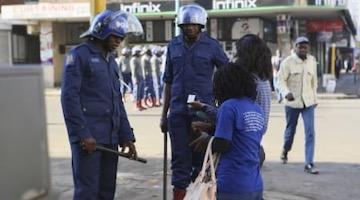 Black women “posed a problem” for the Black government that replaced white rule in Zimbabwe, because their bodies were thought to “disturb urban space,” said Rudo Mudiwa, a PhD in
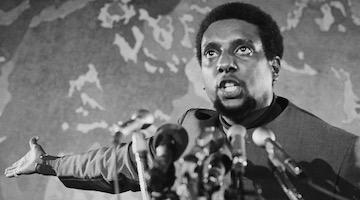 In the political hotbed that was Dar es Salaam, Tanzania, in 1967, US Black Power advocate Stokely Carmichael, who had not yet changed his name to Kwame Ture, made both friends and enemies among th
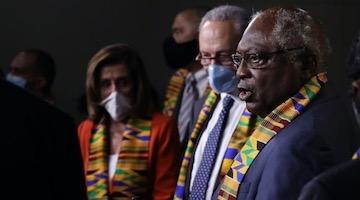 The Black misleaders have been busy selling out Black people for half a century, but are still only barely tolerated by the rich man’s Democratic Party and its racist figurehead, Joe Biden.
 The civil rights groups’ rather basic requests for voting rights protections and the need for federal intervention to address police brutality were minimized and dismissed by the president-ele


