by BAR executive editor Glen Ford
On November 5 and 6, a coalition of Black organizations will put forward a 19-point National Agenda for Self-Determination, to chart a pathway to real democracy and freedom. “Every central demand, every strategy of struggle, must be formulated with the goal of self-determination in mind.” Otherwise, the movement will be “drowned in reformist schemes and projects that bind Black people even more tightly to structures of outside control.”
Black Is Back Coalition to Hold a People’s Convention on Self-Determination
by BAR executive editor Glen Ford
“All peoples have the right to self-determination. By virtue of that right they freely determine their political status and freely pursue their economic, social and cultural development.” – from the International Covenant on Civil and Political Rights, adopted by the United Nations General Assembly, 16 December 16, 1966.
Those words ring with special urgency for Black people in the United States, who have long wrestled with the question of “civil” rights, which are those rights granted under various and changing interpretations of U.S. law, versus “human” rights, which are the birthright of all peoples, everywhere. The right to self-determination is perhaps the most pivotal human right, since only through exercise of this right can oppressed peoples shape their own destinies as equals in the human family.
Malcolm X insisted that Blacks take their stand on the solid legal, moral and internationally recognized ground of human rights and Black self-determination. He understood that “civil rights” were provisional, based on whatever a particular U.S. Supreme Court interpreted as allowable under a U.S. Constitution fashioned by rich slaveholders. By the time of Malcolm’s death in 1965 it was clear that the limited “civil rights” agenda of the “Big Six” Black organizations would not provide anything resembling “freedom” for Black folk, but would instead tie Blacks even closer to Democratic “foxes” (as opposed to Republican “wolves”) who “put you last, cause you are a chump. A political chump...and a traitor to your race.” (Malcolm X “The Ballot or the Bullet,” April 3, 1964.)
“Malcolm understood that ‘civil rights’ were provisional, based on whatever a particular U.S. Supreme Court interpreted as allowable under a U.S. Constitution fashioned by rich slaveholders.”
In the years following Malcolm’s assassination an extraordinary grassroots movement challenged, not just the vestiges of American apartheid, but the whole notion of assimilating Black Americans into the political structures of a “burning house” that had trampled upon the human rights of peoples at home and abroad. For a brief period, Black self-determination was the center of agitation, organization and debate: What is it? How do we achieve it? How do we defend it? However, the Black Liberation Movement was crushed by a combination of state repression and the rise of the “chumps”: a Black Misleadership Class, tied to the Democratic Party, that would collaborate in imposing a Mass Black Incarceration Regime that has been in place for two generations, with catastrophic effects on Black life in the United States.
It’s time to once again incorporate the right of self-determination into all aspects of the Black struggle in the U.S. The Black Is Back Coalition for Social Justice, Peace and Reparations -- formed in 2009, in part to show that not all Black organizations had been bamboozled by a Black presence in the White House -- will hold a national conference in Washington, DC, November 5 and 6, to put forward a 19-point National Black Political Agenda for Self-Determination.
“We know that this agenda is not all encompassing,” says the Black Is Back Coalition’s Declaration on the purpose of the convention. “It cannot be. Our movement is in a developing stage, having been re-energized most recently by the August 9, 2014 uprising of poor, working-class young people on Canfield Drive in Ferguson, Missouri after the police murder of 18-year-old Michael Brown.” If this emerging movement is to effectively grapple with an oppressive, white supremacist, capitalist power structure and state in the 21st century, it must keep its eyes on the prize: self-determination. Every central demand, every strategy of struggle, must be formulated with the goal of self-determination in mind. Otherwise, the movement will allow itself to be drowned in reformist schemes and projects that bind Black people even more tightly to structures of outside control.
“It’s time to once again incorporate the right of self-determination into all aspects of the Black struggle in the United States.”
For example, in the absence of a self-determinationist demand for Black community control of the police, “community policing” most often means strengthening police intelligence capabilities in the Black community.
A call for both excellence and more funding for public education minus a demand for Black community control of schools will achieve neither excellence nor the fundamental democratic goal of self-determination.
The National Black Political Agenda’s 19 Points cover the widest range of issues, with self-determination as the end-goal in each arena of struggle. The Point on gentrification reads:
“Halt Gentrification through the empowerment, stabilization and restoration of traditional Black neighborhoods. Black people have the right to develop, plan and preserve our own communities. No project shall be considered ‘development’ that does not serve the interests of the impacted population, nor should any people-displacing or otherwise disruptive project be allowed to proceed without the permission of that population. Peoples that have been displaced from our communities by public or private development schemes have the Right to Return to our communities, from New Orleans to Harlem.”
And so it goes, from “Black Women” to “Climate Change.” The national convention’s Declaration lays out the political intention of the gathering: “The Black is Back Coalition for Social Justice, Peace and Reparations does not believe that our future should be in the hands of any institution that does not have its origins within our own community and has not been forged through the struggles of our people.”
Let the “chumps,” collaborators and misleaders play with the banksters, warmongers and incarcerators in their Democratic Party sandbox. On November 5 and 6, in Washington, Black people will chart a path to freedom through self-determination.
For more information on the November 5 and 6 National Black Political Agenda for Self-Determination Convention, go to the Black Is Back Coalition website: http://www.blackisbackcoalition.org

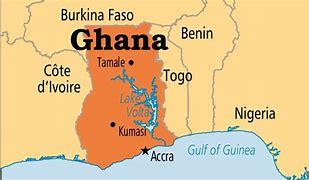 Why would the government of Ghana allow a U.S. military base on its territory? Kwesi Pratt Jr., a journalist and leader of the Socialist Movement of Ghana explains.
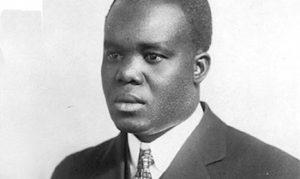 Hubert Henry Harrison was one of the foremost Black socialist and nationalist thinkers of the early 20th century. He was known as "the father of Harlem radicalism." This is the last of a three-…
 The election victory of Gustavo Petro and Francia Marquez in Colombia has implications for relations with other nations, such as neighboring Venezuela.
 The Security Council must say no to continuing interference in Haiti's affairs through the United Nations Integrated office in Haiti (BINUH). BINUH is just the latest iteration of colonial control…
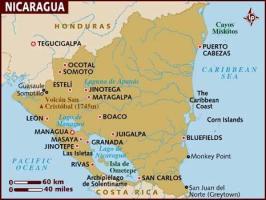 The U.S. corporate media loyally follow the state's narrative about other countries. Nicaragua has instituted rules similar to those in the U.S. regarding governance of NGOs. But destabilizing that…



