by Lorenzo Johnson
The author has spent almost 20 years in prison for a crime he didn’t commit. He asks, “Why has our government yet to intervene when there have been record numbers of exonerations for the past two years?” Incarcerating the innocent is a crime. “The main reasons behind wrongful convictions are ineffective assistance of counsel, false testimony, police and prosecutorial misconduct, misidentification, junk science, false confessions, and evidence suppression.”
Is There a Cure for Wrongful Convictions?
by Lorenzo Johnson
“There are no safeguards in place to protect the innocent.”
For decades, we have been witnessing the evolution of exonerations for wrongful convictions. There was a time when an innocent prisoner being exonerated was world news—now, it’s an everyday occurrence. According to the National Registry of Exonerations, last year saw a new record, with an average of three innocent prisoners being exonerated every week. Exonerations are so common now that some don’t even make the local news. Although the rise in exonerations is good news, we haven’t “fixed” the problem yet, by any stretch of the imagination. We’ve only scratched the surface of the thousands of innocent men and women who have been falsely convicted.
The main reasons behind wrongful convictions are ineffective assistance of counsel, false testimony, police and prosecutorial misconduct, misidentification, junk science, false confessions, and evidence suppression (including DNA evidence). The average time an innocent person spends in prison is between 13½ and 15 years. And that’s only if the courts accept their evidence of innocence. Where’s the humanity in making an innocent person wait all these years for their due process rights?
In 2015, there were a record 27 exonerations that involved false confessions. Eighty percent of these false confessions were in homicide cases, mostly by defendants who were under the age of 18, mentally handicapped, or both.
“The average time an innocent person spends in prison is between 13½ and 15 years.”
Official misconduct was identified as the cause in 65 exonerations in 2015, another record.
I know about these issues personally — I’ve been in prison for almost twenty years for a crime I did not commit. (You can read about my story, including my exoneration in 2012 and the court ruling that sent me back to prison here.)
Some limited steps are being taken to address wrongful convictions. In 2015, there were 24 “conviction integrity units” (CIUs) operating within prosecutors’ offices tasked with preventing, identifying and correcting false convictions. This is double the number of CIUs in 2013 and quadruple the number in 2011. But half of these units have yet to be involved in a single exoneration, and as the National Registry of Exonerations points out, several “have no contact information that’s publicly available on the web or by telephone, including some that have been in operation for years.”
Our criminal justice system continues to fail innocent prisoners because of the structures and statutes that legislators refuse to change. There are no safeguards in place to protect the innocent. Habeas corpus protection has been literally gutted, putting more and more limits on defendants’ access the courts. Who does this affect the most? The innocent.
Meanwhile, what laws have been enacted concerning penalties when officers of the court are found liable for a wrongful conviction? None! If a person is found guilty of murder, they are sentenced to a mandatory sentence. A false conviction takes an innocent life as well by sentencing that person to life in prison, but where is the punishment for the officers of the court who are responsible?
“What laws have been enacted concerning penalties when officers of the court are found liable for a wrongful conviction?”
The public defender’s office in Iowa were the first in the country to start a wrongful conviction review unit. I commend them. Public defenders nationwide are underfunded, but many other attorneys and advocacy groups have followed suit. But where are our political leaders? Why has our government yet to intervene when there have been record numbers of exonerations for the past two years? Why is this not part of the conversation when prison reform is discussed?
What also needs to stop is the fact that innocent prisoners are targeted when we speak out about our injustice. We are not “whistleblowers,” we are human beings whose lives have been taken for crimes we never committed. The judicial system shouldn’t be outraged that we are speaking out, they should be outraged that these heinous acts by court officials ever took place.
Police and prosecutors need to take more active roles in the review and reversal of factually erroneous convictions. Efforts need to step up at the front end, because once a conviction becomes final, the path to exoneration is fraught with so many obstacles. How long will our suffering last?
Lorenzo Johnson served 16 and a half years of a life-without-parole sentence until 2012, when the Third Circuit Federal Court of Appeals ruled there was legally insufficient evidence for his conviction. He remained free for four months, after which the US Supreme Court unanimously reinstated the conviction and ordered him back to prison to resume the sentence. With the support of The Pennsylvania Innocence Project, he is continuing to fight for his freedom. Though he does not have internet access himself, you can email his campaign, make a donation, or sign his petition and learn more at: http://www.freelorenzojohnson.org/sign-the-petition.html.

 Before beginning his term in office, president-elect Donald Trump already proclaimed his intention to seize the Panama Canal. Understanding the importance of the canal and the history of…
 After dozens died in stampedes, Nigerian President Bola Tinubu remarked, “We should just get on with it.” Tinubu’s IMF-prescribed policies have more than doubled food prices in the country,…
 Ajamu Baraka was a guest on the SOBH program on Press TV. He discussed his history of political organizing and activism, human rights, and the importance of the Black Radical Peace Tradition.
 We talk about the killing of Robert Brooks by prison corrections officers and the need to close Rikers Island. We also discuss a recent Cuban conference dedicated to ending racism in that country.
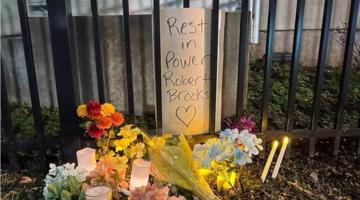 Darren Mack, co-founder and co-director of Freedom Agenda, talks to us about the killing of Robert Brooks, who died after being beaten by corrections officers in a New York state prison, and the need…


