by Mark P. Fancher
Africa has been invaded and re-occupied, militarily and commercially. “Non-African superpowers are competing for and staking claims to Africa’s resources while Africans look on with helpless resignation.” The U.S. military holds sway from the Cape to Cairo. But, “in the 21st Century ‘scramble for Africa’ China leads the race.”
Big Business, Big Guns and Big Lies in Africa
by Mark P. Fancher
“The Chinese presence is perhaps greatest in Ethiopia.”
One of the world’s worst kept secrets is that the United States has incrementally established a military presence in Africa from the “Cape to Cairo.” Notwithstanding claims that the military is needed there to thwart terrorism and provide Africans with humanitarian assistance, the real reason for U.S. military expansion is protection of corporate interests.
On any given day the website of U.S. Africa Command (AFRICOM) showcases several articles about U.S. military personnel providing medical supplies to rural African villages, or rolling up their sleeves to assist with bringing clean drinking water to devastated regions. Still other articles describe special anti-terrorist training and joint military exercises provided to soldiers in the African countries’ armies. It is all presented with such a distinct air of benevolence that a casual observer can remain totally unaware of the underlying corporate mission.
AFRICOM has not been forthcoming about the corporate lust for economic opportunities in Africa, but the White House has been quite candid. A $14 billion investment by U.S. companies in infrastructure projects in Africa last year prompted a White House official to comment to journalists: "These investments will deepen U.S. economic engagement in Africa, fueling growth that will support broader African prosperity and emerging markets for U.S. businesses, which will support jobs in both the United States and Africa." However, when it comes to the presence of the U.S. military in Africa and its role in carrying out a corporate agenda, the U.S. government as a whole has not been as transparent. There is nevertheless plenty of evidence that can be used to connect the dots. China’s African adventure is instructive in this regard.
“Chinese settlements are being built, de facto, in nearly every African nation.”
By all accounts, in the 21st Century “scramble for Africa” China leads the race. Stephen Hayes, President of the Corporate Council on Africa explained to The Cipher Brief: “China is looking at every country on the continent, north to south, east to west. We (the U.S.) continue to focus on a few, particularly where the markets are large and the potential is equally so. Certainly China is engaged in the extraction industries in order to feed its own economy, but I see a far broader engagement in nearly every sector of the economy. This is especially so when you realize that Chinese settlements are being built, de facto, in nearly every African nation. They are actively engaged in small shop business, as well as in large enterprises. I don’t know that Africa has ever seen such engagement, even in the colonial past.”
Hayes also notes that the Chinese presence is perhaps greatest in Ethiopia. He said: “China’s investment in Ethiopia is enormous and is still well-received by the leadership. Sure, they would like other countries but China is making an enormous difference for Ethiopia right now.” Any good capitalist knows that large investments must be protected. Thus, it should come as no surprise that China has announced plans to build a military base in Djibouti, which is in geographical proximity to Ethiopia, and which is the same country that is home to the largest U.S. military base in Africa, Camp Lemonnier.
If China believes its military must protect Chinese investments, there is no reason why the U.S. should expect anyone to believe the lie that the U.S. military presence in Africa is driven by different motives. In fact, if humanitarian assistance and anti-terrorism were the dominant reasons for U.S. military engagement in Africa, U.S. officials would be far less jittery about China’s recent moves. Delaware Senator Chris Coons’ comments betray U.S. fears. He told The Hill: “Overall, China’s presence in Africa is certainly something we need to pay more attention to, but not just in Djibouti. Africa’s middle class is growing faster than ever, and the continent offers great opportunities for partnerships between both governments and the private sector. We don’t want to lose out on those opportunities to Chinese companies or the Chinese government, whose interests might not always align with ours.”
“African heads of state pursue the most expedient avenues for the extraction and processing of their respective national, natural resources.”
The U.S. military presence in Africa is already extensive, but the new Chinese military base may prompt even greater expansion. In comments to The Hill, analyst J. Peter Pham said: “U.S. global leadership is predicated heavily on the U.S. role in protecting and to an extent controlling sea lanes of communication. If China establishes itself as a fellow protector of the global commons, then it certainly increases its stature.” Thus, military brass are likely to conclude that an even stronger U.S. armed presence can preserve military dominance in Africa and bolster non-military efforts to romance China’s new friends. Notably, Ethiopia’s prime minister has been invited to be the keynote speaker at an upcoming U.S.-Africa business summit sponsored by: Chevron, Exxon-Mobil, AstraZenica, John Deere, Microsoft, Ford Motor Company and a couple of dozen other major corporations.
The spectacle of non-African superpowers competing for and staking claims to Africa’s resources while Africans look on with helpless resignation is a tired, pathetic movie that we have seen multiple times before. It never has a happy ending. The re-runs keep coming because African heads of state who pursue the most expedient avenues for the extraction and processing of their respective national, natural resources allow themselves to be seduced or bullied into subservient relationships with non-African corporations and governments. Freedom from these relationships will come only when Africa learns it can and must be completely self-reliant and self-sufficient. The path to this type of genuine liberation is a long, difficult one because it will require first the purging of non-African corporate and government parasites from the continent. This task will be considerably more difficult if foreign militaries are entrenched in Africa. Because African politicians who seek a quick fix will be unwilling to walk this revolutionary path, it must instead be traveled by the broad masses of Africa’s people and the people of the continent’s diaspora.
Mark P. Fancher is an attorney who writes frequently about the U.S. military presence in Africa. He can be contacted at mfancher@comcast.net.

 Policing in the United States is inherently racist and right wing. But individual members of right wing groups are also training police officers across the country.
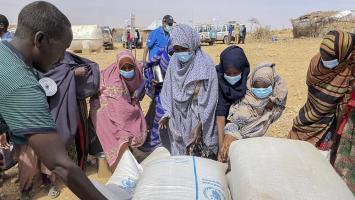 US/NATO sanctions against Russia have resulted in food shortages and price increases throughout the Global South.
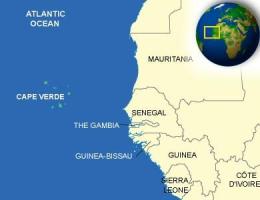 The Trump and Biden administrations violated the Vienna Convention on Diplomatic Relations by arresting and kidnapping Venezuelan diplomat Alex Saab. Cape Verde was under U.S. pressure to participate…
 $100 billion was pledged to assist the Global South amidst the climate change crisis but world wide defense spending now exceeds $2 trillion. War making trumps saving humanity from…
 The U.S. and Australia have fiercely opposed the new security agreement between China and the Solomon Islands. They are attempting to construct a Monroe Doctrine in the Pacific, imposing US hegemony…


