by BAR executive editor Glen Ford
Police, prosecutors, politicians and corporate propagandists seized on the shooting of two cops in Ferguson, to claim that the Black Lives Matter movement had suffered a “setback” – as if they have the moral authority to judge. But the movement is not about keeping its enemies happy, but to establish the power of the Black community over the police.
No Justice, No Peace, Without Black Community Control of Police
by BAR executive editor Glen Ford
“The undeniable logic of the movement is to establish the supremacy of the Black community over the police that patrol the community – period.”
The New York Times and other megaphones for white supremacy have proclaimed that the Black Lives Matter movement suffered a “setback” with the shooting of two cops, last week, during a demonstration in Ferguson, Missouri. To buttress its March 12 headline, “Just as Ferguson Was Making Progress, Shooting Deals a Setback,” the Times quoted Kim Tihen, a white city councilwoman and former Ferguson police officer who is “outraged by the behavior and lawlessness of the protesters who want nothing more than to destroy our city,” and Courtney Davis, a Black Democratic state legislator whose district includes Ferguson, who lamented that the incident “takes away the forward momentum the protesters did have.” Montague Simmons, of the Organization for Black Struggle, described the timing of the shooting as “horrific, because the conversation is really just beginning about what the transformation that we’re looking for looks like.”
There can be no doubt that the wounding of the two officers – both of whom are recuperating at home – has disrupted the timelines of the various actors in the Ferguson drama. However, the determination of whether the “movement” has suffered a “setback” depends on the goals of the movement, which can only be defined by its active participants. This includes people like Mr. Simmons, of the Organization of Black Struggle, and DeRay McKesson, a veteran activist and chronicler of the Ferguson saga, who maintains the shootings should not be allowed to have any impact on movement strategies. He told the Times, “I think people have been looking to discredit the protesters since the first protests.”
The movement’s adversaries – from the local police to the Justice Department to corporate propaganda outfits like the Times – have no moral right to judge the movement’s progress. However, the cops’ behavior in the wake of the shooting does show that 200-plus days of protests have wrought no substantive change in the hearts and minds of Ferguson and St. Louis County lawmen. The accused gunman, 20 year-old Jeffrey L. Williams, whose body bears clear evidence having been badly beaten by cops, now wants to recant his confession. The police refuse to reveal details of how the arrest was made, but say none of the officers involved wore body cameras.
“The movement’s adversaries – from the local police to the Justice Department to corporate propaganda outfits like the Times – have no moral right to judge the movement’s progress.”
County police chief Jon M. Belmar has not recanted his initial claim that the police were “ambushed” by someone “embedded in” the protesters outside Ferguson police headquarters – a theory that defies common sense. Why would protesters call down upon themselves a potential fusillade of police return fire?
Attorney General Eric Holder also used the term “ambush,” and called the perpetrator “a damn punk, a punk who was trying to sow discord... This was not someone trying to bring healing to Ferguson.” Apparently, that’s Obama’s job.
The white mayor of Ferguson, James Knowles III, whose house was targeted for protests in the days following the shooting, said he and the almost lily-white city council will “not allow, nor tolerate, the destructive and violent actions of a few to disrupt our unifying efforts.” What unifies the protesters is their desire for Knowles to leave.
Since, as in New York City, in December, the protesters had nothing to do with shooting the police, they have nothing to answer for to the cops, the mayor, the attorney general, or the corporate media, all of whom are fundamentally hostile to the Black Lives Matter movement. If the confusion and drama surrounding the shooting has disrupted the movement’s work towards a “transformation” of the relationship between the police and the Black community, then it becomes even more important to define what that transformation should be – to define the goals of the movement.
If the goal of the movement is to establish better relations with the Ferguson police, as they are currently constituted, then last week’s shooting was clearly a setback. You don’t start a dialogue with gunfire – although cops constantly express themselves through the use of force.
If the goal of the movement is to dismantle the Ferguson Police Department and turn the city over to the county police – an idea that Attorney General Holder has entertained – then the shootings were definitely a setback. One of the wounded officers worked for the county; the other one came from a nearby town. The county police don’t like the people of Ferguson much, at the moment. (Did they ever?)
If the goal of the movement is to pave the way for the U.S. Justice Department to conclude a consent decree agreement with Ferguson so that Eric Holder’s successor can “bring healing” to the town through the usual list of “reforms” – if that’s what the movement has been all about, then the shootings are a setback to consent-decreed harmony with the army of occupation.
But, none of these aims have anything to do with “transformation” of the police-Black community relationship, which can only be defined in terms of power: the power of Black people over the police.
“The protesters have nothing to answer for to the cops, the mayor, the attorney general, or the corporate media, all of whom are fundamentally hostile to the Black Lives Matter movement.”
This is not a movement for “reconciliation” between the cops and Black people; there can be no reconciliation with injustice.
This movement is not about making the armed occupation of Black communities more pleasant, but for an end to the occupation.
The movement is not concerned about making the cops feel appreciated, safe or secure. Rather, it is determined to make the police accountable to the Black community, so that Black people can feel safe and secure and unafraid of the police.
This is not a movement seeking some spirit of “give and take” with the police, as if they are sovereign powers separate from the people. The goal is to change the meaning and practice of policing, to subordinate the police – to make them serve the people.
Ferguson provided a model for Black community resistance to armed occupation in 21st century America. The undeniable logic of such a movement is to establish the supremacy of the Black community over the police that patrol the community – period. The movement’s job is to gather and nurture the people-power to create Black community institutions that ensure there will be no more police departments like those that exist, not just in Ferguson, but in every city and town in Black America, including those cities under the U.S. Justice Department’s consent decree “reforms.”
This movement is inseparable from the struggle for Black self-determination, which is the democratic principle that should guide us in transforming policing in Black America. The Black Is Back Coalition for Social Justice, Peace and Reparations will hold a national conference in Ferguson, April 18 and 19, on ways to advance the demand for Black Community Control of the Police. We don’t need a truce with the cops, or consent decrees that sweeten the armed occupation of our communities. We must create the conditions in which the police become “one with the people.”
BAR executive editor Glen Ford can be contacted at Glen.Ford@BlackAgendaReport.com.
For more information on the Black is Back Coalition national conference on Black Community Control of Police, in Ferguson, Missouri, April 18 and 19, go to http://www.blackisbackcoalition.org/

 The "transitional council" in Haiti is another part of the plan to maintain the dominance of imperialist forces over the island. This process is driving the nation further into a socioeconomic crisis.
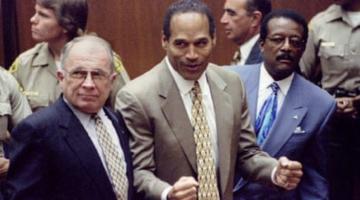 O.J. Simpson's acquittal in one of the most infamous murder trials of the 20th century was celebrated as a symbolic win for the Black community against an oppressive system. However, O.J. was…
 The Axis of Resistance is shining a light on the reactionary regimes in the region who remain active and willing agents of imperialism.
 Ending the war in Sudan will require real Sudanese dialogue to carve out a new political course. The people must be wary of a manufactured process, run by a political and economic elite…
 The reactionary government of the Dominican Republic has continued to pursue its racist policies against Haiti, deporting Haitians while exploiting the nation for its economic gain. Widespread sexual…


