Making Movements Matter
by Michelle Renee Matisons
Originally published by our friends at Counterpunch on January 16.
“#AllLivesMatter is widely viewed as a racist white effort to erase or diminish the obvious historic and contemporary conditions that specifically and uniquely target black people.”
Recently, many people, including critical theorist Judith Butler, have weighed in on the important political distinctions between #BlackLivesMatter and #AllLivesMatter. As an author who has recently had an article with the title “All Lives Matter” circulate (see CounterPunch, for example), I feel it is incumbent on me to also weigh in on what I view to be significant political issues — or really a sensibility — here. Black lives, brown lives, women’s lives, poor lives, all lives: what’s at stake here?
When I wrote my piece about “Class, Race, Gender, and U.S. Policing” that sought to reveal how important intersectional analysis is for our current political moment, I sought a term that would embody the inclusive spirit foundational to intersectional – class, race, gender/sexuality – analysis. I was disheartened at the time that many men I know were debating how racism interacted with capitalism to create the current policing apparatus – yet they, shockingly, failed to mention heteropatriarchy! For that moment, “All Lives Matter” seemed to fit that inclusive feminist spirit well, as the words advance the idea that no group’s experience of oppression should be sacrificed (“all the women are white, all the blacks are men…”) as we build an anti-policing movement. Citing the Abner Louima and Marissa Alexander cases, I sought to indicate that gender/sexuality analysis is essential to the policing apparatus’ operations, figuring that actual case studies are the most helpful for adding concrete substance to more abstract intersectional assertions.
Not a big user of Twitter, I quickly realized that #AllLivesMatter was being used to usurp a focus on the anti-black racism constitutive of today’s political moment, with the best analysis offered by Alicia Garza. I should’ve guessed so much and sought a different title for expressing my feminist sentiments. #AllLivesMatter is widely viewed as a racist white effort to erase or diminish the obvious historic and contemporary conditions that specifically and uniquely target black people. The exhausted hashtag has been exposed as an effort to deny racial specificity and erase black experiences. Yet, we still need to hone our ability to connect and analyze intersecting oppressions as we move forward in the anti-policing movement. How do we balance the particular (group identity) and the universal (broader agenda) tensions inherent in mass movement organizing?
“There is no singular mass movement we can point to that practically embodies the all-inclusive spirit perfectly.”
When I teach U.S. social movement history, I always run into the same problem as a new generation of students and activists are introduced to the contributions of and problems faced by past mass movements. I approach the framing of the movements with my ideal intersectional model in mind (anti-capitalist/imperialist/racist, feminist/womanist, queer) but, in reality, there is no singular mass movement we can point to that practically embodies the all-inclusive spirit perfectly. (There are tendencies and organizations we can point to, with Combahee River Collective being a common historic example.) This realization of the challenges inherent in mass movement development of the ideal all-inclusive intersectional spirit led me to question whether this was practically possible when we consider what movements are and how people become mobilized to participate in them. When I first encountered this problem, I turned to Patricia Hill Collins for guidance. Author of the groundbreaking Black Feminist Thought: Knowledge, Consciousness, and the Politics of Empowerment, which utilized standpoint theory to develop a specific black feminist standpoint, Collins’ work taught me how history shapes the uniquely intersectional lives of American black women (although her work was criticized for erasing queer, poor, and non-U.S. black women immigrants’ experiences). Collins’ first book, and her second book, Fighting Words: Black Women and the Search for Justice, helped me think through how movement inclusivity is both a righteous and perhaps impossible task that we should nonetheless persistently pursue.
Karl Marx’s notion of the proletarian standpoint implied that the proletariat was unique and historically situated in relationship to the means of production to overthrow capitalism. The academic feminist theoretical adaptation of the standpoint concept has developed in many directions, with some directions proving more fruitful than others, and I have adapted the concept under the most general definition — “a unique group identity based on a shared experience” — precisely because I feel the concept can be quite useful in the mass movement organizing and analysis context. In fact, never have I found the concept more useful than in its application to the anti-black racism of police brutality. I was teaching a feminist theory college course years ago in Long Island when four police officers were acquitted for Amadou Diallo’s murder. My classroom near Garden City, Long Island, replicated locally segregated neighborhood demographics. My black students sided squarely with Diallo and called for police convictions, while most white students sided with police officers, even citing the experiences of family members in the NYPD. Far from excusing my white students for having such backwards views, I was able to situate their racism in their own histories and experiences by using the idea of a “white standpoint”: when historical forces and material reinforcements are considered, racism grows more, not less, entrenched and daunting.
“Movement inclusivity is both a righteous and perhaps impossible task that we should nonetheless persistently pursue.”
Back then, given the views I had witnessed among white people regarding policing, I wouldn’t have guessed a mass, multi-racial, anti-policing movement would be possible in the U.S. But it’s here, and now we face the challenges of crafting a movement that matters, one that is: educated on and mobilized around the specificities of institutionalized anti-black racism; connected to other pro-immigrant/ anti-racist/ anti-deportation (#BrownLivesMatter) struggles; inclusive of women’s issues and gender/ sexuality analysis; and tied to the labor movement and anti-capitalist politics. My adaptation of the standpoint concept assumes people are always moved or mobilized from within their own viewpoints and experiences – for better and for worse. (For example, despite my individual feminist intention when writing the “Class, Race, Gender and U.S. Policing” article, my usage of #AllLivesMatter to capture my article’s spirit of gender/sexuality inclusivity unfortunately contributed to the ill-spirited circulation of an exhausted anti-black hashtag.) That, for a variety of reasons, enough people identify excessive militarized and murderous policing as their issue speaks volumes to the promises of this historic moment. But it also delivers the ultimate challenge: how do we address the fact that mobilized groups will inevitably move (against the police, in this case) from their own viewpoints and experiences?
White activist movement roles remain a central concern, as the knee-jerk impulses for epistemic centrality and organizational control are not easy impulses to shake. The diminishment of heteropatriarchy’s structural centrality in the policing apparatus is also no easy impulse to shake. Finally, those who see the current murderous policing state as a matter of misguided policy and not capitalist business as usual present serious problems in the mass movement context.
Centralizing the specificity of black lives, while upholding the general refusal of the policing apparatus that affects so many lives, is the spirit that will make this anti-policing movement really matter.
Michelle Renee Matisons, Ph.D. has written for Counterpunch, Black Agenda Report, Z Magazine, Mint News Press, the NJ Decarcerator, Rethinking Schools, Alternet, and other publications. She can be reached at michrenee@gmail.com.

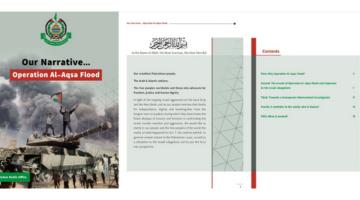 The Palestinian Resistance Movement Hamas issued a 16-page document on Sunday, entitled ‘Our Narrative … Operation Al-Aqsa Flood’. The document addresses many critical questions about the context,…
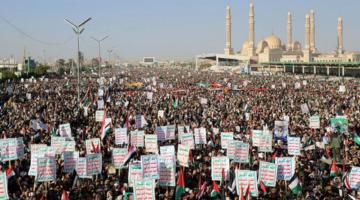 As the White House and 10 Downing Street deny genocide in Gaza, both imperialist states bomb Yemen, the most impoverished country in the West Asia region.
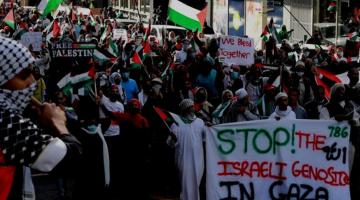 The International Coalition to Stop Genocide in Palestine renews its call for support of South Africa's charge of genocide against Israel in the International Court of Justice.
 One hundred years since Lenin’s death, Nigerian socialist Abiodun Olamosu describes the revolutionary's influence on his own political development.
 For the third time a federal court has dismissed a case targeting the U.S. Campaign for Palestinian Rights' support for the 2018-19 Great March of Return protests in Gaza.


