On October 15, the United Nations Will Fail Haiti Once Again
by Kevin Edmonds and Ajamu Nangwaya
“The historical record has shown that the Security Council will mostly likely renew MINUSTAH for another year without any thought to damage being done to Haiti.”
On October 15, the United Nations Security Council will meet to “debate” the extension of the United Nations Stabilization Mission in Haiti (MINUSTAH) which has acted as an occupying force in the country since the summer of 2004. MINUSTAH was created to put an end to the Multinational Interim Force (primarily made up of U.S., French, Canadian and Chilean troops) which occupied Haiti after an internationally backed coup d’état ousted the democratically elected president Jean Bertrand Aristide and his Fanmi Lavalas party from power on February 29, 2004.
During these ten years, MINUSTAH has compiled a horrific record of human rights abuses, including but not limited to extrajudicial murder, an epidemic of sexual assault against Haitian men, women and children, the repression of peaceful political protests, in addition to unleashing cholera through criminal negligence which has caused the death of over 9,000 people and infecting nearly a million more. Despite these well documented abuses, the historical record has shown that the Security Council will mostly likely renew MINUSTAH for another year without any thought to damage being done to Haiti. As evidence of how little resistance there is to the renewal of MINUSTAH’s mandate in the United Nations, on August 21, MINUSTAH’s budget was extended to June 2015 – clearly signaling that the occupation is certain to continue.

When one examines the level of instability in Haiti which is used as the justification for MINUSTAH’s continued presence in the country, the United Nations’ argument of protecting the Haitian people from themselves falls flat. Despite the mainstream media portrayal of Haiti as a lawless and dangerous country, in 2012, it had a homicide rate of 10.2 per 100,000 people, ranking it as one of the least violent countries in Latin America and the Caribbean – in contrast to Washington DC which sat at 13.71 per 100,000. Furthermore, to argue that it is the presence of MINUSTAH which has acted as a stabilizing force to keep violence down, the United Nations Office on Drugs and Crime reported that between 2007 and 2012, Haiti’s homicide rate doubled from 5.1 to 10.2 per 100,000.
“The United Nations’ argument of protecting the Haitian people from themselves falls flat.”
For the fiscal year running from July 1, 2013 to June 30, 2014, $609.18 million was allocated to MINUSTAH. In the ten years in which MINUSTAH has been operational, their total budget is over $5.5 billion. If this same amount had been applied towards human development in the form of investments in clean water, sanitation, healthcare and education – Haiti would have the potential reclaim its sovereignty and self-determination.
We must be clear, the United Nations Stabilization Mission in Haiti is not based on any principles of humanitarianism, but rather those of an imperialist occupation which seeks to make sure that the island’s government can implement and maintain repressive policies favorable to international investors. Thus the reasons for MINUSTAH’s continued presence in Haiti were confirmed thanks to revelations by WikiLeaks. One of the most up-front classified cables, from US Ambassador Janet Sanderson on October 1, 2008, stated that, “A premature departure of MINUSTAH would leave the [Haitian] government…vulnerable to…resurgent populist and anti-market economy political forces—reversing gains of the last two years.”
The corrupt and repressive regime of President Michel Martelly has proudly boasted that “Haiti is open for business.” Indeed, this is true – however it is the people and the land that are being sold. Canadian mining companies like St. Genevive and Eurasian Minerals have taken advantage of weak laws to prospect new sites covering enormous swaths of territory (an estimated 1/3 of Northern Haiti has been granted to companies via permit), setting up the potential for substantial displacement through forced evictions and environmental destruction. Montreal based Gildan Activewear (the world’s largest manufacturer of blank T-shirts) has routinely pressured the Haitian government to block an increase in Haiti’s abysmally low daily minimum wage and has undermined unionization efforts in its plants.
MINUSTAH has carried out a series of human rights violations resulting in a loss of Haitian sovereignty, stability, dignity and life. Its record of engaging in acts of extrajudicial murder, sexual assault, suppressing peaceful political protests, undermining democracy and introducing cholera into Haiti are more than enough grounds to revoke its mandate. Yet for geopolitical and economic reasons, this does not happen.
As people of good conscience and principled internationalists, we collectively have the capacity and the resources to force an end to the military occupation of Haiti. However, we will not be able to fulfill this potential and stand in solidarity with the laboring classes in Haiti, if we don’t organize campaigns in Canada and across the world that pressure contributing states to end their provision of military and police personnel to MINUSTAH’s occupation force.
“We have a moral and political obligation to support the struggle for self-determination by the popular classes in Haiti.”
Our opposition to the military occupation of Haiti ought to take the form of grassroots-oriented campaigns that educate, mobilize, and organize membership-based organizations to bring an end to the occupation. It is critically necessary to reach out to the people in the spaces in which they are present, and offer specific actions that they may carry out to force the withdrawal of the occupation troops.
We have a moral and political obligation to support the struggle for self-determination by the popular classes in Haiti. The successful Haitian Revolution eliminated the enslavement of Afrikans in Haiti, and lit the fire of freedom in slaveholding states in the Americas.
The people of Haiti demonstrated their solidarity with the colonized peoples in South America by providing a place of refuge, guns, ammunition, personnel, and a printing press to Simon Bolivar’s campaign to liberate the region from Spanish colonialism. The French Revolution and the American Revolution cannot lay claim to being beacons and agents of emancipation in the Americas.
As we work to rid Haiti of MINUSTAH’s occupation forces, we ought to be motivated by the fact that we are continuing a long and proud tradition of people-to-people solidarity in support of emancipation in the Americas. Haiti is the architect and pioneer of this principled political tradition. We should remember this legacy as we call for the Security Council to pull out the occupation troops from Haiti.
Kevin Edmonds is a PhD student and member of the Toronto Haiti Action Committee and the Campaign to End the Occupation of Haiti
Ajamu Nangwaya, Ph.D., is an educator. He is an organizer with the Campaign to End the Occupation of Haiti, and the Organization of Afrikan Struggles and International Solidarity.

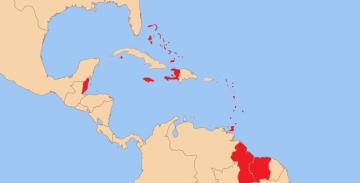 The author asks CARICOM member states to support the Haitian people in their struggle for sovereignty.
 Colombia's new president is popular with the people but beset by enemies. It is a common situation where the popular vote is not indicative of who really holds political power.
 At least 16 people were killed after protests broke out in Senegal following the sentencing of leading opposition figure Ousmane Sonko to two years in prison. Mass public unrest has grown against…
 Uganda and Rwanda began their incursions into the Democratic Republic of Congo 23 years ago. Full reparations to victims have not been paid and the two invader countries still act with impunity.
 Tunde Osazua is Outreach Coordinator for Black Alliance for Peace and a civil society representative in the UN Permanent Forum on People of African D



