Ethiopia: Desalegn’s distraction?
by FikreJesus Amahazion
This article previously appeared in Pambazuka News.
“The Ethiopian army has engaged in executions, rape, torture, arbitrary arrests, and various other abuses.[“
The Ethiopian prime minister’s recent outburst against Eritrea appears to be an attempt to turn the spotlight away from his own government’s crises as it continues to face rising popular discontent against its various policies, crackdowns and interference in socio-religious affairs. Recently, Ethiopian Prime Minister Hailemariam Desalegn conducted an interview in which he threatened northern neighbor, Eritrea. Desalegn warned that Ethiopia has shifted its policy towards Eritrea, and is now determined to unseat Eritrean President Isaias Afwerki by force. The interview was quickly followed by news that the Red Sea Afar Democratic Organization (RSADO) – a terrorist group harbored and financed by Ethiopia – had vowed to “step up military attacks” to topple the Eritrean government.

While the respective statements are serious – in that they precipitously challenge, if not flagrantly violate, accepted international norms, laws, and diplomatic protocols – they do not constitute “breaking developments” per se. For example, prior to his passing, the late Meles Zenawi had similarly changed Ethiopia’s policy toward Eritrea from one based on “no-war-no-peace” to the active pursuit of “regime change” in Asmara. Further, the RSADO has made similar threats in the past. Rather, the developments are possibly better understood within the broader context of Ethiopia’s own internal socio-political challenges and dynamics.
In the fields of political science and international relations, the diversionary theory of war and foreign policy is one of the most speculated about and debated concepts. Most simply, it argues that political leaders who are confronted with public antagonism over domestic economic, social, and political problems may seek to divert the populace’s attention from domestic problems and strife by focusing upon external issues – thus hoping to survive politically. Shifting national attention to an external entity or topic can absolve vulnerable leaders of blame, produce a “rally around the flag” effect, garner support or buy time for leaders.
Within this analytical framework, Desalegn’s remarks offer much insight. By shifting the emphasis to Eritrea, Desalegn removes the spotlight from his own government’s crises and troubles as it continues to face rising popular discontent with its various policies, crackdowns, and interference in socio-religious affairs. Further, with “democratic elections” on the near horizon, the comments serve to burgeon Desalegn’s image as a strong leader.
“By shifting the emphasis to Eritrea, Desalegn removes the spotlight from his own government’s crises.”
The Ethiopian regime’s challenges – and response via harsh repression and silencing of all forms of dissent – were highlighted by the April arrest (and ongoing detention) of the “Zone 9” bloggers. Troublingly for Desalegn, the issue refuses to “go away” and instead has garnered increasing international attention and condemnation.[3] As well, coinciding with the arrests were mass protests by Oromo civilians, especially students, condemning the “Addis Ababa Master Plan.” This led to a brutal crackdown by Ethiopian authorities and scores of arrests, injuries, and deaths.
The simmering discontent within Ethiopia was mirrored by protests in Washington, DC. during the recent US-Africa Summit. Hundreds of Ethiopian protesters gathered outside the State Department to vociferously denounce the Ethiopian government and also demand the US “stop funding [Ethiopia’s] dictators.”
In addition to the various protests, the government faces an ongoing insurgency by the separatist Ogaden National Liberation Front (ONLF). In attempting to counter the ONLF, the Ethiopian army has engaged in executions, rape, torture, arbitrary arrests, and various other abuses. Ethnic groups residing within and around the region have endured arbitrary detentions, torture, and mistreatment in detention, as well as severe restrictions on movement and commercial trade, and minimal access to independent relief assistance - all of which serve to inflame ethno-regional tensions and support the resistance.
Although Desalegn leads a country that has witnessed some economic growth, and improvement in agriculture – which accounts for nearly half of Ethiopia’s economic activity – much of the progress has actually been driven by an out of control “land grab.” Many multinational companies and private speculators vie to lease millions of acres of the country’s most fertile territory from the government at bargain basement prices. Consequently, this has engendered numerous rights violations (particularly via villagization programs), much discontent, and growing resistance by indigenous communities. Further, national poverty and drastic inequalities remain prevalent. Around 90 percent of the population of 94 million still suffers from numerous deprivations, ranging from insufficient access to education to inadequate health care; average incomes are still well below $500 a year; and more than 30 million people still face chronic food shortages.
Overall, Desalegn’s recent comments regarding Eritrea remain aligned with previous stances taken by the Ethiopian government. Further, they serve to deflect attention away from the Ethiopian regime’s serious internal challenges and popular discontent. With “democratic elections” on the near horizon – which have historically involved widespread tension, violence, and crackdowns – Desalegn’s comments also attempt to strengthen his image, while laying any potential troubles or disorder at Asmara’s door.
Fikrejesus Amahazion is a PhD candidate at Emory university focusing on African development, human rights, and political economy.

 In this week’s segment, we hear analysis of the situation in Cuba, which is struggling under a U.S. siege meant to undo the revolution. Yet Cuba is resolute in its determination to enact its own…
 Dr. Jemima Pierre is an editor and contributor to Black Agenda Report and a professor at the University of British Columbia in Vancouver. She joins BAR editor Margaret Kimberley to discuss the…
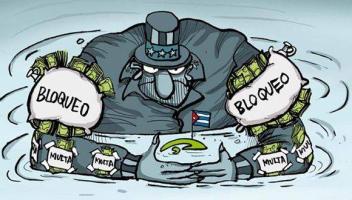 James Counts Early joins Black Agenda Report editor Margaret Kimberley to discuss the latest U.S. efforts to undo the Cuban Revolution and Cuba’s determination to retain its sovereignty while under…
 “This Fourth of July is yours, not mine. You may rejoice, I must mourn.”
 The opening of the Obama Center has brought Barack Obama back into the spotlight, although he offers nothing new. He will be in the pocket of the oligarchy for the rest of his life, and that means he…


