by BAR managing editor Bruce A. Dixon
The utter dependence of our “civil rights” organizations like the NAACP and LULAC upon corporate donations from Big Cable and the telecom industry has caused them to weigh into FCC rulemaking processes against network neutrality and for the continued digital redlining of black and brown communities. They are joined by a substantial cohort of black and Latino elected officials on the federal and other levels. What does this mean for minority communities, whose economic development depends on the availability of cheap, accessible broadband and a relatively free and open internet?
How Corporate Dollars Dominate the Black and Latino Conversation on Network Neutrality
by BAR managing editor Bruce A. Dixon
“Dependence on corporate funding has turned these elected officials and “civil rights” organizations into corporate whores and whorehouses.””
So why are black and Latino civil rights organizations campaigning for the digital redlining of their own communities? Why are black and brown elected officials, LULAC, the NAACP and similar outfits petitioning the FCC to end the relative freedom of the internet that network neutrality makes possible? And how did voices like those of Navarrow Wright, who echoes the party line of Big Cable and the telecom industry become part of the black conversation on network neutrality?
To start with, people talk, and communities define themselves by their internal civic conversations. But in the U.S., our collective conversations have become the territory, literally the property of souless and greedy corporations which intrude themselves into every aspect of our private and collective lives, from child-rearing to how we die, and everything in between. In the generation since the Freedom Movement ended, corporate forces have all but extinguished the internal political conversation of black America, by doing away with news programming on black-oriented and other media, and by assuming the role of chief funders for black elected officials and mainline civil rights organizations.
The Congressional Black Caucus Foundation, the NAACP, the National Association of Black State Legislators and just about every similar institution you can name all have “corporate advisory boards,” “corporate round tables,” and such. These are formal arrangements that let AT&T, Comcast, Lockheed, Wal-Mart and other entities send a fat check and a corporate exec, usually a black one, out to help draft the organization's position on policies it wants to weigh in on. This explains why the NAACP, LULAC and similar organizations supposedly representing the interests of black and brown communities, along with platoons of local and federal elected officials have been lobbying the FCC to give Big Cable and the telecom industry absolute control over the internet. Dependence on corporate funding has turned these elected officials and “civil rights” organizations into corporate whores and whorehouses.
Phone companies invented the digital divide more than a century ago as their core business model...”
Their efforts are supplemented by freelance PR shills like Navarrow Wright, a former BET exec and self-proclaimed social media guru and branding expert who for some reason has been awarded a column at the Huffington Post from which to repeat the talking points of his corporate masters. In a response to a column by Color of Change's James Rucker, Wright claims to be motivated by a concern for minority communities and the digitally disconnected. Such a claim, coming from a former BET exec should be hilarious on its face. But the comedy gets deeper when we actually listen to the message Wright is being paid to deliver to us.
He says that the fuss over network neutrality is a distraction to black people, a conflict between Big Cable and the phone companies who own the internet pipelines on the one hand, and Google, which makes money using them for free on the other. Like the NAACP and LULAC --- and Comcast, Verizon, AT&T, Sprint and that whole crowd --- Wright contends that network neutrality is a bad idea because it costs his masters money that they would otherwise use to invest in minority communities and thus close the digital divide.
Who are these corporate mouthpieces kidding? Phone companies invented the digital divide more than a century ago as their core business model, preferring to extend service to affluent areas where they could levy premium charges, rather than building networks out to reach everybody. 
Universal phone service was only achieved when government stripped the phone companies of their monopoly patents and allowed cooperatives and smaller outfits to build networks out to everybody. Cable companies, coming on the scene a century later have mimicked the phone company model, building out to wealthy areas and ignoring poorer ones. Now that cable and phone companies are the way most Americans get or are denied internet access, their business model has imposed nothing less than the digital redlining of black and brown communities across the country.
In the 21st century, access to cheap, ubiquitous broadband is as essential to economic development as paved streets and roads. Medical services, governmental operations, business and job development, distance education and services we can only imagine will be delivered via broadband internet networks. Those communities that have them will get ahead. Those denied by the digital-divide business models of the cable and phone companies will fall further behind.
Navarrow Wright certainly knows this. He, the NAACP, and LULAC, along with the congressional black and Hispanic caucuses know or ought to know that millions of Americans and immigrants depend on cheap phone cards to make long distance and international calls. Every call made with those cards is routed over the internet, using something the techies call VOIP, or voice over internet protocol. If network neutrality goes away, AT&T and other backbone providers will be able to block or levy extra charges on calls not sent exclusively through their own services. AT&T alone will immediately gouge tens of millions more per week in long distance charges from immigrants calling home, and from the poor, while thousands of small businesses that sell VOIP and other services over the internet will vanish.
“The longer the fight for network neutrality is confined to DC conference rooms, the more likely it is that greedy cable and telco corporations will win after all.”
Wright's HuffPo columns have even trotted out the discredited notion you hear nowhere else but from the lips of greedy cable and telco execs, that home and office internet users should be metered and charged by the number of bytes transferred. At least the NAACP and LULAC, and to some extent our compromised elected officials are open about who they take money from. Wright should come clean and reveal what sectors of Big Cable and the telecom industry are paying him for his HuffPo columns and his time spent lobbying the FCC on their behalf.
The corporate powers which Mr. Wright works for, and who now tell LULAC, the NAACP and many of our minority elected officials what to say and how to say it have spent decades misshaping the apparatus of government to maximize corporate power and minimize that of human citizens. Hence a year after President Obama campaigned vigorously for network neutrality, the FCC rule making process drags on in quiet conference rooms, behind closed doors, out of public view and frankly opposing the public interest.
The longer the fight for network neutrality is confined to DC conference rooms, the more likely it is that greedy cable and telco corporations will win after all. Big telco and cable money can fill DC conference rooms, but it can't fill community centers and meeting rooms across the country. It certainly can't fill the streets. It's time for the media justice movement to re-imagine itself, to stop sitting on its hands, waiting for the president to keep his promises on network neutrality. It's time to pretend it's 2003 again, and convene loud community meetings around the country demanding cheap, ubiquitous broadband for all our digitally disconnected communities. And that won't happen without network neutrality.

 In August 2020 the late Glen Ford spoke to former political prisoner Jihad Abdulmumit of the Jericho Movement about the origins and importance of Black August.
 Wilmer Leon and Margaret discussed the true reasons for antipathy towards Niger, and why other African nations are used as proxies for western interests.
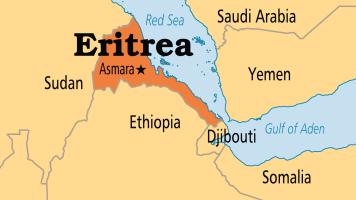 Eritrea is an example of an independent and self-determining African state. Its people are rightly proud of their history.
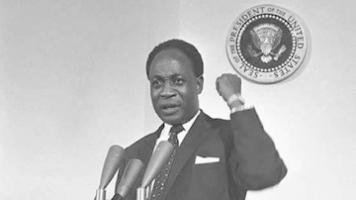 Sixty years ago, Nkrumah told us why it was important that Africa unite. Today, his message and roadmap for Pan-African unity is needed more than ever.
 The war against Africans intensifies, the puppets and stooges do as they are ordered, while others are satisfied with empty gestures. But the revolutionary path is unchanged, as Ajamu Baraka…


