by Anthony Monteiro
Amiri Baraka, the poet/activist who was laid to rest in his native Newark, New Jersey, last Saturday, came to understand 40 years ago that all art is ideological. “It is the courageous move from cultural nationalism to Cultural Revolution that liberated Baraka, and ultimately us, to understand the democratic and revolutionary possibilities inherent in our artistic and cultural traditions.”
Amiri Baraka: Class Struggle and Cultural Revolution
by Anthony Monteiro
“It his turn to Marxism-Leninism, socialist realism and proletarian art and politics that gets him in trouble with “those who know about these matters.”
We need to be clear about who we’re talking about when we talk about Amiri Baraka. For many that seems difficult. There’s a certain Amiri that the petit bourgeois and respectable academics can’t bring themselves to deal with, listen to or confront. How many poets, musicians, music critics and historians, literary critics, academics and the rest ever mention his positions on class struggle in music. Amiri said, “In Black music, like everything else in the world, class struggle is going on. In Black music class struggle between those who want to make Afro-American music the appendage of European concert music and those who understand music is the expression of the great majority of Afro-American working people.” The composer, Arthur Blythe, composed a piece entitled “In The Tradition.” Amiri made use of the idea “In The Tradition”. He said in introducing the suite, “Class Struggle in Music Nos 1&2,” performed with saxophonist David Murray and drummer Steve Mc Call, that The Tradition in Afro-American music is the tradition of class struggle and the fight for ideological clarity. He demanded, “come out of Europe,” get down with “American music,” its “nigger music.” The only music you really have, he insists, if you call yourself “American,” is Black music. For whites that want to save face, go back to your working class poor people’s music in the Appalachian coalmines and country music before it was commercially appropriated.
The Baraka from 1960 to 1972 is the Baraka most easily digested by the petit bourgeois. They claim in this period he did his best work, produced poetry, plays and essays of lasting value. Afterwards he becomes, they say, ideological, repetitive, anti-poetry, propagandistic and bombastic. The academics defenders of “real art” and “important literature” did the same thing with Du Bois and Baldwin. Du Bois was OK until Darkwater, “The Souls of White Folk” and his history masterpiece, Black Reconstruction in America. Baldwin was the white elite’s favorite until The Fire Next Time and the real fire, Blues For Mr. Charlie. In the case of Du Bois and Baldwin it is the radical, anti-capitalist and socialist turns that turn off the elite.
“The only music you really have, he insists, if you call yourself ‘American,’ is Black music.”
In the case of Baraka it his turn to Marxism-Leninism, socialist realism and proletarian art and politics that gets him in trouble with “those who know about these matters.” In reality, though, Baraka never left the blues, Bessie Smith, Billie Holliday, Sarah Vaughn (Sassy) and Dinah Washington. He never left bebop or hard bop, or for that matter Miles Davis, Duke Ellington, Jackie Mc, Art Blakey, Lee Morgan, Max Roach, Philly Joe Jones, Coltrane or Thelonius Monk, to name a few. In fact he got even closer to The Music (classical African American/American Music), as he moved to the left, championing and working with the avant-garde—the next generation, the flamethrowers and revolutionaries. Albert Ayler, Ornett Coleman, Cecil Taylor, David Murray, Hamiet Bluiett, Andrew Cyrille, Grachan Moncur III, Arthur Blythe, Don Pullen, Craig Harris and more. They inspired his Afro-proletarian poetry and plays and he inspired them and gave them confidence to remain true to their proletarian roots and vision.
Baraka steps out front ideologically. The artist, musician, dancer, composer, painter, poet, novelist, he thought could be part of the vanguard, the revolutionary leadership. Du Bois told us in 1926, all art is ideological; the issue is which ideology the artist upholds. For Baraka, like Paul Robeson, the artist must choose to fight for the people or to betray them and hence the mission of art itself. It is the courageous move from cultural nationalism to Cultural Revolution that liberated Baraka, and ultimately us, to understand the democratic and revolutionary possibilities inherent in our artistic and cultural traditions. Genealogically, his turn to the Afro-American working class and their traditions comes out of tough ideological debate and soul searching. Amina Baraka, his wife and closest comrade, leapt ahead of him, insisting upon a complete break and new start. It is she, the poet, dancer, singer, theorist who insisted there be no compromise with sexism or homophobia in the name of “culture.” She understood, like he, that “In The Tradition” meant the tradition of class and national liberation struggle.
“He announced that Afro-American people’s art must be anchored to the working class (the proletariat), uphold the right to self-determination of the Afro-American people and position itself as a force for ideological clarity against imperialism.”
The academics, cultural gatekeepers and the generally backward attacked his new work or, for fear of stirring up his ideological and rhetorical wrath, ignored him. He could no longer get published in the US—he was whited out by the American mainstream. Yet he persisted.
1974 to 2013, almost forty years, is his longest, his most innovative, experimental and creative period. The petit bourgeois poems of the beat period, the nationalism of both the Black Arts Movement and Cultural Nationalism, of the early New Ark years, are reworked, given a new and more profound proletarian grounding after 1974. He announced that Afro-American people’s art must be anchored to the working class (the proletariat), uphold the right to self-determination of the Afro-American people and position itself as a force for ideological clarity against imperialism.
Those for whom this period is unpalatable, admit it, you find this part of Baraka’s life and work distasteful. Admit it and stop frontin’. Baraka’s oeuvre is no dead carcass to be picked over by intellectual hyenas.
Amiri chose! We had no choice in the matter. He chose the Afro-proletariat and class struggle in art and music. We either accept his artistic and ideological choices or we reject them. He is, ultimately, the sum of the choices he made.
The literary, cultural and political opportunists and buzzards are busy, and have been for some time, in finding ways to dismantle/deconstruct Amiri’s legacy. We of the Afro-American Left must defend him and especially his choosing revolution in and through art and music.
Who is Amiri Baraka? It’s easy, just listen to him. He tells us who is he. He never hid. And neither should we.

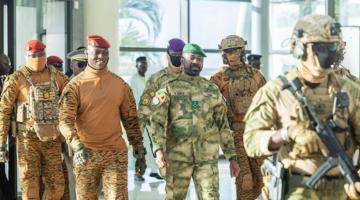 Mali, Burkina Faso, and Niger are leading the way toward the realization of Pan-Africanism and the struggle against imperialism in the 21st century.
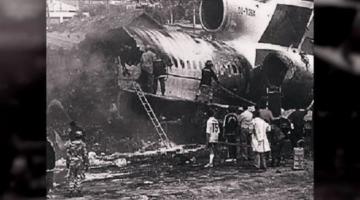 The 1976 bombing of Cubana Flight 455 was part of a six-decade U.S.-orchestrated campaign of destabilization against Cuba, which has now escalated into a genocidal siege aimed at starving the Cuban…
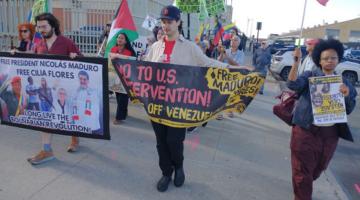 While Trump pardoned an actual drug lord president, he keeps a kidnapped Venezuelan president, Nicolas Maduro, and his wife, First Combatant Celia Flores, in a mold-infested Brooklyn jail on false…
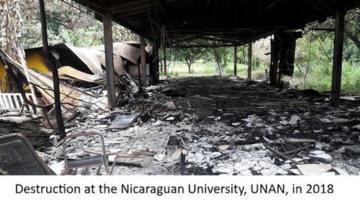 Jeffrey Isaac Jarquin was deported from the U.S. by ICE and upon arrival in Managua was sent to prison by Nicaraguan authorities. Corporate media has decried the detention of a “torture victim” and “…
 In this week’s segment, we discuss student protests by Black and brown youth in France against austerity measures and race-based inequality in the education system. But we begin with a discussion of…


