by BAR managing editor Bruce A. Dixon
Helping us explain the lineup of the social forces that impact our individual and collective lives is the job of people's intellectuals. Selling us clever marketing constructs is the job of intellectuals in the service of empire. But what would a loyal and disciplined servant of the establishment look like, if his aim was to pretend to be a people's intellectual?
Dr. Peniel Joseph: Peoples Historian or Establishment Courtier? Part One of Two
by BAR managing editor Bruce A. Dixon
A few months ago, after hearing our colleague and comrade Dr. Jared Ball interview historian Peniel Joseph on his WPFW Jazz and Justice radio show, I was moved to listen to a couple more hours of Dr. Joseph's speeches, and to read some brief snatches of his available writings on the web. I found his work, such as I understood it, both important enough, and disagreeable enough to write and record a four minute BA Radio commentary, in which I flatly accused Dr. Joseph of peddling slick marketing constructs as “black history.”
Dr. Joseph took strong exception to what I wrote. He contacted me, and sent me one of his books, Waiting For The Midnight Hour and I obtained Dark Days, Bright Nights as well. After reading them with what I think was an open mind, I am more convinced than ever of the utter uselessness of Dr. Joseph's work for anyone who really aims to understand either what he calls the Black Power Movement, or the relevance of the Obama presidency to African Americans. What I wrote back then was
The job of historians in the service of democracy should be to explain and clarify historical trends for ordinary people, to help us better understand where we are, where we came from, and where we're headed. But not all historians serve democracy. As long as there have been intellectuals a great many have made their careers spinning fables which obscure more than they reveal, histories that reinforce rather than challenge illegitimate power, ill-gotten wealth, and undeserved privilege.
People's intellectuals help us to pose and to answer the difficult and important questions that move our understanding forward. By this yardstick, Dr. Joseph is no people's intellectual, and not operating in the service of any progressive movement. In fact, if one had to imagine what a disciplined and loyal servant of the establishment masquerading as a peoples intellectual might look like, it would be hard to come up with a better model than Dr. Peniel Joseph.
Where a people's historian would clarify, Dr. Joseph obscures. Where we need historians to offer us explanations of the lineups of social forces, Dr. Joseph offers us the CNN soundbytes. Instead of outlining and helping us to ask and answer the big questions, Dr. Joseph consistently ignores or dodges them.
The chatty histories of Malcolm X and Kwame Toure which make up more than half of Dark Days, Bright Nights give us breathless accounts of when, where and how many times Malcolm got his picture taken with Fidel Castro and how often Kwame Toure had lunch with Ho Chi Minh. But beyond a romantic attachment to and identification with third world anticolonial revolutions, and a desire to tweak the nose of America's white establishment, Dr. Jones offers us no reason why. He cannot afford to.
To do so would expose one of those big questions that peoples intellectuals are supposed to assist us in framing and answering for ourselves. That question is just what as African Americans, is and ought to be our relationship to the US empire, and its relationship to us? But for Dr. Joseph, the very concept of US empire simply is off the table. In his discussion with Jared Ball, when Ball used the word “imperialism,” Joseph called it a “totalizing” term that put an end to useful discusion. In Dark Days, Bright Nights, as in Waiting For the Midnight Hour, the US has no empire, only a sometimes questionable “foreign policy.” For someone who claims to be a “historian of the movement” as Dr. Joseph surely does, this is a massive blind spot.
Maintenance of the US empire has cost millions of human lives in recent years. A cursory count might start with Vietnam, with two or three million dead, and another million in Iraq since the Bush invasion alone. Madeline Albright didn't quibble with the figure of half a million dead Iraqi children sacrificed by the US blockade during the Clinton years. A US-engineered civil war in Colombia has taken a six figure death toll, and a series of murderous US-backed regimes in Central America, and the wars to protect them took another six figures in the Reagan era alone. A series of civil wars and invasions of Somalia have been fomented by the US, as well as the invasion and plunder of the Congo, with perhaps a higher death toll than any conflict since World War II. A decisive factor in the HIV-AIDS epidemic on the African continent has been US-imposed policies of structural adjustment, which have prohibited African countries from using their own resources to extend the education and health care to their population which might have saved ten or twenty million lives. Calling this genocidal enterprise “foreign policy” doesn't help us understand it. Calling it what it is ---- empire --- is a good, an indispensable place to begin.
Empires have always been about wholesale murder, and the biggest imperial establishments have invariably extracted the largest death tolls. There's an excellent book by Mike Davis called Late Victorian Holocausts: El Niño Famines and the Making of the Third World, in which the author counts the millions of 19th century peasants in India and China deliberately starved to death in contrived “famines” in the course of integrating the agricultural economies of those countries into the world market.
A historian of modern Europe who denied the Nazi holocaust would be worse than useless. A historian of the New World who glossed over or omitted the fact of genocide against the native peoples of North and South America would be deemed factually and morally challenged. So how useful is a black, US-based, self-described “movement activist” and “historian of the Black Power movement” who cannot or dares not pronounce the word “empire” when the US has perhaps a thousand foreign bases in a hundred countries? How useful can such a “peoples historian” be in an era when one of the central questions before African Americans is their own relationship to the empire?
Even more so than in the sixties and seventies, the sheer cost of maintaining the US empire prohibits any meaningful and sustained investment in schools, infrastructure, day care, medical and human services. Dr. King had it exactly right when he pronounced the war in Vietnam “a demonic suction tube” that eviscerated the War on Poverty.
Rather than helping us to understand the relationship of African Americans to the US empire, Dr. Joseph is about scrubbing the legacies of Malcolm X and Kwame Toure of their actual content, in order to wrap “pragmatic” versions of them around President Barack Obama. In part two, we'll unravel a little of this fantasy world, in which Barack Obama's career is an outcome of the Black Power movement.
Bruce Dixon is managing editor at Black Agenda Report, and based in Atlanta, where he is a GA state committee member of the Green Party. He can be reached via email at bruce,dixon(at)blackagendareport.com.

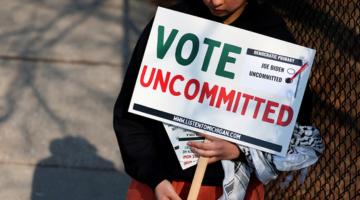 Politicians and the liberal media cite "voter apathy" as the cause of reduced voter turnout, but the reality is that their devotion to corporate interests over those of the people creates a seeming…
 Settler colonialism has caused the destruction of indigenous lands around the world and, as a result, the environment in which we all live. The path forward is an global struggle against these forces.
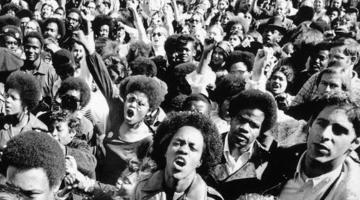 For Africans in the U.S., anger is an important first step in mentally emancipating themselves from empire and declaring war on it.
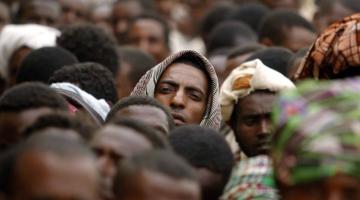 The peoples of this world will never see true liberation and peace until we are free of the shackles of U.S. and Western colonial domination.
 The proposed 854-bed facility will be a hybrid jail, hospital and mental health and substance use treatment facility for people facing criminal charges.


