by BAR executive editor Glen Ford
A new organization will attempt to mobilize African American solidarity with the peoples of North Africa and the Middle East. But that would mean confronting the First Black President. “The unprovoked war on Libya, where U.S.-backed racists massacred Black Libyans and African migrant workers, should have provoked a clear break with the president’s policies, as Dr. King broke with President Johnson over Vietnam.”
Solidarity with Africa, or Obama? You Can't Have Both
by BAR executive editor Glen Ford
“It has largely been inconceivable for African Americans to remain silent in the face of global injustice.”
A new organization has been called forth, to “break the silence” among African Americans on the unfolding sagas in North Africa and the Middle East. In a “unity statement” circulated last month, the initiative invokes the “Pan-African and Black Internationalist tradition” of support for liberation struggles worldwide in the 19th and 20th centuries, citing Black American “opposition to the US occupation of Haiti, opposition to the Italian invasion of Ethiopia, supporting (and serving in) the anti-fascist struggle in the Spanish civil war, supporting the independence struggle of the Indian subcontinent and those of African former colonies in the aftermath of World War II, solidarity with the Cuban people, opposition to US involvement in Indochina, the struggle against South African apartheid and the list could go on to delineate numerous other struggles and efforts.”
The statement was drawn up by former TransAfrica president Bill Fletcher; Mark Harrison, of the United Methodist Peace with Justice Program; Felicia Eaves, Co-chair of US Campaign to End the Israeli Occupation; and Rev. D.A. Lams.
African American opposition to U.S. foreign policy “has often come at some cost,” said the conveners, “such as when Dr. Martin Luther King spoke out against US aggression in Vietnam in 1967.” However, “it has largely been inconceivable for African Americans to remain silent in the face of global injustice.” Blacks in this country “have a special role in speaking out against enemies of peace, justice and democracy, both foreign and domestic.”
“Fifty-five activists had affixed their signatures to the document.”
The new formation, called African Americans for Justice in the Middle East and North Africa, describes the Arab Spring as “a global altering process that has unleashed forces in struggle against neo-liberalism, neo-colonialism, and despotism. It has served as an inspiration for resistance movements in Sub-Saharan Africa, as well as in Europe (against neo-liberal/austerity economics), and here in the USA with the Madison, Wisconsin demonstrations in early 2011 and more recently the Occupy Wall Street/Occupy Together movement.”
The organizers say they are committed to “advancing the demand for a democratic foreign policy on the part of the USA that is based on mutual respect, non-intervention in the affairs of other nation-states, recognition of national self-determination and repairing the damage that it has created through its imperial foreign actions.”
Bill Fletcher and his colleagues call their statement an “opening salvo” and “invite questions and principled, constructive dialogue.” As of two weeks ago, 55 activists had affixed their signatures to the document, including people closely associated with Black Agenda Report and many others whose opinions we respect. Our contribution to this discussion must begin by pointing out what is painfully obvious: that Black America, including much of what in previous decades passed as the African American Left, has shamefully shirked its responsibilities to the besieged peoples of Africa and the Middle East under the Obama presidency. This is not solely a failure of traditional Black American internationalism; the Black Left has also been all but neutralized, domestically, providing no effective critique of the Obama administration’s tenure. Until the advent of the First Black U.S. Presidency, it had, indeed “largely been inconceivable for African Americans to remain silent in the face of global injustice.” However, the installment of a Black face in the nation’s highest place has turned out to be our Achilles Heel, short-circuiting our connections to the Black radical tradition and our internationalist and Pan-African legacies.
“The Black Left has also been all but neutralized, providing no effective critique of the Obama administration’s tenure.”
The unprovoked war on Libya, where U.S.-backed racists massacred and “purged” Black Libyans and African migrant workers – a war that Obama told Congress was not a war at all, since no Americans were known to have died – should have provoked a clear break with the president’s policies by the Black Left, as Dr. King broke with President Johnson over Vietnam, in 1967. It would “largely have been inconceivable” that Dr. King or Malcolm X – or most living Black leftists, prior to Obama’s election – would have countenanced the gang-rape of Syria by the United States, Europe and the royal thieves of the Persian Gulf. Washington’s response to the “Arab Spring” has been to cement its alliance with the most backward Arab regimes and to arm Salafists and jihadis on a scale rivaling the CIA’s shaping of the mujahedeen in Afghanistan into a global movement in the early 1980s. It is a recipe for chaos and mass murder in the near term and an awesome “blowback” not too far in the future. Obama has made a deal with the devil – which is also the way his jihadi allies see their relationship with the U.S. Clearly, “a global altering process” is underway, involving a wholesale American assault on the most fundamental concepts of international law and national sovereignty, all in the name of “humanitarian intervention” – a Bush invention, now a full fledged Obama doctrine, his answer to the “Arab Spring.”
“The U.S. Africa Command, AFRICOM, has tightened its grip on the continent.”
If such a realization is embedded in the language committing Bill Fletcher and his colleagues to “advancing the demand for a democratic foreign policy on the part of the USA that is based on mutual respect, non-intervention in the affairs of other nation-states, recognition of national self-determination and repairing the damage that it has created through its imperial foreign actions” – then we welcome it, and would be glad to help shape future proclamations and mobilizations. We shall see.
Under President Obama, and especially since the assault on Libya, the U.S. Africa Command, AFRICOM, has tightened its grip on the continent. The African Union mission in Somalia is, as the Los Angeles Times recently reported, an American-run affair. AFRICOM holds routine maneuvers with almost every military in Africa. The few countries that do not have military relations with AFRICOM, notably Sudan, Eritrea and Zimbabwe, are treated as enemy states in their own neighborhoods. Although U.S. trade with Africa continues to decline relative to China, India, Brazil and other emerging powers, Washington intends to dominate the continent by force of arms – through its own growing presence, and AFRICOM’s intimate local military partners, which now include most of Africa’s armed forces. AFRICOM needs no formal base of operations (although it has a large permanent presence in Djibouti), because it is already embedded in African armies. The African Union has, in some ways, already been “captured” by the Americans.
This is the overarching truth of U.S.-Africa relations, today. China does not threaten or subvert any African country; the U.S. and Europe are a menace to all of them. Understanding American intentions, based on their conduct (specifically, Obama’s imposition of war and chaos in Africa), how would an energized African Americans for Justice in the Middle East and North Africa suggest the U.S. go about “repairing the damage that it has created through its imperial…actions” in the region?
How about: U.S. Out of Africa, Hands Off Syria?
BAR executive editor Glen Ford can be contacted at Glen.Ford@BlackAgendaReport.com.

 The following is a manifesto in the full sense of the word; a Black anarchist’s proposal for a sweeping approach to a nation and world without capitalism.
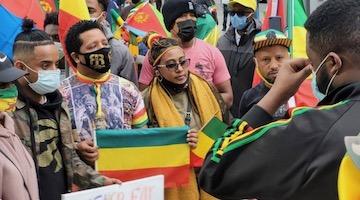 The US bid for sanctions against Eritrea was rebuked by the UN Security Council, so the imperial bloc had to settle for European sanctions against the fiercely independent African government.
 $13 billion aircraft carriers, $10 pencils and $500 hammers, renamed “portable hand-held transcribing devices” and “impact fasteners;” so war-profiteer pimps—war
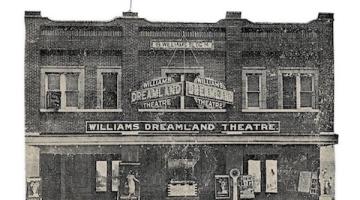 In 1921 thousands of whites attacked the Black population of Tulsa, Oklahoma with machine guns, airplanes, fire and pure hatred, killing at least 300.
 More policing rarely results in justice for anyone, and only puts Black, Indigenous, and other communities of color (BIPOC), including Asian people, at risk for more violence.



