First Bill Clinton was dubbed "our first black president. We are told the next contender is Barack Obama. But when will black people get a say in this?
Electing America's First Black President by Proxy Vote
"Will Black America have a say in electing the first Black President?"
by Marjorie Fields Harris
Nearly two decades later, the media and in its most subtle fashion, the Democratic Party, are once again discussing the possibilities, nay, the promise, of an African-American man's candidacy for the office of President of the United States. As the nation moves forward in this public discourse, however, a more pertinent question for African-Americans is raised. Will the country elect its first Black President by proxy, on behalf of the Black community? Or, to the point: will Black America have a say in electing the first Black President?
"Rumors of the Black President and his rise or demise have been greatly exaggerated."
Over these past 18 years, rumors of the Black President and his rise or demise have been greatly exaggerated. Several years ago, much ado was made about President Thomas Jefferson and his "romance" with his slave Sally Hemings, which led to a dispute between his Black and non-Black descendants. When this information came to light, many flippantly called him the "First Black President." Then, author Garry Wills, published the book, "The Negro President," and dispelled this moniker, appropriately demonstrating that it was seminally Jefferson's quest to maintain power over expanding states that he entertained the representation of slaves (even at that point, only three-fifths). Wills further exposes Jefferson's support for military efforts to topple Toussaint "Breda" Louverture in the Caribbean nation of Saint Domingue in the 1790s and his subsequent refusal to grant diplomatic recognition of the new nation of Haiti. Fouye, Monsieur Jefferson!
Then, in 1998, author Toni Morrison, writing for "The New Yorker" magazine, not only submitted her proxy vote as a Black shareholder, but made a novel attempt at describing what it means to "be" Black in this country by calling former President Bill Clinton, "our first Black President." Ms. Morrison went on in her infamous essay to state that Clinton "displays almost every trope of blackness: single-parent household, born poor, working class, saxophone-playing, McDonald's;and-junk-food-loving boy from Arkansas." By her definition, I should be checking a different box on the Census. But, Ms. Morrison and those who dare to repeat that sobriquet must suffer from some form of retrograde amnesia because in 1994, the Violent Crime Control and Law Enforcement Act was signed into law by the "first Black President". This omnibus crime bill created several new death penalty offenses related to drug-dealing, implemented the "3 Strikes and You're Out" laws and by net effect, incarcerated some of the greatest numbers of African-American males in the history of this country. What's up, Brother Bill?
"Toni Morrison must suffer from some form of retrograde amnesia."
Today, in order to sell magazines, television shows or books, you must mention United States Senator Barack Obama of Illinois. But, don't call him Black. And certainly don't think he'll be the first Black President. In his speech before the nation at the 2004 Democratic National Convention in Boston, the then-candidate said, "There's not a Black America and White America and Latino America and Asian America; there's the United States of America." In the December 27, 2004, issue of Newsweek, the writer begins his profile of Senator Obama by describing "A Tiger Woods category". ¦A David Letterman and "Will and Grace" category." He goes on to add that the only African-American in the United States Senate is not a man who wants to be seen as the leader of Black America and that before a reception with members of the Congressional Black Caucus, Senator Obama said, "I'm looking forward to working with you on behalf of all Americans." (Emphasis theirs) And yes, the writer was referring to the same Tiger Woods who played Noah Webster and created the word "Cablinasian" to describe his race.
"The African-American community is the only one ever asked to stifle its agenda for the sake of an illusionary political parity."
The junior Senator from the State of Illinois, in the true spirit of bipartisanship, then proceeded to work with Republican Senator John McCain on ethics reform, (only to be crossed by the potential GOP Presidential candidate in a publicized spat) and to "listen[ing] and learn[ing] from people like Ted Kennedy and Joe Lieberman", according to Newsweek. The argument in support of this "race transcendent" strategy is that it "elevates" the dialogue beyond such hot-button race-specific issues as affirmative action, social injustice and urban economic blight. However, the dialogue never needs to be "elevated" for Jewish candidates such as Connecticut Senator Joe Lieberman when the issue is this country's relationship with Israel. Nor is there a need to raise the level of discourse for women candidates when the issues are abortion, equal pay or gender discrimination. The African-American community is the only one ever asked to stifle its agenda for the sake of an illusionary political parity.
Before I receive the hater email, let me clarify: I believe that Senator Barack Obama is a brilliant, skilled and capable politician. To date, he appears to have represented his constituency well, and inasmuch as he identifies with his African heritage, has done the people of Kenya proud. I just believe that before the Black community once more allows those outside of the community to identify, or in some cases, elect, our leadership by a proxy vote on our behalf, we must match the issues with the candidates and discern whether or not they truly represent (or even desire to represent) us in a national forum as "our" President.
Now, that may be a poster worth waving in 2008.
Marjorie Fields Harris, Esq. has a web site at http://www.fieldsharrisgroup.com. She can also be reached at prezadvise(at)yahoo.com

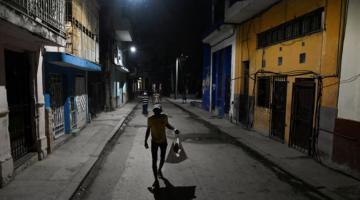 Washington is using economic warfare to manufacture unrest in Cuba, then using that unrest to justify more aggression.
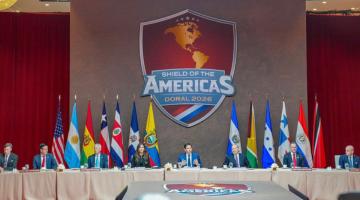 The agreement was signed by more than a dozen right-wing and far-right Latin American governments and ensures Washington’s dominance and leadership in the Americas.
 This week’s segment is devoted to the United States latest war of aggression against the Islamic Republic of Iran. We hear the perspectives of a U.S. based activist and organizer with Black Alliance…
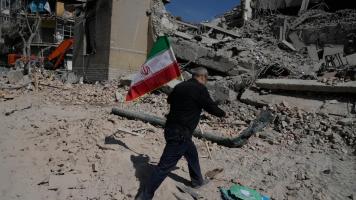 Navid Zarrinnal is an Iranian journalist and host of The Colony Archive podcast. He joins us from Tehran to discuss the US and Israeli aggression and explains why the left must be in solidarity with…
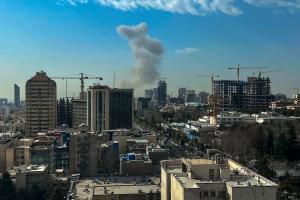 The United States attack on the Islamic Republic of Iran began on February 28. Our guest provides analysis on this U.S. aggression from an anti-imperialist and Black left perspective. Erica Caines is…


