Those that initiated the early occupations in most cities were white. They have re-established the long-lost right of the poor to comngregate in public and express their discontent. If this is not to be a right which only whites enjoy, it's time for us to step up too. There will be race and class tensions, with the increased participation of black and brown people in the occupation movement. But these are growing pains, and necessary. It's time, as Glen Ford has said, to claim our place in the 99% and spell out what that looks like.
Occupation Where? What's In It For Black and Brown People?
By BAR managing editor Bruce A. Dixon
The answer is plenty, and we need to hurry up and claim it.
The tactic of “occupation” has reclaimed is the right of poor and jobless, even homeless, people to congregate, to assemble and to be discontented in public. That's no small thing, and it's surely not a thing that could have been accomplished if the first occupiers had been young, jobless and black or brown instead of white.
If the first occupiers in Zucotti Park had been young and black, they'd instantly have been branded a street gang and arrested en masse, with or without violence, but certainly with little media play or sympathy. If the first occupiers were black, and blathering about the ravages of finance capital and how neither of the two parties were worth a damn, they certainly would not have been endorsed by what passes for the preacher-infested local leadership of black communities. Tied as they are to corporate philanthropy, corporate financing, the corporate-run Democratic party and its corporate-friendly trickle-down black president, our black misleadership class would have run, not walked away from black occupiers who failed to identify as staunch pro-Obama Democrats.
What if the occupiers had been brown? Here's a clue. In the last few years, hundreds of thousands of immigrants at a time have stayed away from work in near general-strike proportions to march on May Day, no less, for their human rights. The anecdotal evidence is that ICE agents raided many workplaces in California, Texas, New York, Arizona, Illinois and elsewhere, and that without much notice in the corporate media, a wave of retaliatory harrassment, jailings and deportations ensued. Certainly, the Obama administration is on track to deport a record 400,000 immigrants for the third year in a row, already far outstripping Bush's eight year total. There are in fact, gang injunction-type laws in many states which make it a criminal offense for young people in designated (black and brown) neighborhoods to assemble in groups in public places for any reason.
Make no mistake about it, reclaiming the right of the poor, jobless and discontented to peaceably assemble, while politically paralyzing mayors and police forces used to cracking heads and dispersing malcontents is a project only white protesters could have accomplished without police violence and massive arrests.
Forty-eight years ago black organizers registering people to vote, organizing farm cooperatives, freedom schools and sharecroppers unions in Mississippi were being maimed and murdered with impunity. SNCC's James Foreman had the vision to recruit young white college students to Mississippi's Freedom Summer to take some of those arrests and blows. He knew that the spectacle of nonviolent white youth being viciously attacked would drive media coverage and public sympathy for the Freedom Movement in a way that the murder and jailing of black activists would not. Things do change, but some things change less than we'd like.
The second thing the wave of occupations have done is inject a note of reality into the nation's political discourse. The plain truth is that Democrats don't rule. Republicans don't rule. Corporations reign. Plutocrats decide. Finance capital rules. Capitalism works for the one percent and against the other 99%, and is therefore fundamentally illegitimate. Discredited are the nonsense phrases about how “government has to live within its means,” and “the rich are the job-creators.” “We are the 99%” may not be deep analysis of political economy, but it's a promising start, an open door, an invitation to investigate and explain how inequality and injustice are not bugs in the system, but have always been its basic features. These were utterances which six months ago were deemed outside and beyond sensible political discourse. Now they are admitted as the plain truth by millions. The occupiers are more popular than either of the political parties, driving Republicans to denounce them, and Democrats to walk the fine line of claiming them while also collecting a billion in Wall Street contributions for the 2012 presidential race alone.
The third thing the occupations have done is provided a standing place to go for people wanting to take part in something meaningful, something that challenges the established order. By being visible and using their bodies to occupy space day after day in hundreds of cities and towns, occupiers are magnets for people to come, to connect and compare their lives and expectations with those of neighbors. This is exactly the sort of thing corporate marketing and the corporate domination of the cable and broadcast airwaves are calculated to prevent.
Corporate media are something akin to the matrix in the movie by the same name, in that they provide a round the clock universe to immerse oneself into. Maintaining these occupations as sites where people can unplug themselves and connect with whatever real-time and meat-space (as opposed to cyberspace) political activity and movement exists near them is a vital public service.
So what's in it for us, and how do we claim it?
The occupation, both as tactic and as movement, has opened a door that we need to stick our foot in before it closes. As Glen Ford said, black and brown people have to step up and claim our place in the 99%. There's bound to be resistance on the part of some. I've met occupiers who claimed the concerns of immigrants and black people had no place in the occupy movement because they were “divisive.” They said this to me in an Atlanta park that the occupiers shared with a hundred homeless black men.
A caucus of the occupation in Atlanta aims broaden the occupation to the long term and everyday concerns of black Atlanta by putting forth an “occupy the BeltLine” strategy. Atlanta's BeltLine project is a greenwashed gengtrification project, a massive publicly financed real estate scam that steals ten figure property tax revenues from schools and city services over the next 20 years to build upscale yuppie residences and shopping, and pay corporate welfare to favored banksters and lawyers.
Atlanta also has a mass transit system that is forced to pay its own way with no help from the state. Although mostly black Fulton and Dekalb counties paid for its multibillion dollar infrastructure over a generation, its further development is being dictated by business interests openly hostile to the transit needs of Atlanta's working poor. Gentrification isn't just the scourge of black urban communities nationwide. It's the core “economic development” model for urban America.
If occupying public spaces with human bodies is a tactic that works for white hipsters in the middle of town, why can't it work elsewhere, with them AND with us? Why can't it work with the abandoned and foreclosed properties in our neighborhoods? Why can't it work with our public transit system? These are the questions that black activists in Atlanta and elsewhere are asking.
Bruce A. Dixon lives in Marietta GA, where he is a member of the Georgia Green Party. He can be reached at bruce.dixon@blackagendareport.com.

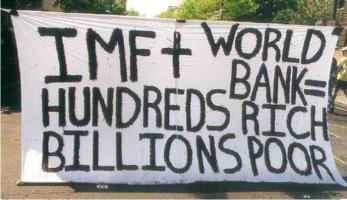 The elites who control international finance are the best educated people in the world. They are also the most dangerous and have inflicted the most harm.
 Black August is the commemoration of actions carried out by revolutionaries ranging from Nat Turner to George Jackson. It is a month to "study, fast, train, and fight" to build the Black radical…
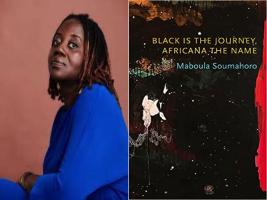 This week’s featured author is Maboula Soumahoro. Soumahoro is Associate Professor in the English department of the University of Tours. Her book is Black is the Journey, Africana the Name.
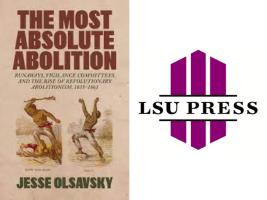 This week’s featured author is Jesse Olsavsky. Olsavsky is Assistant Professor of History at Duke Kunshan University in China.. His book is The Most Absolute Abolition: Runaways, Vigilance Committees…
 Zionist efforts to influence U.S. elections are not surprising, nor is their concern solely about policy towards Israel. The broader goal is to kill solidarity between the oppressed in this country…



