by BAR editor and senior columnist Margaret Kimberley
Forty years ago, countless Black living rooms featured wall paintings with Dr. Martin Luther King sandwiched between the two slain Kennedy brothers – as if the trio were martyrs of the same struggle. One wonders if the picture would have been so popular had the Kennedys’ true feelings about the Black leader been widely known. “Robert Kennedy believed that black people should be happy with the little the president had done and felt that the march [on Washinton] was a personal slap in the face.” From the grave – via a new book – Jackie Kennedy reveals JFK and RFK as no friends of the civil rights movement.
Freedom Rider: MLK and Jackie Kennedy
by BAR editor and senior columnist Margaret Kimberley
“Not only did Robert Kennedy tape King’s personal conversations, but he revealed their contents to other people.”
It is all but impossible to escape news about the Kennedy family. If the media some how manage to let time pass without giving them attention, they will bring some to themselves. Caroline Kennedy has recently published a book, Jacqueline Kennedy: Historic Conversations on Life with John F. Kennedy, which is comprised of conversations her mother had with court scribe Arthur Schlesinger.
The then recently widowed first lady never passed up an opportunity to deify her late husband. She coined the bizarre term Camelot to describe her husband’s overrated administration, and in doing so pulled off one of the greatest public relations coups in history. The man who began the horrible escalation of the Vietnam War, who attempted to kill Fidel Castro and overthrow the Cuban government is admired out of proportion and in direct contradiction to what he did while in office.
The falsely burnished image is the least of the Kennedy brothers’ political sins. Attorney General Robert Kennedy permitted FBI director J. Edgar Hoover to monitor Martin Luther King’s activities, including taping his phone conversations and paying informers to give information about him.
“He told me of a tape that the FBI had of Martin Luther King when he was here for the freedom march. And he said this with no bitterness or anything, how he was calling up all these girls and arranging for a party of men and women, I mean, sort of an orgy in the hotel, and everything…."
“The president called members of the Student Non Violent Coordinating Committee 'sons of bitches' who were 'invested in violence.'”
It is difficult to know where to begin in commenting upon that statement. It is easiest to snicker about the orgies John Kennedy was alleged to have had, but that is hardly the most important issue. Not only did Robert Kennedy tape King’s personal conversations, but he revealed their contents to other people. He obviously revealed the contents to his brother, and perhaps to other people as well.
Caroline Kennedy puts the onus for her mother’s comments on Hoover. “Obviously J. Edgar Hoover had passed on something that Martin Luther King said about my father's funeral, to Uncle Bobby and to Mommy. And obviously, she was upset about that.” She doesn’t mention that her Uncle Bobby didn’t need to have his arm twisted in order to carry out Hoover’s dirty work or that the president called members of the Student Non Violent Coordinating Committee “sons of bitches” who were “invested in violence.”
If we are going to discuss the history of the Kennedy family with King or with the wider civil rights movement, facts, not myth and fantasy, should be the order of the day. The march on Washington, as originally conceived, was a far cry from what eventually took place. It was part of a larger, grassroots movement that unapologetically asserted that black Americans should have full citizenship rights.
“RFK: ‘If the country knew what we know about King's goings-on, he'd be finished.’”
The Kennedys initially opposed the march, for self-interested and dubious reasons. They claimed they didn’t want to raise the ire of southern Dixiecrats, or feared it might become violent, any excuse would do to keep black people quiet and compliant. Robert Kennedy believed that black people should be happy with the little the president had done and felt that the march was a personal slap in the face. According to diplomat Marietta Tree, Robert Kennedy had this to say on the eve of the march. “So you're down here for that old black fairy's anti-Kennedy demonstration?” Not content to heap insult upon march organizer Bayard Rustin, Kennedy added, “He's not a serious person. If the country knew what we know about King's goings-on, he'd be finished.”
The administration allowed the march to take place, but only on the condition that speakers – and even their words – be carefully chosen. John Lewis of SNCC, now a congressman, was forced to censor his speech in order to be allowed at the podium.
The only heroes of the civil rights movement are the people who fought the good fight for themselves. Their names are largely unknown, but they made presidents and other politicians take notice. They forced the issue and are the most responsible for their success in turning the tide of American history.
The revelations from this new book are important, but not for purposes of gossip and conjecture. They are important because they remind us that it is rare for the powerful to be responsible for great changes. Change takes place in spite of them and the interests that they represent.
Margaret Kimberley's Freedom Rider column appears weekly in BAR, and is widely reprinted elsewhere. She maintains a frequently updated blog as well as at http://freedomrider.blogspot.com. Ms. Kimberley lives in New York City, and can be reached via e-Mail at Margaret.Kimberley(at)BlackAgandaReport.com.

 Wilmer Leon and Margaret discussed the true reasons for antipathy towards Niger, and why other African nations are used as proxies for western interests.
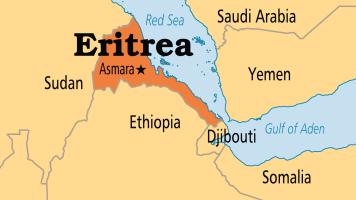 Eritrea is an example of an independent and self-determining African state. Its people are rightly proud of their history.
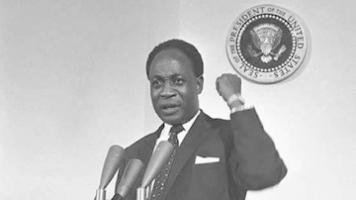 Sixty years ago, Nkrumah told us why it was important that Africa unite. Today, his message and roadmap for Pan-African unity is needed more than ever.
 The war against Africans intensifies, the puppets and stooges do as they are ordered, while others are satisfied with empty gestures. But the revolutionary path is unchanged, as Ajamu Baraka…
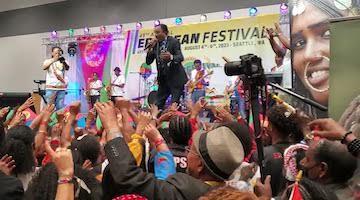 Last week I attended the Eritrean American Festival in the Seattle/Tacoma area, at the Tacoma Convention Center. This was the speech I would have given if the festival had not been disrupted by…


