For America's Scholars Of Race, An Obama Dilemma
by Jonathan Tilove
This article was prepared by the Newhouse News Service.
"It will be up to the black community to keep the pressure on him to address their needs."
For scholars of race, Barack Obama presents a new American dilemma. On the one hand, his election as president would be a breathtaking symbol of racial progress. On the other, an Obama victory could prove illusory, doing little to dismantle racism while crippling their ability to call attention to it.
"Then what will we do as race scholars?" wondered University of Virginia political scientist Lynn Sanders.
Newhouse News Service asked some of the nation's leading students of race about the predicament.
"At this point, any conflict I might have is more than eased by the knowledge that Barack Obama, if elected, could be the salvation of a country in free flight failure," Derrick Bell, a professor of law at New York University, who taught Obama when he was a student at Harvard Law School, replied via e-mail.
In books like Faces at the Bottom of the Well: The Permanence of Racism, Bell, who is black, offers a bleak view of the possibility of racial progress in America, a view much at odds with the hopeful promise of Obama.
"If he sounded as I might wish him to sound, he could not be elected," Bell wrote in his e-mail. "And he may not be elected even as his intellect and savvy puts him worlds ahead of his Republican counterpart. And that is all I wish to say on the matter."
Another renowned pessimist -- University of Pennsylvania political scientist Adolph Reed Jr. -- did not respond to an interview request.
"Having co-opted so much of the left, Obama may move the boundary of acceptable discourse on race and class well to the right."
But in a blistering recent post on blackagendareport.com, Reed, who is black, argued that while Obama might be better than John McCain in the short run, in the long run he might be worse. This, Reed reasoned, is because, having co-opted so much of the left, Obama may move the boundary of acceptable discourse on race and class well to the right.
"I'm not arguing that it's wrong to vote for Obama, though I do say it's wrong-headed to vote for him with any lofty expectations," wrote Reed, indicating his intention "to abstain from this charade."
David Roediger, a race historian at the University of Illinois at Urbana-Champaign, evinced a particle more enthusiasm for Obama's candidacy. "I feel this sometimes has something to do with something I care about and, as things go in U.S. politics, it's not the worst thing to happen," said Roediger, who is white.
But, as he notes in the conclusion of his book - How Race Survived U.S. History: From Settlement and Slavery to the Obama Phenomenon, due out this fall - "Obama does not represent the triumph of an advancing anti-racist movement but rather the necessity, at the highly refracted level of electoral politics, of abandoning old agendas, largely by not mentioning them."
Angela Dillard, professor of Afroamerican and African studies at the University of Michigan in Ann Arbor, concurred. "It's an odd paradox that this will shrink even further any kind of public space to talk about race," she said. "That shouldn't be possible, but it is."
What bothers Brown University economist Glenn Loury is that Obama's election would fundamentally change the rules of race in America, yet that victory would come with the overwhelming assent of black people who have no idea that is what they are agreeing to. "They're voting for the end of affirmative action and they don't even know it," said Loury, who is black. "They're voting for the end of race and they don't even know it."
"It's an odd paradox that this will shrink even further any kind of public space to talk about race."
"Everybody is so enticed and intrigued all at once just by the mere fact that he's black, as if that's enough," said Paul Street, a Chicago labor historian now living in Iowa City, whose book - Barack Obama and the Future of American Politics - will be published this month. Yet Street, who is white, says that because Obama is black, he "can't be particularly aggressive on race, or anything else."
"He's not going to change my syllabus," said Roland Anglin, executive director of the Center for Race and Ethnicity at Rutgers University, who teaches race and public policy.
Obama's election, Anglin explained, won't by itself change the objective condition of black people, the crisis of black males, the education gap or the prison gap. It will be up to the black community to keep the pressure on him to address their needs.
Still, Anglin said, there is no gainsaying the stunning power of the moment.
At 13, Anglin was bused into hostile Italian and Irish territory in Brooklyn, where he was physically and verbally attacked. "From that to seeing Barack Obama and the enthusiasm he's generated, it's almost full circle to me, that America could grow to the point where it could see someone like Barack Obama in a different light," he said.
For the most part, Stephen Steinberg, a race scholar at Queens College, has taken a cool view of the Obama phenomenon.
But in March, as he watched Obama's race speech in Philadelphia, Steinberg, who is white, e-mailed his surprise at what he was hearing: "His candidacy hinged on putting a happy face on racism, and here he reveals, to his credit, knowledge and compassion about racism and its tentacles into the present. He was running away from history, and this has forced him to talk about the past, which blows away his transcendental cover."
Nevertheless, a group of left social scientists wrote Obama an open letter critiquing the speech.
"You remarked that Reverend Jeremiah Wright 'expressed a profoundly distorted view of this country -- a view that sees white racism as endemic,'" they wrote Obama. "We believe that Wright is exactly right, that racism is not only endemic but is at the core of American society as reflected in a large and well established body of social scientific research."
"Those forecasting an Obama victory don't understand the degree to which whites remain racist ‘backstage.'"
One signer of that letter was Texas A&M's Joe Feagin, who said that, considering the obvious need for Obama to trim and "pander" to maintain white support, "It was the best speech on race ever given by a major presidential candidate."
Feagin, who is white, is writing a book on Obama and race with Georgia State University sociologist Adia Harvey Wingfield. He doubts Obama's chances. Based on his extensive field interviews over the years with blacks and whites, Feagin said those forecasting an Obama victory don't understand the degree to which whites remain racist "backstage."
But for John McWhorter, a black linguist affiliated with the conservative Manhattan Institute in New York, Obama's success forever discredits such worldviews.
"I think it really is going to change the way responsible people talk about racism," McWhorter said. "Their basic idea, that racism is at the heart of how Americans feel, simply has been shown not to be true in the way that they said it."
His Manhattan Institute colleague, Abigail Thernstrom, put it more caustically: "Are they still going to whine endlessly about racism in America?"
Yes, says Stanford political scientist Paul Sniderman. Whether Obama wins or loses, Sniderman predicts, "There is going to be a furious effort to use evidence to show that racism is still this deep scar in the American experience."
Those looking for it will find it. But Sniderman said what they may overlook, and what he will examine, is the countervailing trend: "There's a big chunk of white America that wishes blacks well and doesn't feel contempt or dislike for them. ... People talk about a backlash, but it never enters their head that their might be a frontlash."
That may be changing. Listen to Virginia's Lynn Sanders, then to Howard Winant.
"I think it will be hugely positive if (Obama) wins, because there will be this possibility of a more genuine conversation between scholars of different orientations," said Sanders, who with Donald Kinder authored Divided by Color.
"I think it will mess up the congestion in a way that will be very healthy. I can't wait for that part of it."
And Winant, a leading race scholar of the left and director of the Center for New Racial Studies at the University of California at Santa Barbara, called this "a very promising moment."
"It's hard," he said, "to give up that thrilled sense of possibility, that thrilled sense that something really big might be changing in this area, which is so long overdue."
Jonathan Tilove can be contacted at jonathan.tilove(at)newhouse.com.

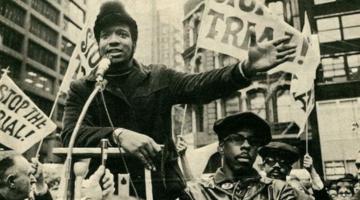 The thread connecting the struggles of Black and Palestinian liberation makes itself known in the propagandistic attacks on the Palestinian resistance. The assassination of Fred Hampton helps…
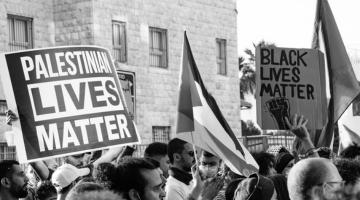 As the US continues to conflate every criticism of Zionism with anti-semitism, the predicable happens once again. Black people are used as an avatar of anti-Jewish sentiment. This tactic will not…
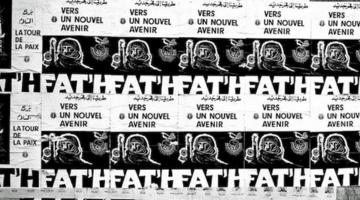 Al-Fateh’s communique at the 1969 Festival of Pan-African Culture offered a brilliant analysis of the overlapping histories of European colonialism and white supremacy in Africa and Palestine.
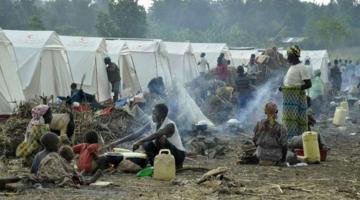 The ongoing crisis is a result of converging forces determined to pursue their own interests by controlling the affairs within the Congo and subjecting the masses to inhumane conditions.
 Ngũgĩ wa Thiong'o reminds us that the primary contradiction in Africa is imperialism and its meek comprador bourgeoisie enforcers.


