
by Bill Quigley
Wikileaks has clearly caused Washington great embarrassment, but even U.S. officials don’t claim any deaths have resulted from release of classified State Department documents. Conversely, policies hatched and executed in secret by the U.S. have killed untold thousands. The Obama administration’s “anger at a document dump, no matter how extensive, is more than a little suspect.”
Why Wikileaks is Good for Democracy
by Bill Quigley
“Information is the currency of democracy.” – Thomas Jefferson.
Since 9-11, the US government, through Presidents Bush and Obama, has increasingly told the US public that “state secrets” will not be shared with citizens. Candidate Obama pledged to reduce the use of state secrets, but President Obama continued the Bush tradition. The Courts and Congress and international allies have gone meekly along with the escalating secrecy demands of the US Executive.
By labeling tens of millions of documents secret, the US government has created a huge vacuum of information.
But information is the lifeblood of democracy. Information about government contributes to a healthy democracy. Transparency and accountability are essential elements of good government. Likewise, “a lack of government transparency and accountability undermines democracy and gives rise to cynicism and mistrust,” according to a 2008 Harris survey commissioned by the Association of Government Accountants.
Into the secrecy vacuum stepped Private Bradley Manning, who, according to the Associated Press, was able to defeat “Pentagon security systems using little more than a Lady Gaga CD and a portable computer memory stick.”
“Transparency and accountability are essential elements of good government.”
Manning apparently sent the information to Wikileaks – a non-profit media organization, which specializes in publishing leaked information. Wikileaks in turn shared the documents to other media around the world including the New York Times and published much of it on its website.
Despite criminal investigations by the US and other governments, it is not clear that media organizations like Wikileaks can be prosecuted in the US in light of First Amendment. Recall that the First Amendment says: “Congress shall make no law respecting an establishment of religion, or prohibiting the free exercise thereof; or abridging the freedom of speech, or of the press; or of the right of the people peaceably to assemble, and to petition the government for a redress of grievances.”
Outraged politicians are claiming that the release of government information is the criminal equivalent of terrorism and puts innocent people’s lives at risk. Many of those same politicians authorized the modern equivalent of carpet bombing of Baghdad and other Iraqi cities, the sacrifice of thousands of lives of soldiers and civilians, and drone assaults on civilian areas in Afghanistan, Pakistan and Yemen. Their anger at a document dump, no matter how extensive, is more than a little suspect.
“It is not clear that media organizations like Wikileaks can be prosecuted in the US in light of First Amendment.”
Everyone, including Wikileaks and the other media reporting the documents, hopes that no lives will be lost because of this. So far, that appears to be the case as McClatchey Newspapers reported November 28, 2010, that “US officials conceded that they have no evidence to date that the [prior] release of documents led to anyone’s death.”
The US has been going in the wrong direction for years by classifying millions of documents as secrets. Wikileaks and other media which report these so called secrets will embarrass people, yes. Wikileaks and other media will make leaders uncomfortable, yes. But embarrassment and discomfort are small prices to pay for a healthier democracy.
Wikileaks has the potential to make transparency and accountability more robust in the US. That is good for democracy.
Bill Quigley is Legal Director of the Center for Constitutional Rights and a professor of law at Loyola University New Orleans. Bill can be reached at quigley77@gmail.com.

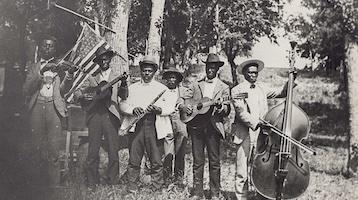 “Without the help of the American Negro, the abolition movement would have been impossible.”
 FIFA uses the World Cup to present the United States as a legitimate nation, but the U.S. is a rogue state committing crimes against humanity. The call for a boycott is a call to decolonize football…
 Chris Smalls and his best friend, Derrick Palmer, led the first successful drive to unionize an Amazon warehouse. He believes that labor must decouple from the Democratic Party, as he explains in his…
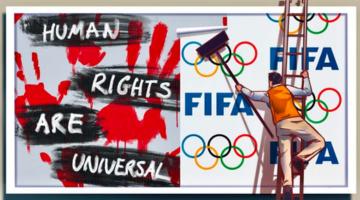 A single working mother could once take her child to a Yankees game for $40, but today that money would not even cover the online service fees. Sporting events have been stolen from poor and working…
 "Booing Boss Tweet’s Cruel Reich Cult wherever they go" is the latest from BAR's Poet-in-Residence


