
A Black Agenda Radio commentary by Glen Ford
Sunday’s election is the last thing Haiti’s majority wants or needs. It is the United States that needs Sunday’s election in Haiti to provide “a veil of legality on the theft of Haiti’s sovereignty and independence by U.S. imperialism and its allies.” Haitians have been given a choice to validate their own re-enslavement. Most will choose No.
Haiti Election: Theatrical Prelude to Colonization
A Black Agenda Radio commentary by Glen Ford
“It is a charade, paid for by the United States, to provide a veneer of legitimacy to America’s colonization of Haiti.”
The United States, having stolen Haiti’s government in a 2004 coup and re-invaded the country with 22,000 troops after last January’s catastrophic earthquake, now foists a farce of an election on the cholera-wracked nation. It is an election designed, not to allow the Haitian people to express their political aspirations, but to impose a veil of legality on the theft of Haiti’s sovereignty and independence by U.S. imperialism and its allies. In other words, this Sunday, when a small minority of Haitians go through the motions of casting votes for a president, they will in effect be participating in the very opposite of a democratic process. This election is not for their benefit – it does not enhance the power of Haiti’s people to determine their own destiny. Rather, it is a charade, paid for by the United States, to provide a veneer of legitimacy to America’s colonization of Haiti.
Whoever is eventually chosen among the 19 candidates for president – most likely in a runoff election between the two top vote-getters, in January – he or she could not possibly be the choice of the Haitian people. That’s because the party of ousted President Jean Bertrand Aristide, Fanmi Lavalas, which is by far the most popular political organization in the country, has once again been barred from taking part in the election. As a result – and also because of widespread opposition to holding elections at all when cholera is raging in the country – turnout will be low and the outcome unsatisfactory to the majority of people.
Which is the only kind of outcome that the United States will tolerate. The American ambassador to Haiti, Kenneth Merten, who is a notorious liar, nevertheless spoke the truth when he told the Washington Post that he hadn’t met anybody among the contenders that he “can’t work with.”
“Real power belongs to the Haiti Recovery Commission co-chaired by former U.S. President Bill Clinton and totally dominated by foreign governments and bankers.”
The United States owns this election, because Washington has paid for it. The nominal cost is $15 million for Sunday’s election machinery. But one must also factor in the cost of arming and training the death squads that swept into Haiti from U.S.-financed bases in the Dominican Republic to reverse by violence the Haitian people’s electoral choices, in 2004. U.S. costs for the colonization of Haiti include funding and organizing the minority political opposition to President Aristide, so that the majority’s will could be thwarted. And it includes the huge expense of bribing and orchestrating the United Nations to become a kind of 12,000-man rent-a-cop security outfit for the occupation of Haiti, against the people's will.
What the U.S. is paying for in this election, is a grotesque caricature of a vote that will produce a nominal president who will sit as a pitiful figurehead over a state that has no power. Real power belongs to the Haiti Recovery Commission co-chaired by former U.S. President Bill Clinton and totally dominated by foreign governments and bankers whose mission is to restore Haiti to the colonial status it escaped two centuries ago.
Through blockades and invasions and coups and, finally, electioneering theatrics, the Americans think they have purchased a Black Krayol-speaking colony in the Caribbean. They will soon find out they have bought an island of resistance. For Black Agenda Radio, I'm Glen Ford. On the web, go to www.BlackAgendaReport.com.
BAR executive editor Glen Ford can be contacted at Glen.Ford@BlackAgendaReport.com.

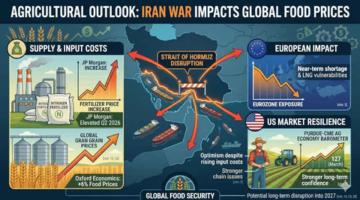 Faced with the blockade of vital oil routes, the extreme dependence of modern agriculture on fossil fuels foreshadows not only high prices but also a food shortage capable of generating global social…
 Free trade deals, water contracts, and military training programs are quietly binding one Latin American government after another to Tel Aviv.
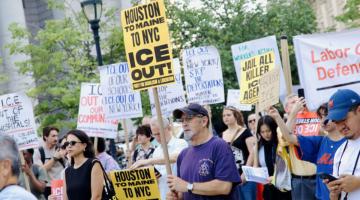 Recent killings at the hands of federal agents have fueled protests across the US, including a nationwide day of action on July 18.
 The human rights groups’ suit came as the Trump administration vowed to destroy the International Criminal Court entirely.
 The fight for the ballot has always been tied to a wider war against Black political power, against workers, against the people paying for empire abroad and austerity at home.


