
A Black Agenda Radio commentary by Glen Ford
Wall Street reversed its fortunes by seizing total control of the U.S. state and its treasure. No greater conflict of interest can be imagined than that which exists between bought-off Democratic and Republican office holders and corporations that are deemed "too big to fail." Yet "they're trying to burn" Black Congresswoman Maxine Waters "for the crime of giving the little guy an opportunity to plead his own case."
Rep. Maxine Waters and Upside Down Morality
A Black Agenda Radio commentary by Glen Ford
“"The Black banks had one reliable friend: Congresswoman Maxine Waters."
In a society in which government policy now dictates that some enterprises are "too big to fail," it is obscene that Los Angeles Black Congresswoman Maxine Waters faces political ruin because she championed Black-owned banks. The principles most valued by civilized human beings, including helping the little guy, are turned upside down when huge corporations dominate every aspect of national life, as is the case in the United States. In today's corporate moral madhouse, billion-dollar bailouts are reserved for the filthy rich and their huge, predatory corporations, while smaller enterprises must sink or swim on their own. If someone tries to balance the scales even a little bit, there is hell to pay - as Congresswoman Waters has discovered.
Waters faces probable congressional trial on ethics charges, for arranging a meeting between Black bankers and officials of the Bush Treasury Department, back in 2008. Waters has long sat on the House Financial Services Committee, which handles banking legislation. For decades, Waters has been a strong advocate of minority business. She arranged a sit-down between Treasury Secretary Henry Paulson and representatives of the National Bankers Association, the trade group for the nation's Black-owned banks. Paulson, if you remember, was the fellow that panicked Congress, when the bottom fell out of Wall Street shortly before the presidential elections, crying that life as we know it would cease to exist if the biggest banks were not bailed out immediately to the tune of $700 billion. Paulson was well-placed to make the case for the big bank bailout, having previously served as CEO of one of the main beneficiaries of the people's largess: Goldman Sachs.
“"In today's corporate moral madhouse, billion-dollar bailouts are reserved for huge, predatory corporations, while smaller enterprises must sink or swim on their own."
Black banks were in crisis, too, but who did they have to call on? Not Paulson, who would make sure that his old comrades in crime at Goldman Sachs made out like the greatest bandits of all time. Not Robert Rubin, Barack Obama's banking guru, also a former CEO of Goldman Sachs and later chairman of Citigroup, another prime recipient of bailout billions. No, the Black banks had one reliable friend: Congresswoman Maxine Waters. She succeeded in hooking the Black bankers association up with Secretary Paulson. At the meeting, however, only one Black bank was represented, OneUnited Bank. Naturally, the bank's chief executive made his case for a bailout of only $12 million - thousands of times smaller than the bailouts given to Goldman Sachs and Citigroup. Rep. Waters was not at the meeting, and Treasury Department officials say that Waters had no influence on the loan to the Black bank.
The alleged conflict stems from the fact that Congresswoman Waters' husband owned stock in the bank, although he no longer sat on the board. The reality is, Waters' husband could not have sold his stock in 2008, even if he wanted to, because the bank was in danger of going under. Maxine Waters never had enough influence to create a conflict of interest. She had no checkbook, no budget, no real clout. All Waters could do was set up an appointment. Now they're trying to burn her for the crime of giving the little guy an opportunity to plead his own case. The Paulsons and Rubins dispense trillions to their friends on Wall Street, and that is not considered a conflict. But, Maxine Waters can't even set up a meeting for a small Black bank, without putting her career at risk. For Black Agenda Radio, I'm Glen Ford. On the web, go to www.BlackAgendaReport.com.
BAR executive editor Glen Ford can be contacted at Glen.Ford@BlackAgendaReport.com.

 The Trump administration is accelerating policies meant not just to deport undocumented people, but to restrict every avenue of legal immigration from the Global South. Abraham Paulos is Deputy…
 In this episode of El Taller, hosts José Luis Granados Ceja and Kurt Hackbarth sit down with Ajamu Baraka, national organizer and spokesperson for the Black Alliance for Peace, a former vice-…
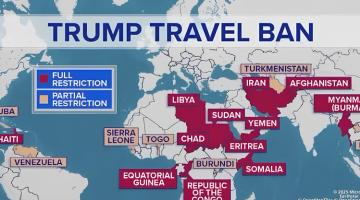 There is nothing mysterious about Trump’s effort to curb legal immigration. White supremacy is the explanation.
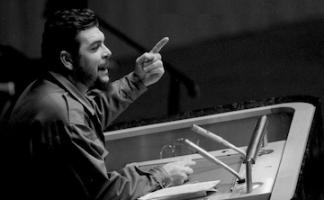 “Cuba ... a free and sovereign state with no chains binding it to anyone...with no proconsuls directing its policy, can speak with its head held high.”
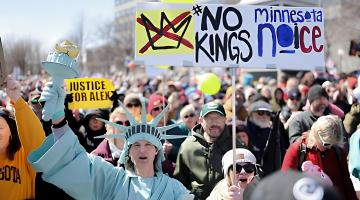 Minnesota pushed back against ICE until its visible presence seemed cut in half, but Trump does not forgive or forget, and it’s a time to be organized.


