 by Bill Quigley
Mercenary and security companies are descending on Haiti, a stricken nation where guns are illegal to buy or sell. There is every reason to fear that “money that might have been injected into the Haitian economy is just going to be grabbed by these companies.”
Mercenaries Circling Haiti
by Bill Quigley
“These guys are like vultures coming to grab the loot over this disaster.”
On March 9 and 10, there will be a Haiti conference in Miami for private military and security companies to showcase their services to governments and non-governmental organizations (NGOs) working in the earthquake devastated country.
On their website for the Haiti conference, the trade group IPOA (ironically called the International Peace Operations Association until recently) lists eleven companies advertising security services explicitly for Haiti. Even though guns are illegal to buy or sell in Haiti, many companies brag of their heavy duty military experience.
Triple Canopy, a private military company with extensive security operations in Iraq and Israel, is advertising for business in Haiti. According to human rights activist and investigative reporter Jeremy Scahill, Triple Canopy took over the Xe/Blackwater security contract in Iraq in 2009. Scahill reports on a number of bloody incidents involving Triple Canopy including one where a team leader told his group, “I want to kill somebody today…because I am going on vacation tomorrow.”
Another company seeking work is EODT Technology which promises in its ad that its personnel are licensed to carry weapons in Haiti. EODT has worked in Afghanistan since 2004 and provides security for the Canadian Embassy in South Africa. On their website they promise a wide range of security services including force protection, guard services, port security, surveillance, and counter IED response services.
A retired CIA special operations officer founded another company, Overseas Security & Strategic Information, also advertising with IPOA for security business in Haiti. The company website says they have a “cadre of US personnel” who served in Special Forces, Delta Force and SEALS and they state many of their security personnel are former South African military and police.
“A team leader told his group, ‘I want to kill somebody today…because I am going on vacation tomorrow.’”
Patrick Elie, the former Minister of Defense in Haiti, told Anthony Fenton of the Inter Press Service that “these guys are like vultures coming to grab the loot over this disaster, and probably money that might have been injected into the Haitian economy is just going to be grabbed by these companies and I’m sure they are not the only these mercenary companies but also other companies like Haliburton or these other ones that always come on the heels of the troops.”
Naomi Klein, world renowned author of The Shock Doctrine, has criticized the militarization of the response to the earthquake and the presence of “disaster capitalists” swooping into Haiti. The high priority placed on security by the U.S. and NGOs is wrong, she told Newsweek. “Aid should be prioritized over security. Any aid agency that’s afraid of Haitians should get out of Haiti.”
Security is a necessity for the development of human rights. But outsourcing security to
private military contractors has not proven beneficial in the U.S. or any other country. Recently, U.S. Representative Jan Schakowsky (IL) and U.S. Senator Bernie Sanders (VT) introduced bills titled “Stop Outsourcing Security” to phase out private military contractors in response to the many reports of waste, fraud and human rights abuse.
“Any aid agency that’s afraid of Haitians should get out of Haiti.”
Human rights organizations have long challenged the growth in private security contractors in part because governments have failed to establish effective systems for requiring them to be transparent and for holding them accountable.
It is challenging enough to hold government accountable. The privatization of a public service like security gives government protection to private corporations which are also difficult to hold accountable. The combination is doubly difficult to regulate.
The U.S. has prosecuted hardly any of the human rights abuses reported against private military contractors. Amnesty International has reviewed the code of conduct adopted by the IPOA and found it inadequate in which compliance with international human rights standards are not adequately addressed.
This is yet another example of what the world saw after Katrina. Private security forces, including Blackwater, also descended on the U.S. gulf coast after Katrina grabbing millions of dollars in contracts.
Contractors like these soak up much needed money which could instead go for job creation or humanitarian and rebuilding assistance. Haiti certainly does not need this kind of U.S. business.
In a final bit of irony, the IPOA, according to the Institute for Southern Studies, promises that all profits from the event will be donated to the Clinton-Bush Haiti relief fund.
Bill Quigleyis legal director of the Center for Constitutional Rights and a long-time human rights advocate in Haiti. He can be contacted at Quigley77@gmail.com

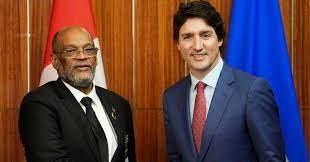 The U.S. and Canada are using Caribbean and Latin nations to act as fronts, willing dupes, in their plans for the next occupation of Haiti. Travis Ross explains in the second of a three-part report.
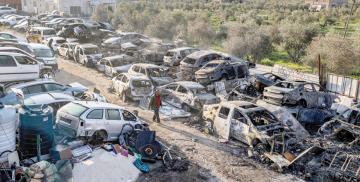 The attack by Israeli settlers on the town of Hawwara was no aberration. It was just one example of the violence inherent in an apartheid state.
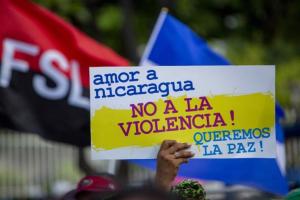 It is important to understand the truth about the 222 people recently released to the US who were convicted of treason in Nicaragua for savage acts of violence against their people.
 The tenth anniversary of the death of Venezuelan president Hugo Chavez reminds us of his commitment to serve the people of his country, and to fighting for sovereignty for his nation and all the…
 Having used arms control to gain unilateral advantage over Russia, the cost to the U.S. and NATO in getting Moscow back to the negotiating table will be high.



