 by Sikivu Hutchinson
In a nation of 300 million that's half-female, only a select group is entitled to rank among the high-profile “missing,” should they disappear. “In the national 'victim-ocracy,' small town, suburban and/or university affiliated white women get the most play as valued human interest subjects and cultural possessions.” Skin and class privilege are highly relevant, even if (or especially if) you've vanished from sight.
Prized Possessions: Media Politics and Missing Women
by Sikivu Hutchinson
“Location, race and gender play a pivotal role in the media’s fixation on missing person stories.”
When the L.A. Times runs a story on a missing black woman on the front page of its local features section it stimulates inquiring minds. How, in the super-charged climate of breathless cable news reports on Jaycee, Elizabeth Smart and their white sisterhood could such a feat of journalistic subversion be possible? In mid-September of this year 24 year-old Mitrice Richardson, an African American woman from South Los Angeles, went missing after being released from a Calabasas, California jail. Richardson had been arrested for apparently refusing to pay the tab for a meal she ate at a Malibu restaurant. Prior to the arrest, restaurant personnel and witnesses reported that she was behaving erratically and gave the appearance of being mentally ill. After authorities found marijuana in her car they arrested her on charges of “defrauding an innkeeper” and possession.
The Times chronicled the massive search made for Richardson by friends, relatives and the Los Angeles County Sheriff’s Department. The story was also picked up by local news and has outraged African Americans nationwide. Questions swirl around the County Sheriff’s conduct in both the arrest and release of Richardson. Why, for example, was she not placed on a 72-hour psychiatric hold (a common practice when dealing with mentally ill “suspects”) when detained? And why, after being released from jail was she sent off into the dead of night in a remote area without a cell phone or vehicle? Families of missing and abducted people of color organize tirelessly to generate any shred of coverage they can get from the media in “post-racial” America. Tired of the media’s ritual indifference to the lives of black women in their community, the mothers of missing women in Edgecombe County in North Carolina launched a billboard campaign called MOMS (Missing or Murdered Sisters) to advertise a slew of suspected abductions and murders of black women in their area. So what distinguishes Richardson’s case from that of the scores of other missing and abducted people of color which seldom score even a few lines buried in a big city newspaper? Location is apparently the only factor that would warrant such an aberration.
“Families of missing and abducted people of color organize tirelessly to generate any shred of coverage they can get from the media in “post-racial” America.”
The Malibu sightings of Richardson were evidently so jarring for local white residents that they elicited instant recollection from those reported to have seen her. Unlike other missing person cases tainted by the urban “grit” of South Los Angeles and other communities of color where crime is perceived to be the cultural norm, the crime free veneer of an almost exclusively white community in which “it’s strange to see a black woman walking in the (Malibu) canyon,” is the subtext. Location, race and gender play a pivotal role in the media’s fixation on missing person stories. In the national “victim-ocracy,” small town, suburban and/or university affiliated white women get the most play as valued human interest subjects and cultural possessions. The endless media loop of search parties, dragged lakes, crack of dawn patrols and tearful living room pleas from grieving family members only lodge in the public imagination as national pathos when “our” little hometown girls are at stake. As exceptions to the rule, Richardson’s case—coupled with the more prominent example of slain Vietnamese-American Yale University student Annie Le—illustrates the extent to which location can obscure the regime of white privilege and entitlement that frames the stories and lives deemed most valuable by the mainstream media.
“Small town, suburban and/or university affiliated white women get the most play as valued human interest subjects.”
Centered in a bastion of Ivy League power and privilege nestled uneasily in the racially segregated city of New Haven, the Le case garnered national attention in spite of Le’s ethnic background. As a member of the academic elite, Le represented a student body potentially imperiled by the urban dangers of crime-ridden housing “projects” and other undesirable areas. And as with any good colonialist private university regime (e.g., the University of Chicago and the University of Southern California) hellbent on takeover of the “ghetto,” these untamed areas naturally sully a city’s cosmopolitan aspirations. Once it was discovered that Le was murdered by a white insider, and not an encroaching racial Other, the tabloid cable news mafia modulated its budding hysteria and moved on.
Clearly the racist “model minority” myth and the promotion of the docile, assimilable Asian stereotype make Asian Americans more palatable to mainstream white society than African Americans. Le and Richardson’s backgrounds are dissimilar save for their being young women of color. Yet take away Le’s Yale pedigree and they would be “united” as victims of the mainstream media’s hierarchy of the disposable. For it is utterly certain that the mainstream media would not have deviated from its nationally sanctioned script of victimized white women if either Le or Richardson had gone missing in South L.A. or the “gritty” streets of New Haven.
Sikivu Hutchinson is the editor of blackfemlens.org and a commentator for Some of Us Are Brave, KPFK 90.7 FM in Los Angeles.
For more information on MOMS: http://essentialpresence.blogspot.com/2009/07/moms-group-puts-up-billboard-to-give.html

 Trump's active and very public intervention in the Honduras election invalidated the results.
 As international eyes stay locked on Gaza, Tel Aviv is executing its most aggressive campaign of ethnic cleansing and land theft in the occupied West Bank since 1948.
 Unilateral coercive measures, sanctions, are weapons of mass suffering. This new international day marks a global rejection of the West’s economic warfare against sovereign nations.
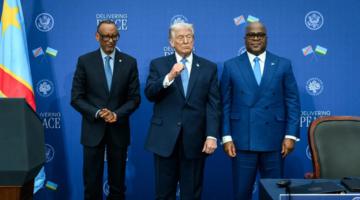 The so-called "peace agreement" between Rwanda and Congo prioritizes U.S. access to mineral riches. The violence carried out against thousands of civilians continues.
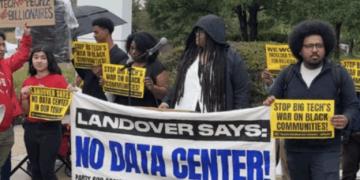 Trump’s accelerated fascism is met with the silence of a compromised U.S. "left." Its institutions, tethered to capitalism and the Democratic Party, reveal they are part of the machine they claim to…


