 A Black Agenda Radio commentary by Glen Ford
Supporters of African independence are generally pleased that the U.S. Africa Command, AFRICOM, has not yet established an official headquarters on the continent, for fear of igniting anti-imperialist passions. But AFRICOM does have a major base on the continent, and more than half the militaries of Africa are at this moment being trained by AFRICOM units.
U.S. Achieves Deep Penetration of African Armed Forces
A Black Agenda Radio commentary by Glen Ford
“They are creating African militaries that cannot operate without the assistance of the Americans.”
AFRICOM, the U.S. military's Africa Command, has forged deep ties to a growing number of militaries on the African continent. And, contrary to popular belief and official U.S. proclamations, Africom has established a base on the African continent. The base is located in Djibouti, the former French colony in the Horn of Africa on Somalia's northern border. The huge American base in Djibouti, from which the United States coordinates military actions in the region, including operations in Somali territory, is under AFRICOM command. It is, therefore, a fiction to maintain that AFRICOM has no bases on African soil. The U.S. Africa Command has simply opened no new bases, or relocated its official headquarters from Germany – a move that might ignite a wave of protest on the continent.
But the Americans may not have to stage a ribbon-cutting ceremony for a formal AFRICOM headquarters to accomplish the militarization of Africa under U.S. domination. A massive, U.S.-led military exercise is just winding down in the west African nation of Gabon. Dubbed “Africa Endeavor” the training mission involves military units from nearly 30 African countries under the auspices of the Americans: the U.S. Africa Command. It is by far the largest joint exercise with African militaries, and the third in so many years; the first two involved South Africa and Nigeria.
“It is a fiction to maintain that AFRICOM has no bases on African soil.”
The African American who commands AFRICOM, Gen. William Ward, claims the latest exercise in Gabon, which began last week and ends October 8, is designed to improve the ability of armed forces from various African nations to communicate with each other in peace-keeping operations. They are without a doubt learning how to communicate with and operate alongside the United States military. The current focus of U.S. AFRICOM activities appears to revolve around preparing African troops to operate under American command-and-control procedures. In early September, 50 Ugandan military officers were sent to the U.S. military base in Djibouti for training. A spokesman for the Ugandan Armed Forces told reporters the objective was to train Africans to fight with international forces. That is clearly a euphemism for operating alongside the Americans.
If the U.S. can turn the militaries of sovereign African nations into appendages of American forces, operating under American command-and-control, then there is no need to draw attention to the US. military presence in Africa by formally designating an AFRICOM headquarters in, say, Kampala, Uganda, or Monrovia, Liberia. Once the U.S. has subverted the officers corps of Africa's armies and made them dependent on U.S. equipment, procedures and logistics, American military domination becomes a fait accompli.
For its part, the U.S. Africa Command says the military exercises are meant to develop “standard procedures” for the operation of an all-African “Standby Force,” under the African Union. What they are in fact creating is a force that cannot operate without the assistance of the Americans. And, of course, such a force could never resist the Americans in battle. The U.S. will never give Africans the tools to defend themselves from...the Americans.
BAR executive editor Glen Ford can be contacted at Glen.Ford@BlackAgendaReport.com.

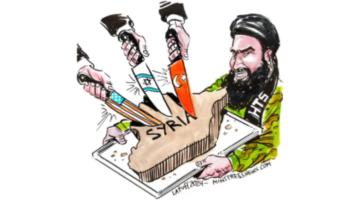 A succession of U.S. presidents have been committed to regime change in Syria. That long-held goal has been achieved in part through a sustained campaign of war propaganda.
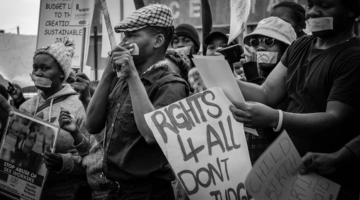 The Black Alliance for Peace just launched its North-South Project for People(s)-Centered Human Rights. Ajamu Baraka and Margaret Kimberley discussed why this project is so necessary.
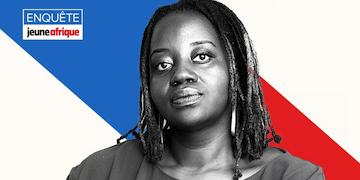 “How do you fight racism in a land where racism obviously exists, the far right is ascendent, but race is not accepted as a category?”
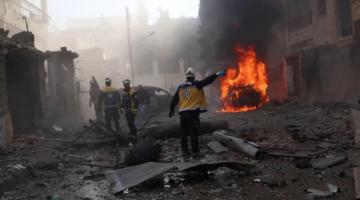 The fall of the Syrian government is being heralded by Western liberals and "leftists." The collapse is not the liberation that is being presented by the US and its corporate media partners.
 A French criminal court has convicted a journalist for writing dissident history about Rwanda and the Democratic Republic of the Congo.


