 A Black Agenda Radio commentary by Glen Ford
A new study shows the corporate news media behave as if their primary audience is comprised of the rich and powerful. Issues dear to the hearts (sic) of bankers in New York and Washington insiders dominate the “news,” while stories about jobs, housing and consumer prices are few and far between. In the Great Recession, “the rich use their media monopoly to starve the public of the fundamental facts of national economic life.”
Media Tell the Rich Man's Story, Starve the People of Real News
A Black Agenda Radio commentary by Glen Ford
“The very rich, through their media, have been holding a conversation among themselves.”
The Great Recession, or the Financial Meltdown of 2008, or whatever history will ultimately wind up calling the unfolding economic debacle we are experiencing, has been “covered” in a highly skewed and selective manner by the media powers-that-be in the United States. That's the general conclusion of a new study by the Pew Research Center's Project for Excellence in Journalism. The Pew study was, of course, centered on news outlets owned and operated by huge corporations, since that is virtually all that has survived for general consumption in the U.S.
The study found that media coverage of the economic disaster – based on numbers of stories and articles – focused overwhelmingly on banking, the economic stimulus, and the fate of the auto industry. The pattern also reveals that the bulk of this narrow band of topics was examined from vantage points in New York and Washington, where the voices of finance capital and its servants in government are located.
It is no wonder, then, that the prevailing narrative on the nature of the crisis, and proposed solutions to the crisis, are informed almost entirely by the corporate view of the world. In essence, the very rich, through their media, have been holding a conversation among themselvesand serving it up as “news.” Their crisis is all that has mattered in this corporate media conversation. It is, therefore, logical that when the stock market rallies the corporate media world is filled with news of “recovery” and “green shoots” sprouting all over the place. But most people experience the economy through the prism of jobs, housing and consumer prices. According to the Pew survey, these fundamental concerns shared by the vast majority of the population rank as very low priorities in the nation's newsrooms.
“Stories about labor issues and worker layoffs in the auto industry made up an infinitesimal two-tenths of one percent of what passed for news.”
While housing foreclosures climbed through the roof and home prices went into the basement, stories on housing represented only six percent of news coverage. The plight of renters is almost totally absent from the news. Unemployment shot from 8.1 to 9.7 percent between February and August – the highest in a quarter century – but merited only six percent of news coverage. The drama over General Motors and Chrysler corporate reorganization was one of the top three topics of news coverage, but stories about labor issues and worker layoffs in the auto industry made up an infinitesimal two-tenths of one percent of what passed for news in the corporate media. Food prices were of even less interest to corporate journalists, who gave the issue only one-tenth of a percent of news coverage. That's one story out of every thousand.
Relentless corporate consolidation of media has resulted in a daily menu of news that is worse than useless to the great mass of people. The rich use their media monopoly to starve the public of the fundamental facts of national economic life. In Black America, where Black-oriented radio still reaches 80 to 90 percent of households, the information void is all but total, with the virtual extinction of local news. As a result, the reality of economic disaster comes without warning. It arrives in the form of a pink slip or an eviction or foreclosure notice, while the television anchorperson blathers on about good times on Wall Street.

 for Aiyana, for Tommie, for Jordan.
 In excerpts from a speech given in Accra, Ghana, BAR editor and contributor Dr. Jemima Pierre highlights the United Nations’ involvement in the 2004 coup d'état and the subsequent…
 Washington, D.C., is implementing a new campaign intended to crack down on fare evasion. This bill, like many others of its kind, will serve as a tool deployed in the ongoing war against the…
 Mozambique is experiencing a period of unrest provoked by recent elections. After unending suffering under neoliberal austerity measures and the encroachment of AFRICOM, the …
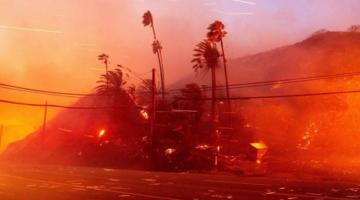 The fires that have been raging in southern California for days are destroying the cities and homes of tens of thousands of people. This disaster, driven by the worsening climate crisis, is…


