A Black Agenda Radio commentary by Glen Ford Click the flash player below to listen to or the mic to download an mp3 copy of this BA Radio commentary.
On January 16 of next year, Iraqis will vote in national elections and a referendum on whether to send the Americans home by the end of 2010 – a year earlier than the U.S. expected. “There is no doubt – none whatsoever – that overwhelming majorities of Iraqis will vote to evict the American occupiers.” But the U.S. anti-war movement can take little of the credit.
Iraqis to Vote on Early U.S. Exit
A Black Agenda Radio commentary by Glen Ford
“Will Washington just give up the occupation and slither away?”
The American occupation of Iraq may be ending much sooner than Washington anticipated – but little thanks to the U.S. anti-war movement, which has in recent years made itself largely irrelevant to issues of war and peace. The Shi'ite-dominated government in Baghdad is asking Iraq's parliament to hold a popular referendum this coming January that will almost certainly demand the withdrawal of U.S. forces by the end of 2010, a year before the Obama administration's fuzzy target date of December, 2011. That means all U.S. military, not just so-called “combat” forces – the semantic farce deployed by the Obama administration to disguise a huge U.S. military and mercenary presence deep into the misty future.
There is no doubt – none whatsoever – that overwhelming majorities of Iraqis will vote to evict the American occupiers, whose flimsy and coerced United Nations “mandate” to remain in Iraq expired last December. That means there is no longer even a veneer of legal basis for the U.S. presence, once the Iraqis say it's time to go.
Despite what you have heard and seen and read in the U.S. corporate media, the great mass of Iraqis have always wanted the Americans out. Nobody on the planet except Americans ever believed the U.S. was in Iraq to protect anything other than American ambitions to dominate the land and resources of other peoples. The current regime in Baghdad promised the Iraqi people it would hold a referendum on the American presence this summer, but delayed the plebiscite to buy more time to consolidate their position, politically and militarily. The January 16 referendum will coincide with Iraq's national elections. Prime Minister Nouri al-Maliki's faction could not hope to win those elections unless it allowed a vote on ridding the country of the U.S. Occupation.
“There is no doubt that overwhelming majorities of Iraqis will vote to evict the American occupiers.”
The Obama administration is no more in favor of Iraqis expressing their political will through the voting process than was the Bush administration, which only agreed to popular elections back in 2005 after Ayatolla al-Sistani threatened to bring a million Shi'ites into the streets of Baghdad. President Obama and his generals have applied every conceivable pressure to avoid a referendum on the occupation. Now it appears the clock is ticking – not in the Obama White House, where it could always be turned back on some pretext, but in Baghdad, where al-Maliki's government must show it is on the side of the people, and not the occupier. None of the Iraq developments of the last two years were due to the U.S. anti-war movement, much of which effectively collapsed into the Obama campaign and then disintegrated.
When the Iraqi people declare at the polls in January that the Americans must pick up their marbles and leave, will Washington just give up the occupation and slither away? That's not in the nature of the imperial beast. But the U.S. will find it much more difficult to claim it is protecting the people whose house it broke into and plundered in March of 2003.
BAR executive editor Glen Ford can be contacted at Glen.Ford@BlackAgendaReport.com .

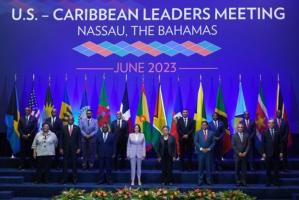 Kamala Harris can be the object of derision for her word salads and oddly nervous laughter. But she plays an important role in promoting US imperialism and the cynical politics of representation.
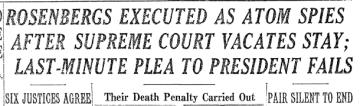 Joseph McCarthy carried out his red scare with the help of establishment media like the New York Times. Its recent Sinophobic screeds follow the Biden administration narrative and are consistent with…
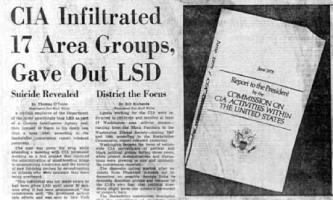
 Glen Ford explained the end of affirmative action in 2013, CIA experiments on indigenous children and Black prisoners, and the Peoples' Senate builds its formation.
 Black Agenda Report co-founder, the late Glen Ford, spoke to the Real News Network after another affirmative action ruling in 2013.
 Orisanmi Burton is an assistant professor at American University’s Department of Anthropology.


